What Changed in the Last 24 Hours
On April 22, 2026, the FDA Law Blog published Post 2 of 2 in its peptide compounding series. Unlike earlier coverage that focused on headlines (Category 2 removals and the July 2026 PCAC meeting), this follow-up zeroes in on the practical realities that will determine what happens next: API supply chain compliance and enforcement risk.
Bottom line: even if the FDA eventually recommends that certain peptides can be compounded under Section 503A, many stakeholders could still be blocked by the requirement to source pharmaceutical-grade API from an FDA-registered establishment with a Certificate of Analysis — and by FDA’s demonstrated willingness to police marketing claims around compounded drugs.
The Big Takeaways (Fast)
- Regulatory steps are not the finish line. PCAC meetings and Category changes are process milestones, not permission to dispense peptides tomorrow.
- API sourcing is a hard constraint. Section 503A has specific sourcing and documentation expectations, and many popular peptides have historically been sold through non-pharmaceutical channels.
- Marketing is a real enforcement vector. FDA’s GLP-1 warning letters show how quickly promotion can become the focus, even when compounding itself is a legal gray area.
- Deadlines matter. If you want to shape the record, the July docket schedule is the practical window.
Why This Matters for Peptide Patients, Clinics, and Compounders
If you run a clinic that prescribes peptides, operate a compounding pharmacy, or you’re a patient trying to understand “Are peptides legal again?”, this is the missing piece. Regulatory process is only one gate. The other gate is operational compliance: what can actually be sourced, compounded, labeled, and promoted without triggering enforcement.
The FDA Law Blog’s argument is simple: the policy environment is shifting, but it’s shifting incrementally. Businesses that plan as if “Category 2 removal = green light” are likely to make expensive mistakes — or worse, risk enforcement.
Context: What the FDA Actually Put on the Calendar
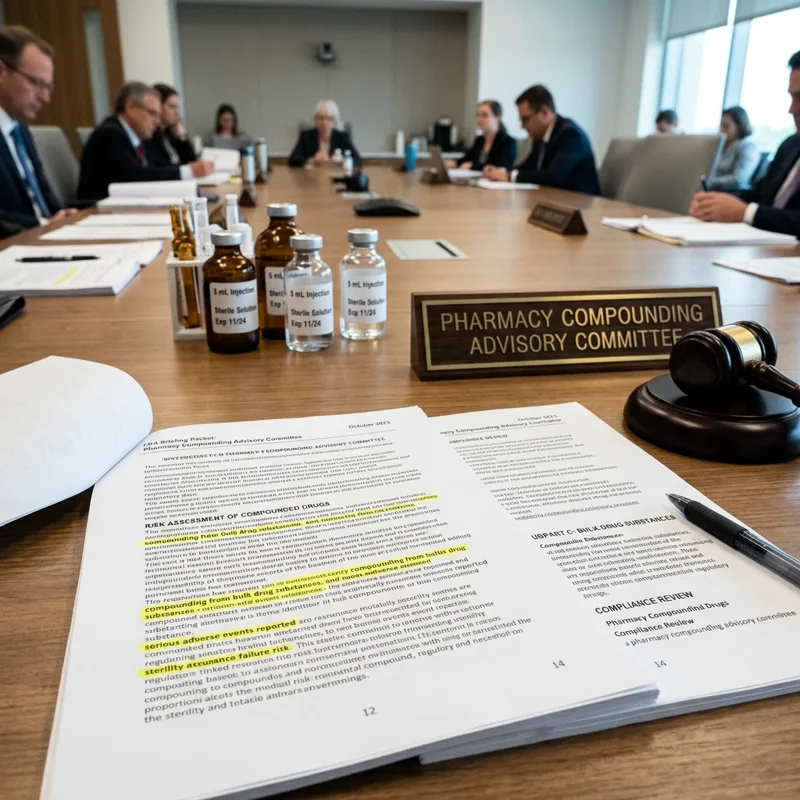
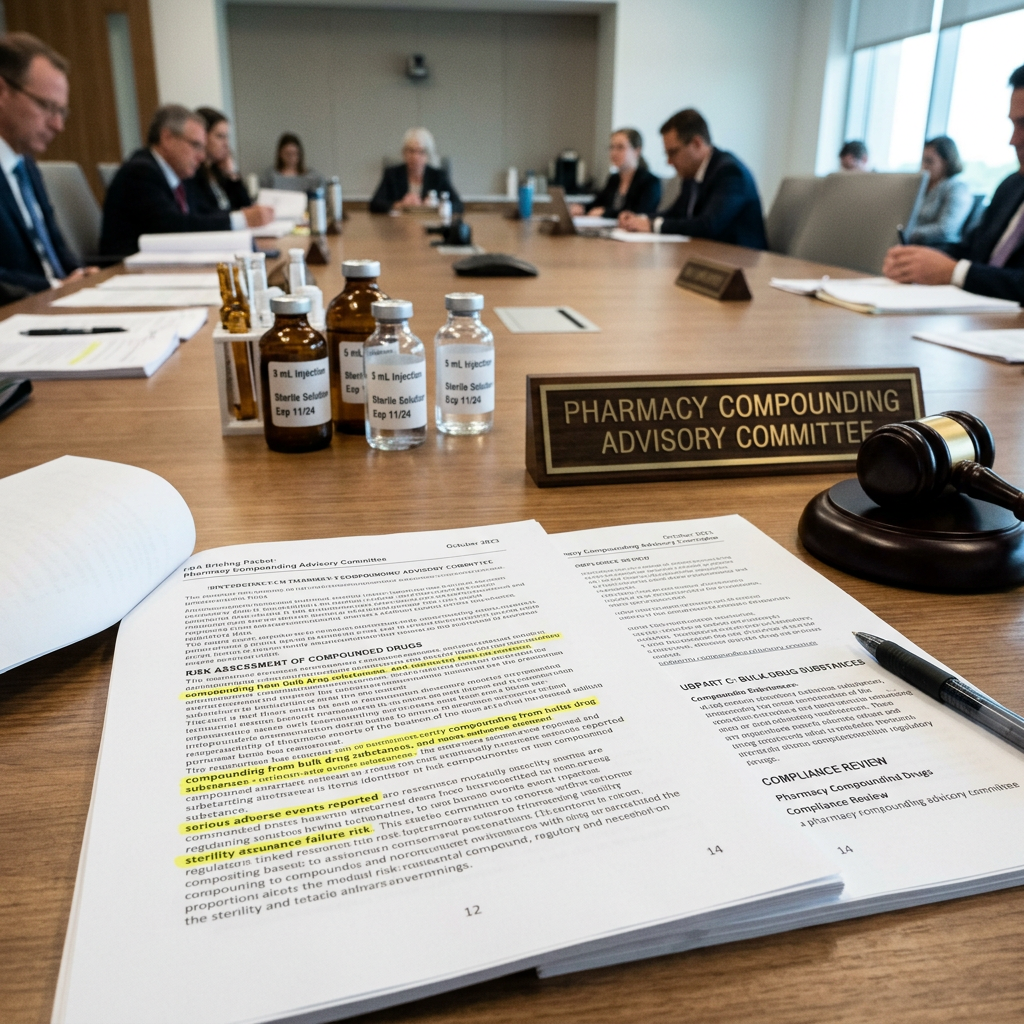
In mid-April, the FDA posted details for a July 23–24, 2026 meeting of the Pharmacy Compounding Advisory Committee (PCAC), where the committee will discuss whether seven peptides should be considered for inclusion on the Section 503A Bulks List.
Those seven include popular names like BPC-157, TB-500, and MOTS-C, plus Semax, Epitalon, KPV, and DSIP (Emideltide) (FDA advisory committee calendar).
Why “PCAC is Meeting” Isn’t the Same as “Peptides Are Allowed”
PCAC provides non-binding scientific advice. In the 503A bulks-list framework, final outcomes typically require additional FDA steps, including formal rulemaking. That’s why FDA-watchers keep emphasizing: this is a process, not a switch.
Supply Chain Reality Check: What Section 503A Actually Requires
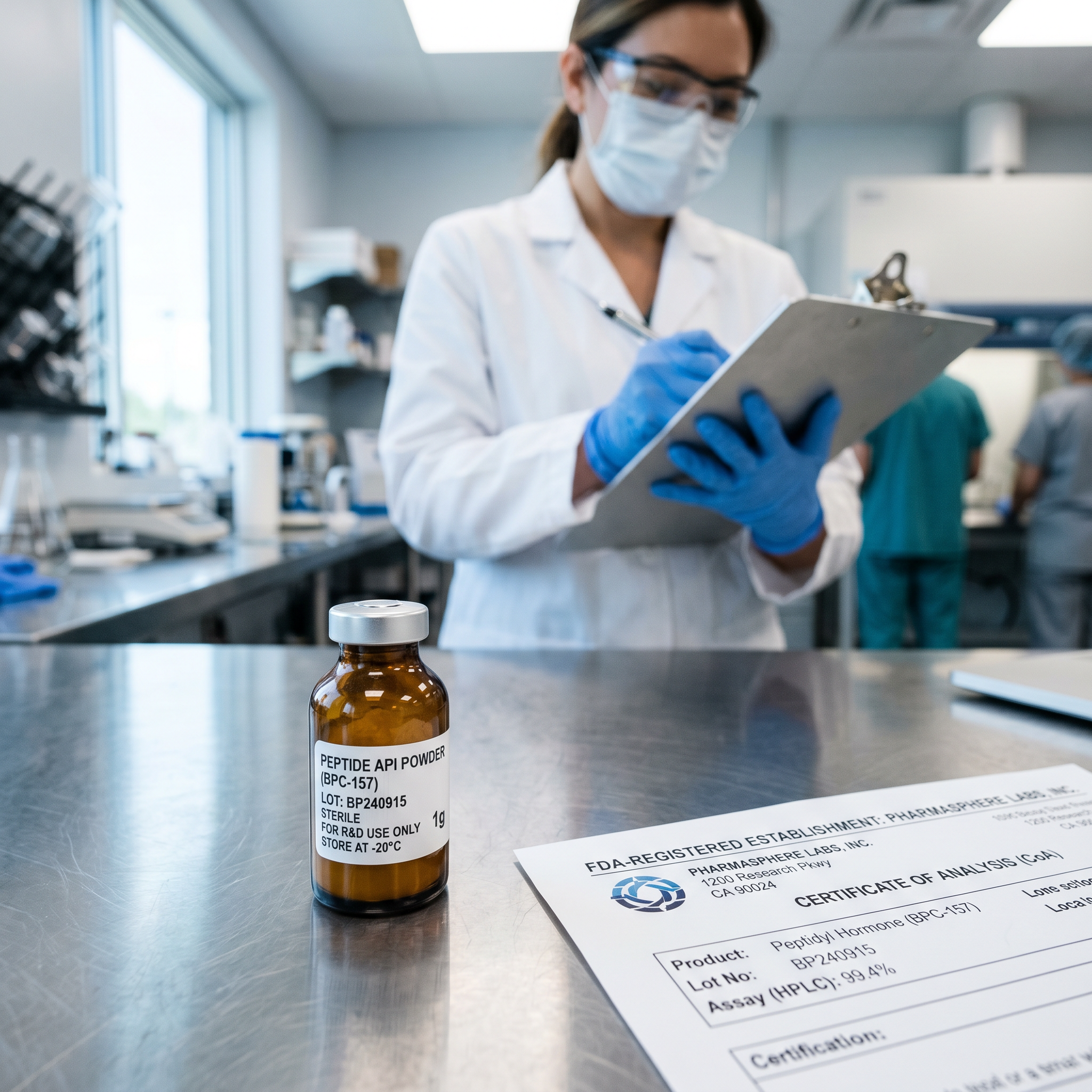
Under Section 503A, bulk substances used in compounding need to come from an FDA-registered drug establishment and be accompanied by a Certificate of Analysis (FDA Law Blog).
That matters because many “popular peptides” in the U.S. have historically been supplied through gray-market channels, often as research-use-only material. Even if a peptide becomes legally eligible for 503A compounding, pharmacies still need compliant API (and for many peptide use-cases, sterile injectable-grade supply) (FDA Law Blog).
What “Pharmaceutical-Grade” Really Means in Practice
In plain English, “pharmaceutical-grade” is less about marketing language and more about documentation and controls:
- Known manufacturing site (registered with FDA where applicable)
- Quality systems appropriate for drug-grade material (often GMP-aligned)
- Certificate of Analysis documenting identity, purity, and key quality attributes
- Impurity profile and characterization that can stand up to scrutiny
Why “Regulatory Permission” Doesn’t Automatically Create API
The post highlights a chicken-and-egg problem: manufacturers may not invest in GMP-grade peptide infrastructure without clear regulatory signals, but pharmacies can’t dispense without compliant API (FDA Law Blog).
If you’re a clinic or pharmacy planning for patient demand, the implication is uncomfortable but important: even a favorable policy outcome can be bottlenecked by supply.
Sterility and Injectable Risk: Why Peptides Raise the Bar
Many peptide protocols in the U.S. market involve injections. The FDA Law Blog notes that if peptides are treated as likely sterile injectable products, expectations shift toward pharmaceutical-grade sourcing and tighter controls (FDA Law Blog).
For patients, this is one of the strongest arguments for regulation: sterility failures are not theoretical. For legitimate providers, it’s a reminder that the lowest-cost supply chain is often the highest-liability supply chain.
The Other Risk: Marketing, Telehealth, and FDA Enforcement
The FDA Law Blog points to the GLP-1 compounding crackdown as a preview of how peptide enforcement could play out. It reports that FDA issued over 80 Warning Letters to telehealth companies for allegedly misleading marketing of compounded GLP-1 products in the 12 months ending March 2026 (FDA Law Blog).
The warning is not subtle: peptide businesses should assume a similar enforcement posture — especially around claims that imply FDA approval, guaranteed safety, or proven efficacy for compounded products (FDA Law Blog).
Compliance Red Flags (Common in the Peptide Market)
- Calling compounded peptides “FDA-approved” (or implying they are)
- Claiming a compounded peptide “treats” a disease without context
- Before/after marketing that implies predictable outcomes
- Influencer-style performance claims (“healed my tendon in 10 days”) presented as representative
- Broad telehealth funnels that look like mass manufacturing instead of patient-specific compounding
Timeline Check: What Happens Next (and Key Dates)
The FDA meeting page states that the docket for public comment is FDA-2025-N-6895 and closes July 22, 2026 (FDA advisory committee calendar).
Deadlines to Know
- June 30, 2026: notify FDA if you want to make an oral presentation (FDA Law Blog).
- July 9, 2026: submit written comments by this date to ensure the committee receives them (FDA Law Blog).
- July 22, 2026: docket closes (Regulations.gov accepts electronic submissions until 11:59 p.m. ET) (FDA advisory committee calendar).
What to Watch Between Now and July
- FDA “event materials” (briefing documents and background packets posted shortly before the meeting)
- Any FDA statements on enforcement discretion related to Category updates or interim policy
- API supply announcements from legitimate manufacturers moving into peptide production
- Provider marketing shifts (more compliance language, fewer “miracle” claims) as enforcement risk becomes clearer
What This Means for Patients (and How to Reduce Risk)
Patients don’t control federal rulemaking, but you do control your risk profile. The themes from Post 2 point to practical questions worth asking your provider:
- Is this compounded peptide being prepared by a licensed pharmacy pursuant to a patient-specific prescription?
- Can the pharmacy describe its sourcing standards for bulk ingredients (documentation, testing, COAs)?
- If the peptide is injectable, how is sterility handled and verified?
- Are the benefits you’re hearing based on human evidence, animal data, or anecdotes?
If a seller can’t answer basic sourcing and quality questions, that’s the clearest signal you have.
Related PeptideKnow Coverage (Internal Links)
If you’re catching up, start here:
- FDA’s ‘Peptide Rally’: What Changed — and What Hasn’t (Yet)
- How to Submit Public Comments on FDA Peptide Compounding (Docket FDA-2025-N-6895)
And for quick reference, see our peptide profiles:
FAQ: Peptide Compounding, Supply Chain, and Enforcement
Does removing a peptide from Category 2 make it legal to compound?
Not necessarily. Category 2 removal can be a procedural step, but 503A compounding legality depends on the bulks list process and FDA actions (including rulemaking), plus compliance with sourcing requirements (FDA Law Blog).
What is “pharmaceutical-grade API” in this context?
In simple terms: active ingredient made under appropriate quality systems (often GMP-aligned), sourced from an FDA-registered establishment, and backed by documentation such as a Certificate of Analysis (FDA Law Blog).
If peptides become permissible for compounding, will marketing get easier?
Probably not. Even if compounding becomes permissible, promotional rules still apply. The FDA Law Blog argues that the agency may continue aggressive marketing enforcement, citing the GLP-1 warning-letter pattern (FDA Law Blog).
Which peptides are on the July 2026 PCAC agenda?
The FDA agenda lists BPC-157, KPV, TB-500, MOTs-C, Emideltide (DSIP), Semax, and Epitalon for discussion as candidates for inclusion on the 503A Bulks List (FDA advisory committee calendar).
Industry Angle: Why This Is Also an API Market Story
It’s easy to frame the FDA’s peptide actions as a political story. But Post 2 argues the more durable story is structural: if FDA creates a pathway for certain peptides, you should expect a parallel race to build compliant manufacturing capacity.
That makes this moment similar to other “regulation unlocks a market” cycles: the first wave is regulatory process, the second wave is supply chain and quality infrastructure, and the third wave is commercial scaling (where marketing enforcement tends to intensify).
For patients, the upside is clearer: if legitimate manufacturers invest in drug-grade peptide production, the market’s center of gravity shifts away from research-grade material and toward traceable, documented supply.
Primary Sources
Medical and Legal Disclaimer
This article is for informational purposes only and does not provide medical or legal advice. Compounded drugs are not FDA-approved, and individual legal status depends on evolving FDA policy, state pharmacy rules, and specific facts. Talk with a qualified clinician and consult legal counsel for compliance decisions.
Sources & References
- FDA PCAC Meeting Announcement (July 23-24, 2026)
- PBS: FDA to Weigh Easing Limits on Peptides Favored by RFK Jr.
- BioPharma Dive: FDA Peptides RFK Advisory Committee Restrictions
- RAPS: FDA Considers Adding a Dozen Peptides to Bulk Drug List
- Ars Technica: RFK Jr. Forces FDA to Reconsider 12 Peptides
- ProPublica: Peptide Safety Investigation
- New York Times: Peptide Ban FDA RFK Jr.
- SSRP Institute: FDA Announces Change in Status of 12 Peptides
- CNBC: RFK Jr. Peptides Hims Hers GLP-1
- USA Today: RFK Jr. FDA Peptides Explainer