Peptide Reconstitution Calculator
Calculate exact bacteriostatic water volumes, concentrations, and syringe units for precise peptide dosing. Supports body-weight-based dosing.
Step 1: Peptide Information
Step 2: Desired Dose
Step 3: Body Weight Adjustment (Optional)
Your Results
Syringe Reference
Frequently Asked Questions
How much bacteriostatic water should I use?
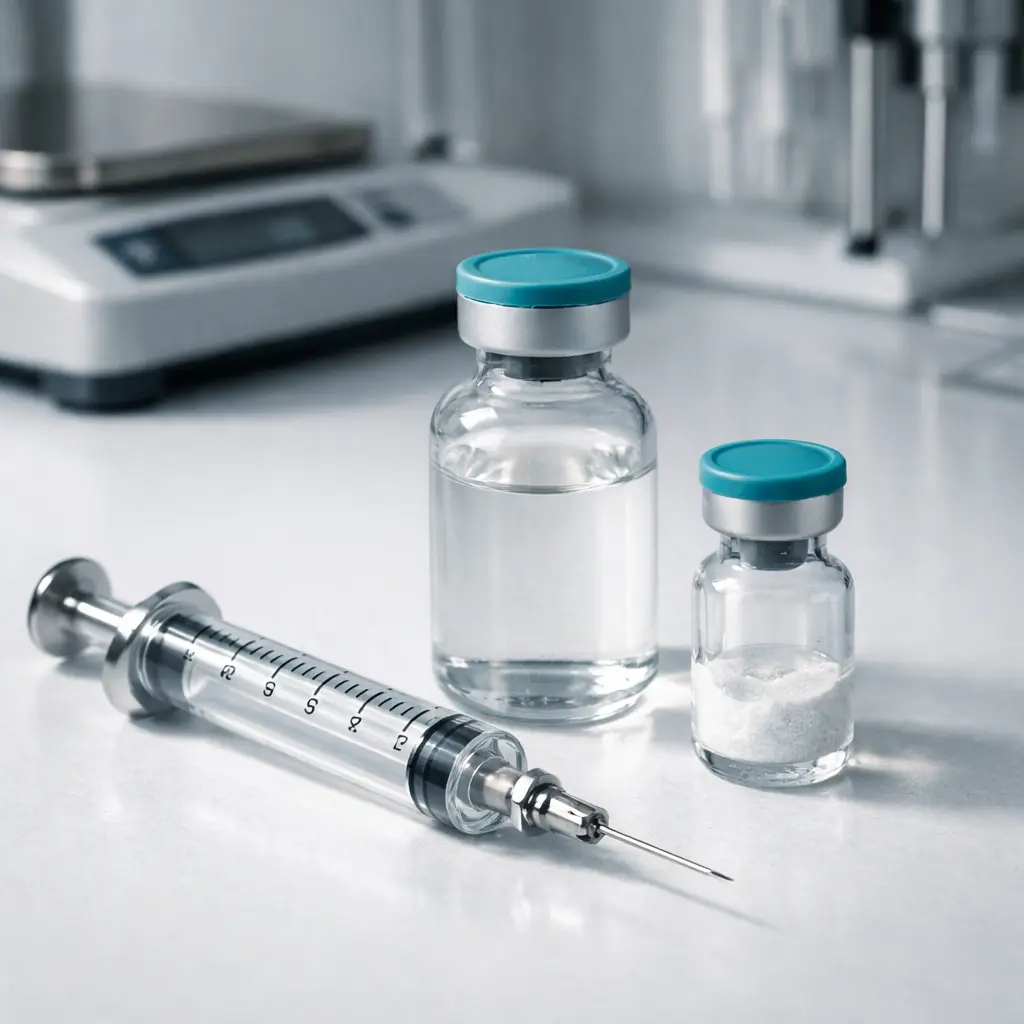
The standard reconstitution uses 1–2 mL of bacteriostatic water per vial. Using less water creates a more concentrated solution (less volume per injection). Using more water makes it easier to measure small doses but increases injection volume. For most peptides in 5mg vials, 2 mL is the most common choice.
What's the difference between bacteriostatic water and sterile water?
Bacteriostatic water contains 0.9% benzyl alcohol as a preservative, allowing multi-use vials to remain sterile for up to 28 days. Sterile water has no preservative and is suitable only for single-use. For peptides that will be used over multiple injections, bacteriostatic water is the standard choice.
How do I read insulin syringe units?
A standard 1 mL insulin syringe has 100 units total. Each unit equals 0.01 mL. So 10 units = 0.10 mL, 25 units = 0.25 mL, etc. Our calculator converts your desired dose directly into syringe units so you can draw accurately.
How long does reconstituted peptide last?
When mixed with bacteriostatic water and stored refrigerated (2–8°C / 36–46°F), most reconstituted peptides remain stable for 28–30 days. Do not freeze reconstituted peptides. If the solution becomes cloudy or discolored, discard it.
Can I adjust dosing based on body weight?
Yes — our calculator includes an optional body-weight adjustment. Some research protocols specify doses in mcg per kilogram of body weight. Enter your weight and the per-kg dose from the literature to get a personalized calculation.