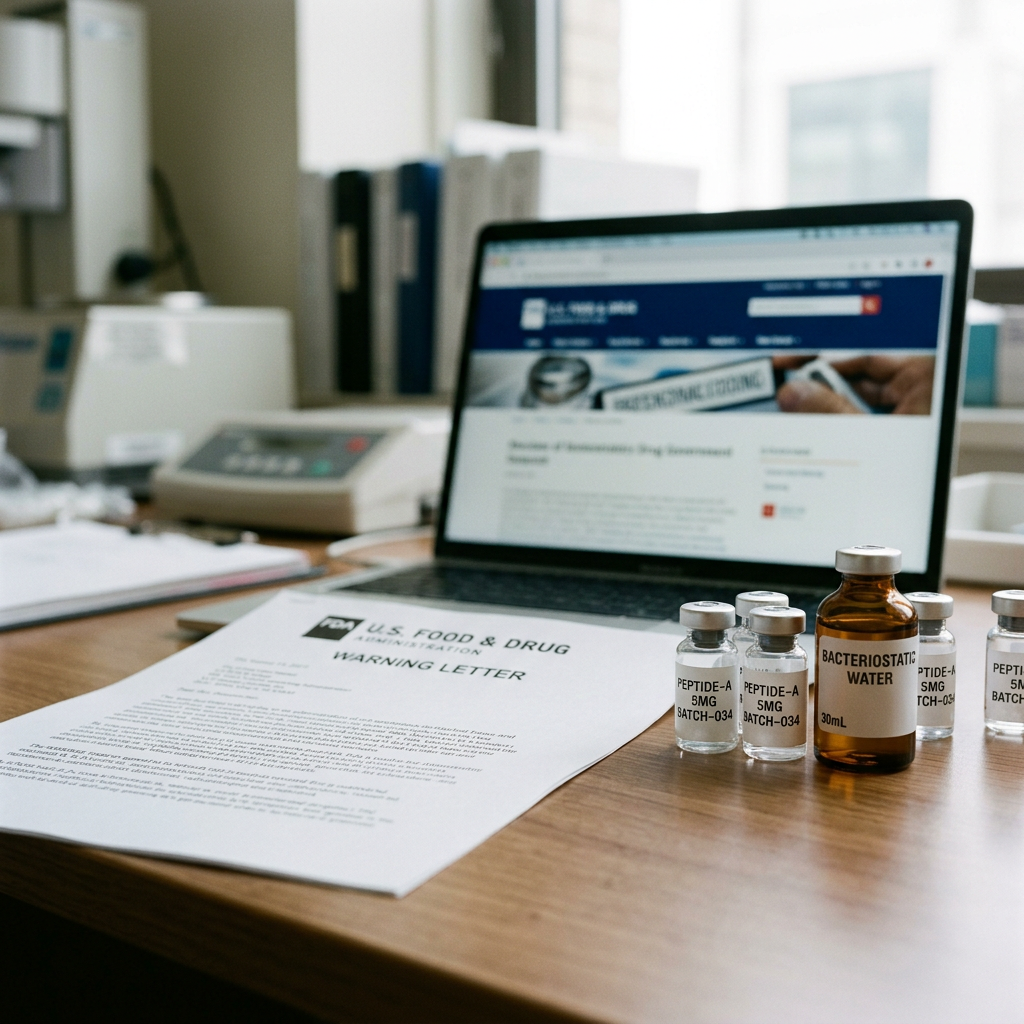
On March 31, 2026, the U.S. Food and Drug Administration (FDA) sent a warning letter to Gram Peptides, an online seller whose website promoted retatrutide and tirzepatide as “research” peptides. The agency’s argument is blunt: once your marketing starts reading like a drug label—appetite suppression, weight loss, glucose handling—“research use only” (RUO) disclaimers stop functioning as a shield. The letter is a useful case study because it shows what regulators focus on: not the fine print, but the overall presentation of intended use. (FDA warning letter: Gram Peptides (03/31/2026))
This matters for more than one corner of the peptide ecosystem. It touches the “grey-market” research supply chain, telehealth storefronts that blur the line between education and advertising, and the broader crackdown on peptides that orbit GLP-1 weight-loss drugs. It also intersects with compounding policy, where the FDA has been explicit that compounded products are not FDA-approved and cannot be marketed as if they are. (FDA press announcement (03/03/2026))
What the FDA actually alleged in the Gram Peptides letter
The Gram Peptides warning letter reads like a checklist of the FDA’s core internet enforcement theory.
- Products offered: The FDA said it observed Gram Peptides offering “Retatrutide” (which the company also called a “GLP-1-R peptide”), “Tirzepatide” (also called a “GLP-2 peptide”), and “Bacteriostatic Water for Injection” for sale in the United States. (FDA warning letter: Gram Peptides (03/31/2026))
- Regulatory theory: The FDA framed these as unapproved new drugs introduced or delivered for introduction into interstate commerce in violation of the FD&C Act. (FDA warning letter: Gram Peptides (03/31/2026))
- Why RUO didn’t help: The FDA cited the website’s own claims—weight management, appetite suppression, glucose response, lipid metabolism—as evidence that the products were intended for human drug use even if the site included RUO language elsewhere. (FDA warning letter: Gram Peptides (03/31/2026))
- The “bacteriostatic water” tell: The FDA said selling bacteriostatic water alongside reconstituted peptide products helped demonstrate intended use for injection. (FDA warning letter: Gram Peptides (03/31/2026))
There’s a reason this structure shows up again and again in warning letters: it is the shortest path from “website content” to “intended use,” and intended use is the hinge that turns a chemical into a drug.
Why retatrutide is a flashpoint (and why it’s not “just another GLP-1”)
Retatrutide has become a magnet for internet peptide marketing precisely because it sits at the intersection of hype and regulatory vulnerability. It’s frequently described in the wild as a next-generation weight-loss molecule, which invites sellers to write copy that sounds clinical. But that copy is also the evidence regulators use when they argue a product is being sold as a drug.
Contrast this with how legitimate drug development is supposed to work: investigational compounds belong inside controlled trials and regulated manufacturing systems, not in “add to cart” listings paired with injection supplies. The FDA has made clear—across multiple enforcement actions—that marketing language is not a cosmetic detail; it is the product’s legal identity.
What this means for compounding pharmacies, telehealth, and clinics
It’s tempting to read a warning letter like this as a “research chemical” story only. That misses the downstream effect: clinics and telehealth operators often rely on the same demand signals. If customers are trained to think of peptides as quasi-approved drugs, marketing follows, and then enforcement follows the marketing.
In March 2026, the FDA said it issued warning letters to 30 telehealth companies for making false or misleading claims about compounded GLP-1 drugs, emphasizing that compounded drugs are not FDA-approved and are not the same as generics. (FDA press announcement (03/03/2026)) That enforcement lane is adjacent to the Gram Peptides lane: different targets, same core issue—presentation that implies equivalence to approved therapies.
For licensed compounders, the practical question becomes: what does “essentially a copy” mean, and what happens when shortage conditions shift? The FDA has separately published guidance-style statements on how it views compounding when national GLP-1 supply stabilizes, including the legal constraints in sections 503A and 503B. (FDA statement on compounders and GLP-1 supply)
A simple translation of the FDA’s “intended use” logic
Think of intended use like a shadow the product casts. The FDA doesn’t need to prove that customers actually inject a peptide to argue it is a drug. It needs to show that the seller’s overall presentation encourages drug-like use.
Three patterns keep showing up in enforcement actions:
- Outcome claims (weight loss, appetite suppression, glucose control).
- Administration cues (sterile vials, “for injection” language, bacteriostatic water sold alongside).
- Therapeutic framing (benefits sections, “studied for” copy that reads as a recommendation rather than a citation).
Put those together and RUO disclaimers become a footnote to the main story. In the Gram Peptides letter, the FDA explicitly pointed to the site’s own claims about appetite suppression, insulin sensitivity, and fat oxidation as evidence of intended drug use. (FDA warning letter: Gram Peptides (03/31/2026))
What the letter says about the rest of the supply chain
Warning letters are not just enforcement documents. They are also signaling documents. Each one tells the regulated industry what the FDA noticed, which arguments worked for the agency, and what kinds of presentations will probably draw the next letter.
The Gram Peptides letter signals several things at once. It says the agency reads product pages line by line. It says “GLP-1-R peptide” and “GLP-2 peptide” framing — descriptors that sound like pharmacology but get used as marketing tags — are being parsed as therapeutic claims. It says bundling supplies (vials, syringes, bacteriostatic water) is being read as a complete-the-injection kit. And it says the agency is willing to walk through the website screenshot by screenshot and quote the seller back to itself.
For sellers further upstream — bulk powder distributors, contract synthesis houses, formulators who supply RUO-only labs — the practical takeaway is that the burden of proof now sits on the seller, not the buyer. A bulk supplier whose downstream customers consistently behave like online drug retailers is increasingly difficult to defend as a legitimate research vendor. That is a different commercial environment than the one most peptide suppliers operated in five years ago.
Where peptide policy is heading next (PCAC, bulks lists, and the long game)
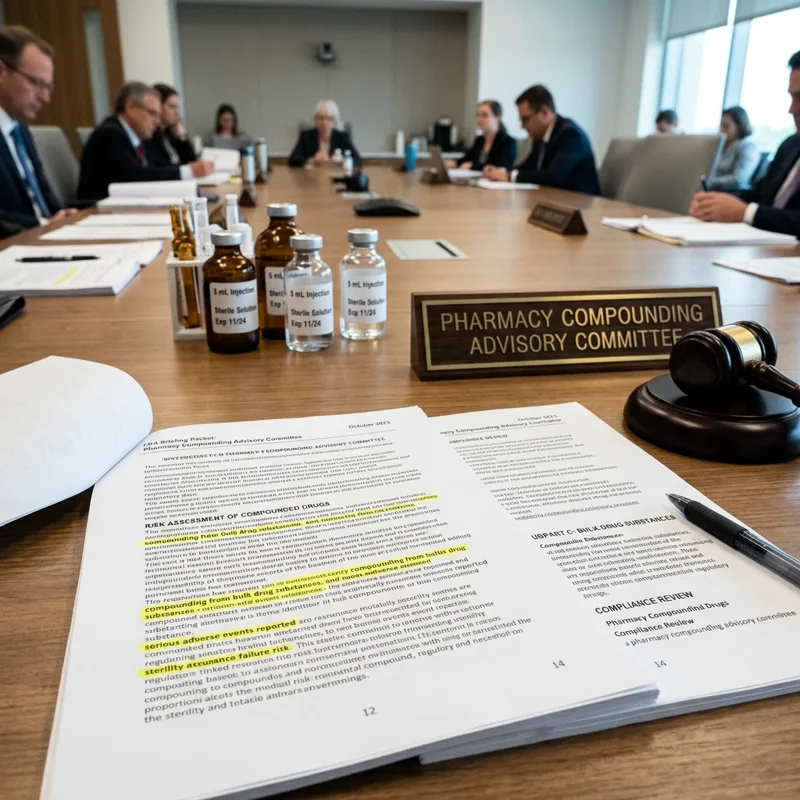
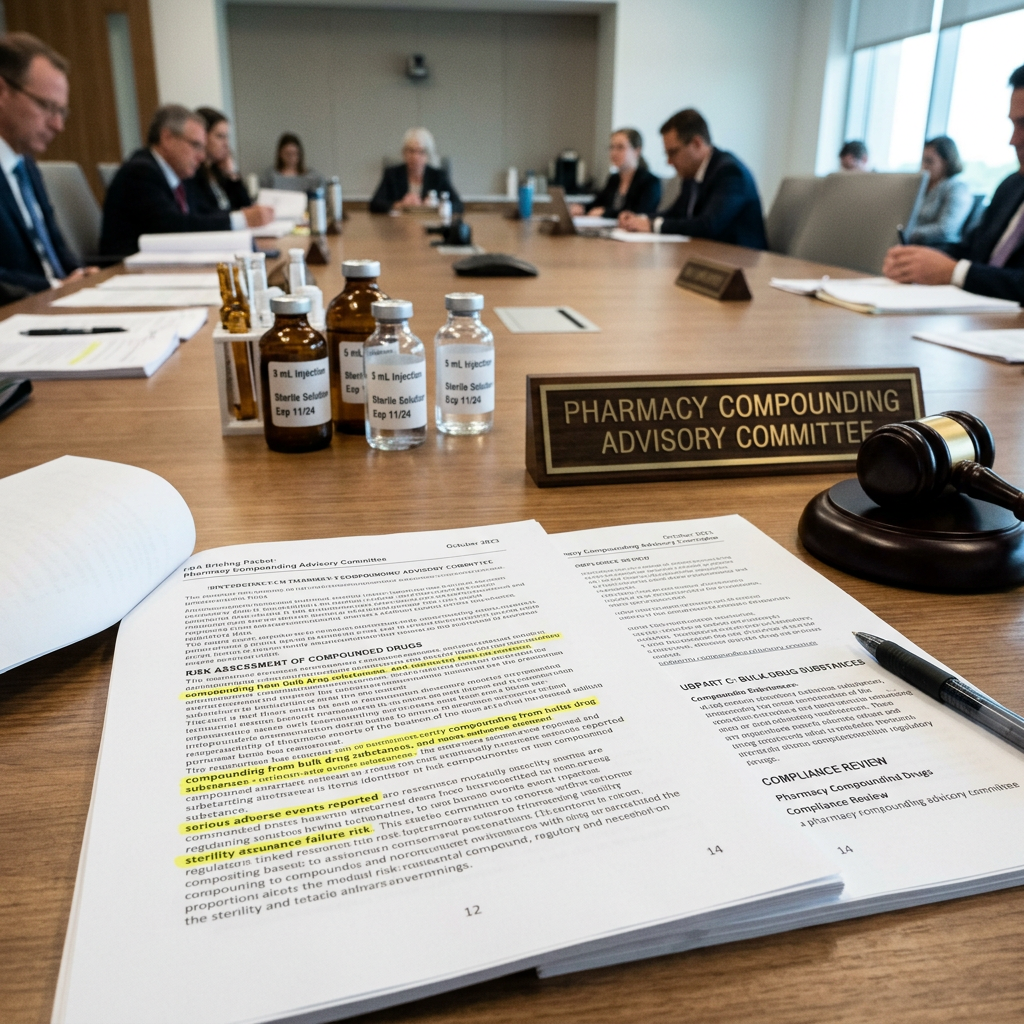
The regulatory pressure around peptides isn’t just about GLP-1 lookalikes. It’s also about the FDA’s longer-running effort to decide which bulk drug substances can be used for traditional pharmacy compounding under section 503A.
The agency’s public-facing documents around the 503A bulks process show how messy this can get—withdrawn nominations, category reshuffling, and scheduled advisory committee reviews. For example, the FDA’s “Bulk Drug Substances Nominated for Use in Compounding Under Section 503A” document includes entries such as GHK-Cu (with non-injectable routes discussed) and lists multiple peptide-like substances across categories. (FDA: Bulk Drug Substances Nominated for Use in Compounding Under Section 503A (download))
Even when a peptide isn’t approved as a drug, the compounding question still matters: it determines whether patient-specific formulations can be prepared legally by licensed pharmacies—subject to strict conditions—rather than sourced through the informal internet supply chain.
Practical risk checklist: if you’re a buyer, clinic, or operator
This is not legal advice. It’s a reality check drawn from how the FDA writes these letters.
- If you sell peptides online: Avoid drug-like claims, before-and-after language, and “benefits” copy that reads as a recommendation; citations don’t automatically make the framing compliant.
- If you run a clinic: Know your upstream supply chain. A product marketed as RUO may still become an enforcement target if the seller’s copy signals intended human use.
- If you’re a patient or consumer: Treat “research peptide” marketing as a signal of regulatory uncertainty, not as a badge of safety. The FDA does not review these products for quality, effectiveness, or sterility.
Frequently Asked Questions
Does a “research use only” disclaimer make a peptide legal to sell?
Not by itself. The FDA’s position in many internet enforcement letters is that intended use can be established by the overall marketing—especially therapeutic claims—regardless of RUO statements. (FDA warning letter: Gram Peptides (03/31/2026))
Why did the FDA mention bacteriostatic water?
In the Gram Peptides letter, the FDA said selling bacteriostatic water “for injection” alongside peptide products supported the inference that the products were intended for injection use. (FDA warning letter: Gram Peptides (03/31/2026))
Is tirzepatide a peptide?
Tirzepatide is a synthetic peptide-based medicine approved in specific formulations; the issue in the warning-letter context is not the molecule’s category, but whether an unapproved product is being marketed for human drug use without an approved application. (FDA warning letter: Gram Peptides (03/31/2026))
How is this different from compounding?
Traditional pharmacy compounding operates under sections 503A/503B with legal constraints (including limits on making drugs that are “essentially copies” of FDA-approved drugs). The FDA has published policy statements on how those constraints apply as national GLP-1 supply stabilizes. (FDA statement on compounders and GLP-1 supply)
Sources (primary and reference)
- FDA. “Gram Peptides - 721806 - 03/31/2026.” Published March 31, 2026. https://www.fda.gov/inspections-compliance-enforcement-and-criminal-investigations/warning-letters/gram-peptides-721806-03312026
- FDA. “FDA warns 30 telehealth companies against illegal marketing of compounded GLP-1s.” Published March 3, 2026. https://www.fda.gov/news-events/press-announcements/fda-warns-30-telehealth-companies-against-illegal-marketing-compounded-glp-1s
- FDA. “FDA clarifies policies for compounders as national GLP-1 supply begins to stabilize.” (Drug Alerts and Statements). https://www.fda.gov/drugs/drug-alerts-and-statements/fda-clarifies-policies-compounders-national-glp-1-supply-begins-stabilize
- FDA. “Bulk Drug Substances Nominated for Use in Compounding Under Section 503A of the Federal Food, Drug, and Cosmetic Act.” (downloaded May 2026). https://www.fda.gov/media/94155/download
Sources & References
- FDA PCAC Meeting Announcement (July 23-24, 2026)
- PBS: FDA to Weigh Easing Limits on Peptides Favored by RFK Jr.
- BioPharma Dive: FDA Peptides RFK Advisory Committee Restrictions
- RAPS: FDA Considers Adding a Dozen Peptides to Bulk Drug List
- Ars Technica: RFK Jr. Forces FDA to Reconsider 12 Peptides
- ProPublica: Peptide Safety Investigation
- New York Times: Peptide Ban FDA RFK Jr.
- SSRP Institute: FDA Announces Change in Status of 12 Peptides
- CNBC: RFK Jr. Peptides Hims Hers GLP-1
- USA Today: RFK Jr. FDA Peptides Explainer