
Medicare began paying for obesity drugs on July 1. The federal insurance program that covers 68 million older and disabled Americans has never covered a medication prescribed solely for weight loss. That changed this week. Under a demonstration project called Medicare GLP-1 Bridge, eligible beneficiaries can now fill prescriptions for Wegovy, Zepbound, Foundayo, or the oral formulation of Wegovy for a flat $50 monthly copay.
The change is temporary. It runs through the end of 2027. It carries a projected federal cost that the Congressional Budget Office has estimated could exceed $30 billion annually if every eligible senior enrolled. And it arrives against a statutory backdrop — the 2003 Medicare Modernization Act — that explicitly prohibits Medicare Part D from covering drugs used for weight loss. Bridge exists because the Centers for Medicare and Medicaid Services invoked its demonstration authority to sidestep that prohibition for eighteen months.
What launched, and who qualifies
Bridge covers four brand-name products. Novo Nordisk's Wegovy is available as both the weekly subcutaneous injection and as an oral tablet. Eli Lilly's Zepbound is covered only in the KwikPen presentation — a four-dose autoinjector that delivers a month's supply in a single pen. Lilly's Foundayo, an oral daily tablet approved in April 2026, rounds out the list. Single-dose vials of Zepbound and single-dose pens are excluded. All doses cost the same $50 copay; the price does not scale with strength.
Eligibility is broader than most commercial insurance plans. Any Medicare Part D beneficiary with a body mass index of 35 or higher qualifies. Beneficiaries with a BMI between 27 and 35 also qualify if they have a weight-related condition — prediabetes, a prior heart attack, prior stroke, uncontrolled hypertension, or peripheral artery disease are the ones CMS has named. The health research group KFF estimated earlier this week that roughly 4 million Medicare beneficiaries meet the criteria based on 2023 survey data. Lilly and Novo executives, in public statements, have suggested the eligible population could reach 20 million. Medicare director Chris Klomp has pegged the number at "several million."
Coverage does not extend to seniors who already receive a GLP-1 through Part D for a use Medicare already covers — Type 2 diabetes, cardiovascular risk reduction, or moderate-to-severe obstructive sleep apnea. Those patients continue through their existing benefits.
How enrollment actually works
The mechanics are worth walking through, because they differ from ordinary Part D. A patient's Part D plan is not the decision-maker under Bridge. Instead, CMS contracted Humana to serve as the central administrator for the entire program. A qualifying beneficiary starts with a visit to a prescribing provider — a primary care physician, an obesity medicine specialist, or a bariatric clinician. The provider assesses BMI and comorbidities against the CMS criteria. If the patient qualifies, the provider sends the prescription to the patient's pharmacy, which triggers a prior authorization request. The provider then completes the request and submits it directly to Humana, not to the Part D plan. Humana has committed to processing decisions within 72 hours, and CMS is encouraging electronic submission to keep the workflow moving.
Once Humana approves, the patient picks up the medication at the pharmacy counter for the flat $50 copay. That copay does not count toward the Part D deductible. It does not count toward the $2,100 annual out-of-pocket cap that took effect this year. Bridge is funded through taxpayer dollars and the beneficiary copay itself. Part D plan sponsors are not on the hook for the drug cost, which is the political concession that made the program feasible without a full statutory change.
The peptides underneath the program
Semaglutide — sold as Wegovy for obesity and Ozempic for diabetes — is a 31-amino-acid analog of native GLP-1 with a modified backbone that resists degradation by the DPP-4 enzyme. Its half-life of roughly seven days enables once-weekly injection. Novo's oral formulation, approved in December 2025, uses the absorption enhancer SNAC to cross the intestinal wall, and requires strict fasting protocols to maintain bioavailability.
Tirzepatide, marketed as Zepbound for obesity and Mounjaro for diabetes, is a 39-amino-acid dual agonist that activates both GLP-1 and GIP receptors. The dual-receptor mechanism produces greater weight loss than semaglutide in head-to-head data. Lilly's third product in the Bridge list, Foundayo, is a distinct molecule — orforglipron is a small-molecule GLP-1 agonist, not a peptide, and its oral bioavailability does not depend on a permeation enhancer. It became the first GLP-1 pill without food-and-water restrictions when the FDA approved it in April.
The mechanism these drugs share is receptor activation in specific hypothalamic nuclei that regulate appetite, satiety, and gastric motility. They slow gastric emptying, blunt the reward response to high-calorie food, and reduce reported hunger between meals. Adverse effects — nausea, vomiting, constipation — track dose escalation and typically ease with time. Rare but serious signals include pancreatitis, gallbladder disease, and a boxed warning for medullary thyroid cancer based on rodent data. The safety database is now large enough — millions of patient-years across three approved molecules — that regulators consider the class well-characterized in adults.
What Bridge changes, and what it does not
The starkest change is for cash-pay seniors who had been priced out. Brand-name Wegovy and Zepbound list at roughly $1,000 per month before rebates. A senior on fixed retirement income choosing between rent and a GLP-1 has functionally not had access to these drugs since they launched. At $50 per month, the drugs are within reach of any Part D–eligible beneficiary who clears the clinical criteria. For that population, the change is meaningful in a way that policy discussions about coverage rarely are.
Two things Bridge does not change matter equally. It does not resolve the underlying statutory conflict — the Medicare Modernization Act still prohibits routine coverage of anti-obesity medications, and Bridge expires December 31, 2027 absent congressional action or a new administration extending the demonstration. Coverage after 2027 is contingent on either Congress amending the statute or CMS launching a successor program. Neither is guaranteed. Physicians who prescribe these drugs as chronic therapy are acutely aware that clinical continuity matters — patients who stop GLP-1 therapy regain weight, often to baseline, within a year. A two-year runway is not a chronic-disease benefit; it is a bridge to a decision that has not been made.
The other unchanged variable is supply. Wegovy and Zepbound emerged from a multi-year shortage in 2024 and 2025 that reshaped the compounding pharmacy industry around GLP-1 fills. Novo and Lilly have expanded fill-finish capacity — Novo through three former Catalent sites now ramping up, Lilly through its own new facilities — but a program that could add millions of new prescriptions in a compressed window will strain the system regardless. Dr. Carolynn Francavilla Brown, vice president of the Obesity Medicine Association, told CNBC that patients should not expect same-day pickups on July 1 and warned of "strain on clinics and pharmacies for the next couple of months."
The pipeline pressure Bridge creates
Wall Street responded to the launch by pricing in what one Leerink Partners analyst called "rapid adoption over the second half of the year," with a projected revenue lift of more than a billion dollars per year for each of Novo and Lilly. That framing captures the near-term arithmetic but understates the second-order effects on the injectable peptide development pipeline.
Every next-generation candidate in late-stage development now has a larger addressable market at approval. Retatrutide, Lilly's triple-agonist in Phase 3 with weight-loss data approaching 25 percent in earlier trials, gains a directly-covered senior population if approved in the Bridge window. Novo's CagriSema, the semaglutide-plus-cagrilintide combination now awaiting an FDA decision expected in the fourth quarter of 2026, would enter a market where Medicare pays. The oral small-molecule programs — Ascletis's ASC35, Roche's enicepatide, Structure Therapeutics's aleniglipron, Corxel's CX-11 with fresh Phase 2 data from late June — all benefit from a Medicare pathway their predecessors did not have.
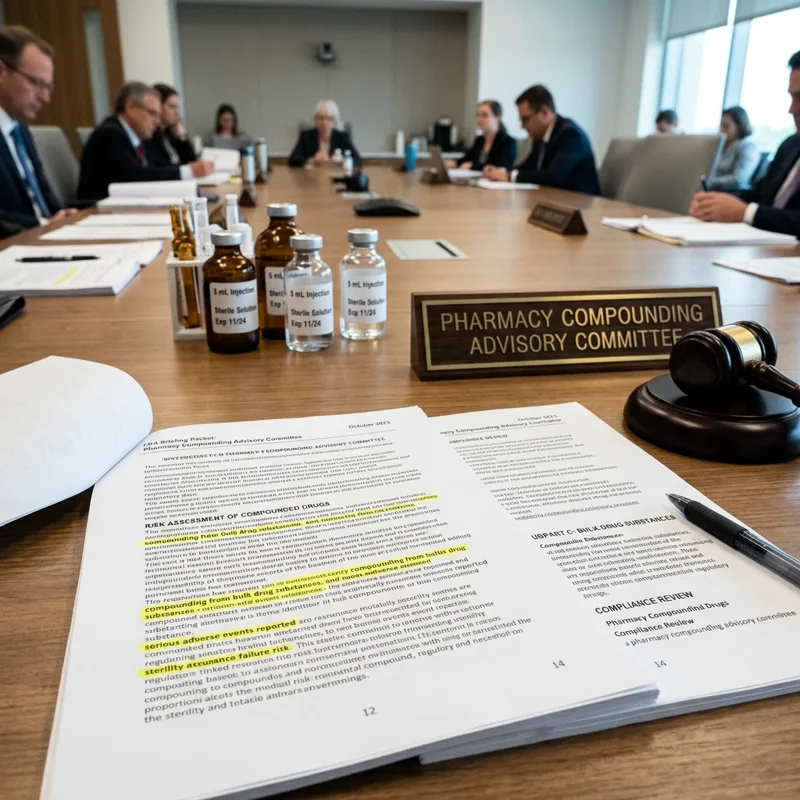
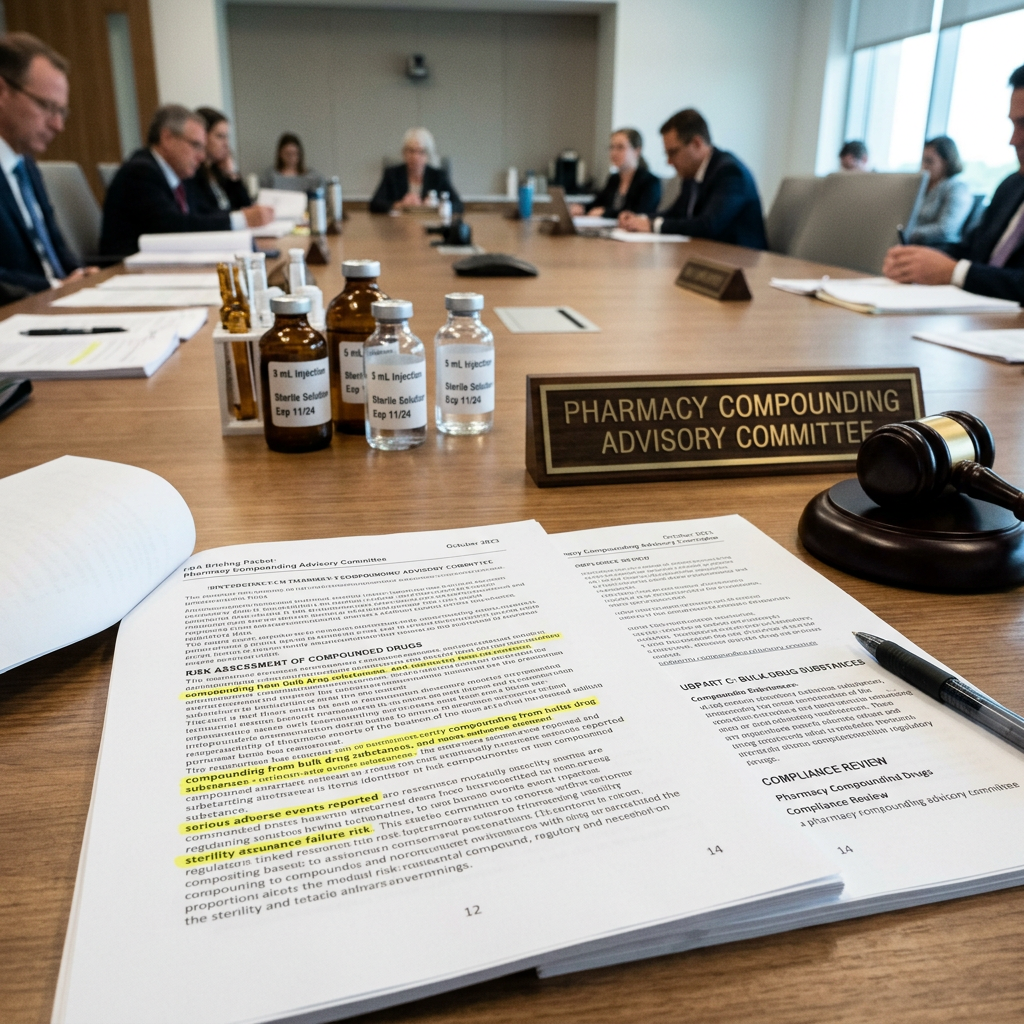
Generic and biosimilar pressure changes shape too. Sandoz's two abbreviated new drug applications for a generic tirzepatide, accepted by the FDA on June 29, target the same molecules that Bridge is now paying for at brand prices. If approved by the FDA in the standard ten-month window and if patent litigation resolves quickly, a generic launch in 2027 would land near the tail end of Bridge — either extending affordability past the program's expiration or providing the government with a lower-cost alternative for a successor benefit. The compounding market that grew during the shortage now faces two pressures at once: Bridge routes cash-pay seniors to FDA-approved products with insurance, and generics eliminate the shortage-based rationale that has kept some compounders operating.
What can go wrong in year one
Three failure modes are worth watching. The first is administrative bottleneck. Humana's 72-hour turnaround target on prior authorization assumes clean submissions from providers. Many primary care offices have not run this workflow before and will submit incomplete requests. Shauna Levy, medical director at Tulane's bariatric center, told CNBC her clinic began preparing weeks ago and still expected the process to be "potentially cumbersome." The number of physicians credentialed to prescribe for chronic weight management is small relative to the eligible population, and clinics that are already at capacity will not double it overnight.
The second is discontinuation. Caroline Apovian of Brigham and Women's Hospital has raised the concern that seniors who benefit from Bridge could lose access in December 2027 with no continuity plan. Semaglutide and tirzepatide are not curative — they are lifelong treatments in the same category as antihypertensives or statins. A hard sunset creates a public health cliff at the exact moment CMS will have accumulated the outcomes data that would justify a permanent benefit.
The third is off-ramp pricing. Bridge negotiates net prices below list, but exact figures have not been disclosed. If the program lapses and drug prices remain at current list levels, senior patients will face the same $1,000-per-month wall they faced before July. Novo and Lilly have both said publicly they support permanent Medicare coverage. Whether either company would voluntarily reduce list prices to preserve access if Congress does not act is a question no executive has answered.
Frequently Asked Questions
Who runs Medicare GLP-1 Bridge?
The Centers for Medicare and Medicaid Services is the sponsoring agency. CMS contracted Humana to serve as the central administrator, receiving and processing prior authorization requests from providers. Individual Part D plans are not involved in eligibility decisions under Bridge.
Do Medicare Advantage members qualify?
Yes, if the Medicare Advantage plan includes Part D prescription coverage. The Bridge program layers on top of Part D benefits and is available regardless of whether Part D is delivered through traditional Medicare or an MA plan.
How is the $50 copay different from ordinary Part D cost-sharing?
The Bridge copay is flat across all doses and does not scale with drug strength. It does not accumulate against the Part D deductible or the $2,100 annual out-of-pocket cap. Ordinary Part D cost-sharing for GLP-1s used for diabetes or cardiovascular indications is unchanged; Bridge applies only to prescriptions written for obesity.
Are compounded semaglutide or tirzepatide covered?
No. Bridge covers only the four brand-name FDA-approved products named in the program. Compounded versions of semaglutide and tirzepatide fall outside the benefit regardless of the price the compounding pharmacy charges.
What happens if a beneficiary already takes a GLP-1 for diabetes?
Beneficiaries currently covered for a GLP-1 through Part D for Type 2 diabetes, cardiovascular risk reduction, or moderate-to-severe obstructive sleep apnea continue through their existing coverage and do not qualify for Bridge. The program is designed for weight loss as a standalone indication.
Can a beneficiary switch from Wegovy to Zepbound under Bridge?
Yes, subject to prior authorization for the new drug. Providers can submit a switch request to Humana with clinical justification. There is no penalty or lockout for changing GLP-1s during the program period.
What happens after December 31, 2027?
The demonstration is currently scheduled to end. Continued coverage requires either congressional action to amend the Medicare Modernization Act's prohibition on weight-loss drug coverage, or CMS to launch a successor demonstration. As of this week, neither has been formally announced. The Trump administration has the authority to extend or replace Bridge before the expiration date.
Sources
- CNBC — Medicare will start covering obesity drugs for the first time. Here's what patients should know (June 30, 2026)
- Reuters via U.S. News — Older Americans left out of costly GLP-1 craze expected to flock to new program (July 1, 2026)
- Forbes — GLP-1 Access Program May Enable Affordable Access For Some On Medicare (July 1, 2026)
- Fox News — Big Medicare change slashes weight-loss drug costs for eligible seniors (July 1, 2026)
- CMS Innovation Center — Demonstration Models
- KFF — Medicare Program Analysis
Sources & References
- FDA PCAC Meeting Announcement (July 23-24, 2026)
- PBS: FDA to Weigh Easing Limits on Peptides Favored by RFK Jr.
- BioPharma Dive: FDA Peptides RFK Advisory Committee Restrictions
- RAPS: FDA Considers Adding a Dozen Peptides to Bulk Drug List
- Ars Technica: RFK Jr. Forces FDA to Reconsider 12 Peptides
- ProPublica: Peptide Safety Investigation
- New York Times: Peptide Ban FDA RFK Jr.
- SSRP Institute: FDA Announces Change in Status of 12 Peptides
- CNBC: RFK Jr. Peptides Hims Hers GLP-1
- USA Today: RFK Jr. FDA Peptides Explainer