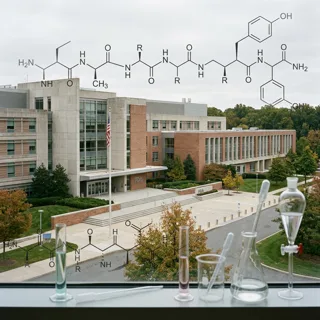
Dihexa
Also known as: PNB-0408, N-hexanoic-Tyr-Ile-(6) aminohexanoic amide
Overview
Dihexa is a synthetic small peptide derived from angiotensin IV, developed at Washington State University as a hepatocyte growth factor (HGF) mimetic. It has demonstrated extraordinary potency as a cognitive enhancer in rodent models — reportedly 7 orders of magnitude more potent than BDNF in promoting synaptogenesis. It has the key advantage of oral bioavailability and blood-brain barrier penetration, addressing two major limitations of most neuropeptides. Animal studies show reversal of cognitive deficits from Alzheimer's-like conditions to near-normal levels.
Mechanism of Action
Dihexa binds to hepatocyte growth factor (HGF) with high affinity, inhibiting HGF dimerization and acting synergistically with HGF to promote c-Met receptor signaling. The HGF/c-Met pathway drives: synaptogenesis (new synapse formation); dendritic spinogenesis; neuroplasticity via long-term potentiation (LTP) enhancement; and cell survival and migration. A 2014 study confirmed that HGF antagonist delivery blocked all procognitive effects of orally delivered dihexa, establishing HGF/c-Met as the essential pathway. Additionally activates PI3K/AKT signaling, reducing neuroinflammatory cytokines (TNF-α, IL-1β) and increasing anti-inflammatory IL-10.
Potential Benefits
- Reversal of cognitive deficits in Alzheimer's disease mouse models
- New synapse formation (synaptogenesis) in hippocampus
- Increased dendritic spine density
- Oral bioavailability with effective blood-brain barrier penetration
- Improved spatial learning and memory in aged animal models
- Reduction of neuroinflammation (TNF-α, IL-1β reduction)
- Recovery of long-term potentiation (LTP) in damaged neural circuits
Dosage Protocols
The following reflects doses used in published research studies. This is not medical advice. Consult a qualified healthcare professional.
| Typical Range | 10-20 mg/day (oral or topical); 1-5 mg/day subcutaneous |
| Beginner | 10 mg/day oral or topical |
| Intermediate | 15-20 mg/day oral |
| Advanced | 20 mg/day oral; or 2-5 mg/day subcutaneous |
| Cycle Duration | 4-8 weeks |
| Cycle Off | 4-8 weeks |
Dihexa is 10 million times more potent than BDNF in activating the HGF/MET signaling pathway for synaptogenesis. Very small doses are biologically active. Topical formulation (in DMSO) achieves CNS delivery. Oral bioavailability reasonable for a peptide due to small size and resistance to proteolysis.
Use our Reconstitution Calculator to determine exact syringe units for your protocol.
Routes of Administration
Oral (Sublingual/Capsule) Moderate — crosses blood-brain barrier
Can be taken orally due to metabolic stability. Typical dose 10–20 mg daily. Sublingual may improve bioavailability.
Subcutaneous Injection High — enhanced CNS penetration
Alternative for higher bioavailability. Typical dose 5–10 mg daily.
Intranasal Moderate-high — direct CNS delivery
Delivers peptide to brain via olfactory route, bypassing BBB limitations.
Read our full Routes of Administration Guide for detailed comparison of all delivery methods.
Stacking Protocols
Popular research stacks involving Dihexa:
Cognitive Recovery Stack
Maximum cognitive enhancement. Dihexa for synaptogenesis and HGF/c-Met activation, Semax for BDNF upregulation, Selank for anxiety reduction and focus.
Explore our complete Peptide Stacking Guide for more combinations and safety considerations.
Reconstitution
| Typical Vial Size | 5mg, 10mg |
|---|---|
| BAC Water | 1-2ml per 5mg vial; DMSO-based topical also common |
| Storage | Refrigerate at 2-8°C after reconstitution |
| Shelf Life | 28 days refrigerated; stable lyophilized at -20°C |
Need exact syringe measurements?
Amino Acid Sequence
N-hexanoic acid-Tyr-Ile-6-aminohexanoic acid amide (modified dipeptide derivative)
Side Effects & Safety
- Potential cancer risk via c-Met pathway (significant theoretical concern)
- No long-term human safety data
- Possible excessive neuroplasticity effects
- HGF/c-Met is a known oncogenic pathway — cancer risk not established but theoretically concerning
Safety & Contraindications
This information is for educational purposes only. Consult a qualified healthcare provider before using any peptide.
Pregnancy / Lactation
Bleeding Disorders
Active Skin Infection at Injection Site
Pharmacokinetics
| Half-Life | ~10-12 hours (oral, estimated) |
|---|---|
| Storage | Store at room temperature (15-25°C) in a dry, dark place. Keep tightly closed. Do not refrigerate capsules. |
Synergistic Compounds
The following compounds have been studied alongside Dihexa for potential complementary or synergistic effects:
Learn More
References & Further Reading
Latest News & Research
View all articles →
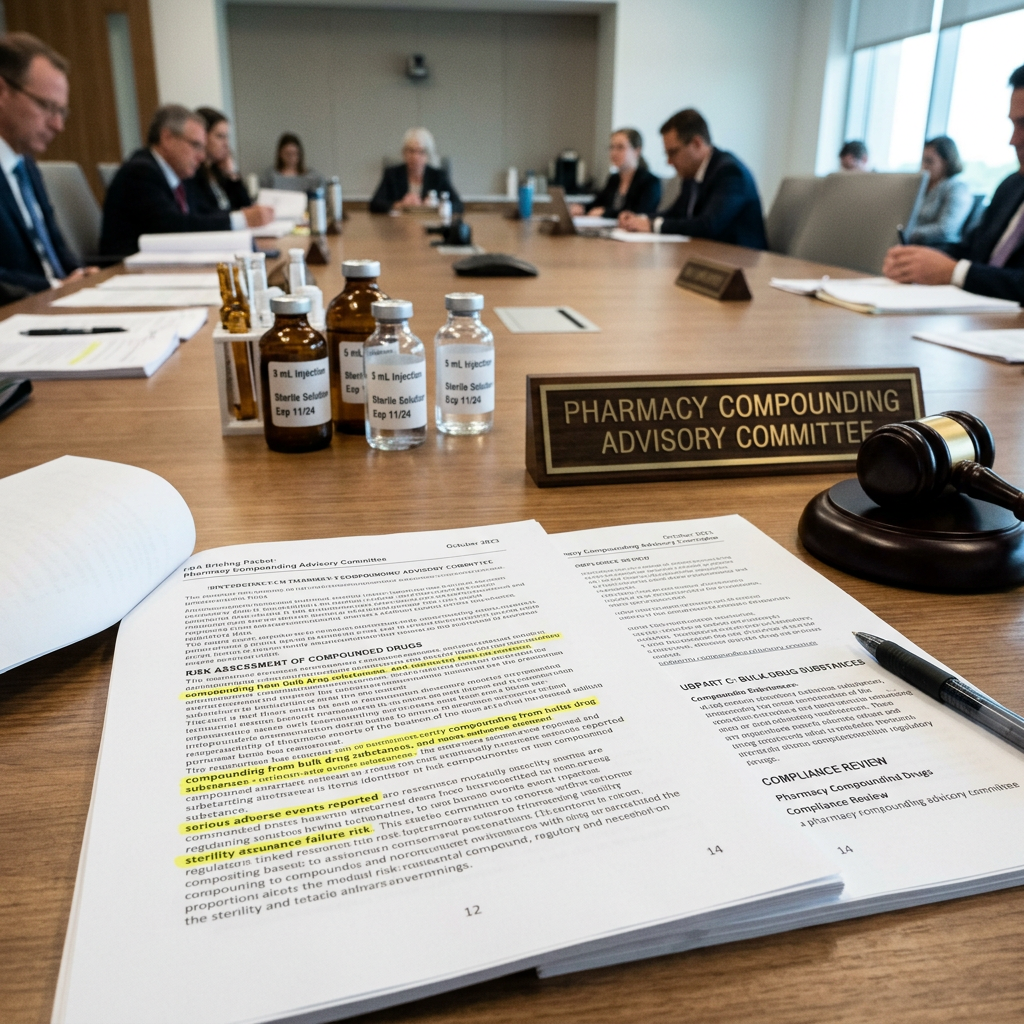
FDA Staff Reviewers Say ‘No’ to 7 Compounded Peptides Ahead of July PCAC Vote
FDA staff reviewers urged against adding seven popular peptides to the 503A bulks list ahead of the July PCAC meeting, citing weak human data and safety uncertainty.

FDA reviewers urge ‘no’ on BPC-157, TB-500, MOTS-c ahead of July 2026 compounding vote
FDA reviewers’ June 29 briefings recommend against listing seven popular peptides for 503A compounding, citing limited human data and immunogenicity risk.

Medicare Starts Paying for Obesity Drugs Today — Bridge Program Opens $50 Access for Millions
Medicare's new $50 Bridge program covering Wegovy, Zepbound, Foundayo, and oral Wegovy for obesity launched July 1 — the first Medicare weight-loss benefit.
FDA staff urges caution on compounded peptides ahead of July advisory meeting
Ahead of the July 23–24 Pharmacy Compounding Advisory Committee meeting, FDA staff briefings recommend against listing seven popular peptides for compounding.