Davunetide
Also known as: NAP, AL-108, NAPVSIPQ
Overview
Davunetide (NAP, NAPVSIPQ) is an 8-amino acid neuroprotective peptide derived from the activity-dependent neuroprotective protein (ADNP). It was first identified as a neuroprotective factor secreted by VIP-stimulated astrocytes and represents the shortest active fragment capable of protecting neurons. It has been characterized as the first drug to improve memory performance by targeting microtubule stability mechanisms underlying neurofibrillary tangles. Davunetide was studied in Phase II clinical trials for schizophrenia, Alzheimer's disease, and progressive supranuclear palsy (PSP).
Mechanism of Action
Davunetide protects neurons through microtubule stabilization — specifically preventing neurofibrillary tangle formation and repairing existing microtubule network damage. It reduces hyperphosphorylation of tau protein through modulation of PI3K/Akt, MAPK/ERK, and Src kinase signaling cascades. By stabilizing the cytoskeletal network, it preserves synaptic integrity and axonal transport, both critical for cognitive function. It also promotes neuritic outgrowth (70% increased axon length vs controls) and protects neurons against a broad range of toxins relevant to Alzheimer's and PSP.
Potential Benefits
- Microtubule stabilization preventing neurofibrillary tangle formation
- Reduction of tau hyperphosphorylation in multiple models
- Neuroprotection against diverse neurotoxins
- 70% increase in axon length versus controls in neuritic outgrowth studies
- Phase II improvements in verbal recall and visual working memory (digit span, delayed-match-to-sample)
- Significant functional capacity improvements in schizophrenia trial (UPSA scale)
- Intranasal delivery enabling non-invasive CNS delivery
Dosage Protocols
The following reflects doses used in published research studies. This is not medical advice. Consult a qualified healthcare professional.
| Beginner | 15 mg intranasal daily (single dose) |
| Intermediate | 15 mg 2x daily intranasal |
| Advanced | 30 mg 2x daily intranasal (clinical high dose) |
| Cycle Duration | 12-52 weeks in clinical trials |
Also known as NAP (Asn-Ala-Pro-Val-Ser-Ile-Pro-Gln) — an 8-aa fragment of ADNP. Failed Phase III for PSP.
Use our Reconstitution Calculator to determine exact syringe units for your protocol.
Routes of Administration
Intranasal Moderate CNS delivery
Clinical trial route. Administered via metered spray device.
Read our full Routes of Administration Guide for detailed comparison of all delivery methods.
Stacking Protocols
Popular research stacks involving Davunetide:
Neuroprotection Stack
Multi-mechanism neuroprotection: NAP stabilizes microtubules, Cerebrolysin provides trophic support, Semax boosts BDNF.
Explore our complete Peptide Stacking Guide for more combinations and safety considerations.
Reconstitution
| Storage | Refrigerate at 2-8°C after reconstitution |
|---|
For nasal peptides (Semax, Selank, PT-141 nasal), reconstitute in sterile saline and transfer to a metered nasal spray device.
Need exact syringe measurements?
Amino Acid Sequence
Asn-Ala-Pro-Val-Ser-Ile-Pro-Gln (NAPVSIPQ)
Side Effects & Safety
- Well-tolerated in Phase I/II studies
- No significant adverse events reported at clinical doses
- Mild nasal irritation with intranasal form
Safety & Contraindications
This information is for educational purposes only. Consult a qualified healthcare provider before using any peptide.
Pregnancy / Lactation
Bleeding Disorders
Active Skin Infection at Injection Site
Pharmacokinetics
| Half-Life | Not well characterized for this peptide; consult primary literature |
|---|---|
| Storage | Store lyophilized peptide at -20°C (long-term) or 2-8°C (short-term, under 30 days). Reconstituted: refrigerate at 2-8°C and use within 28-30 days. Protect from light. Do not freeze reconstituted solution. |
Synergistic Compounds
The following compounds have been studied alongside Davunetide for potential complementary or synergistic effects:
Learn More
References & Further Reading
Latest News & Research
View all articles →
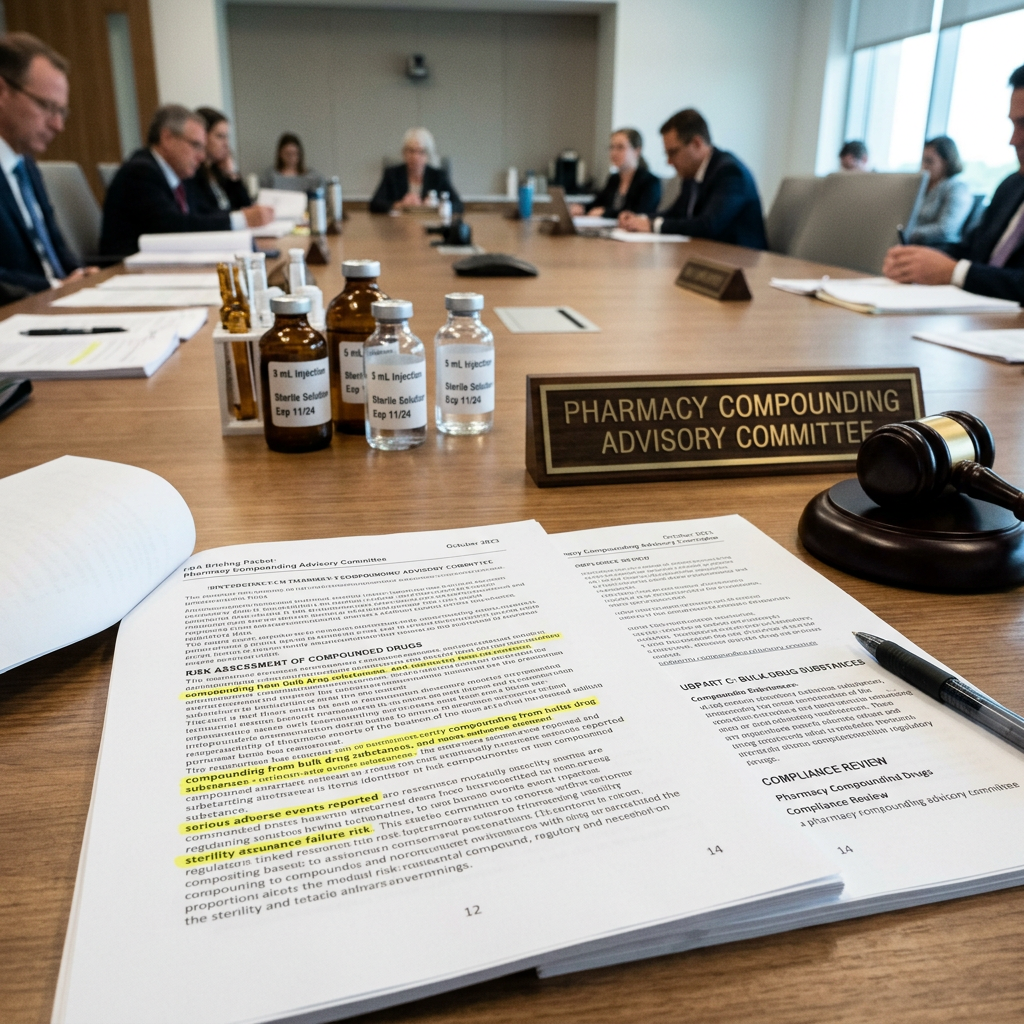
FDA Staff Reviewers Say ‘No’ to 7 Compounded Peptides Ahead of July PCAC Vote
FDA staff reviewers urged against adding seven popular peptides to the 503A bulks list ahead of the July PCAC meeting, citing weak human data and safety uncertainty.

FDA reviewers urge ‘no’ on BPC-157, TB-500, MOTS-c ahead of July 2026 compounding vote
FDA reviewers’ June 29 briefings recommend against listing seven popular peptides for 503A compounding, citing limited human data and immunogenicity risk.

Medicare Starts Paying for Obesity Drugs Today — Bridge Program Opens $50 Access for Millions
Medicare's new $50 Bridge program covering Wegovy, Zepbound, Foundayo, and oral Wegovy for obesity launched July 1 — the first Medicare weight-loss benefit.

FDA staff urges caution on compounded peptides ahead of July advisory meeting
Ahead of the July 23–24 Pharmacy Compounding Advisory Committee meeting, FDA staff briefings recommend against listing seven popular peptides for compounding.