What Happened (In One Minute)
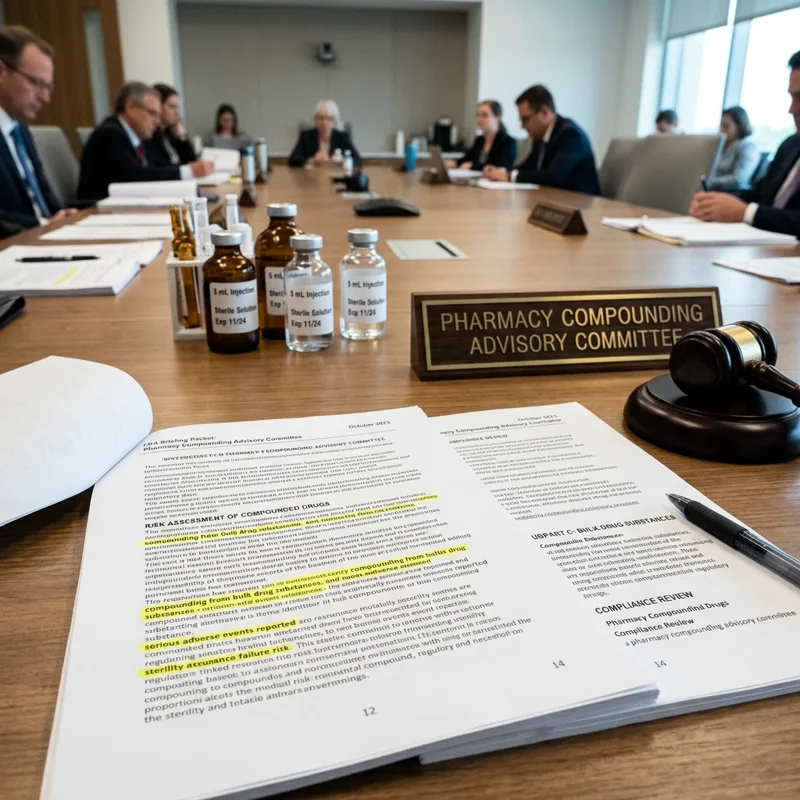
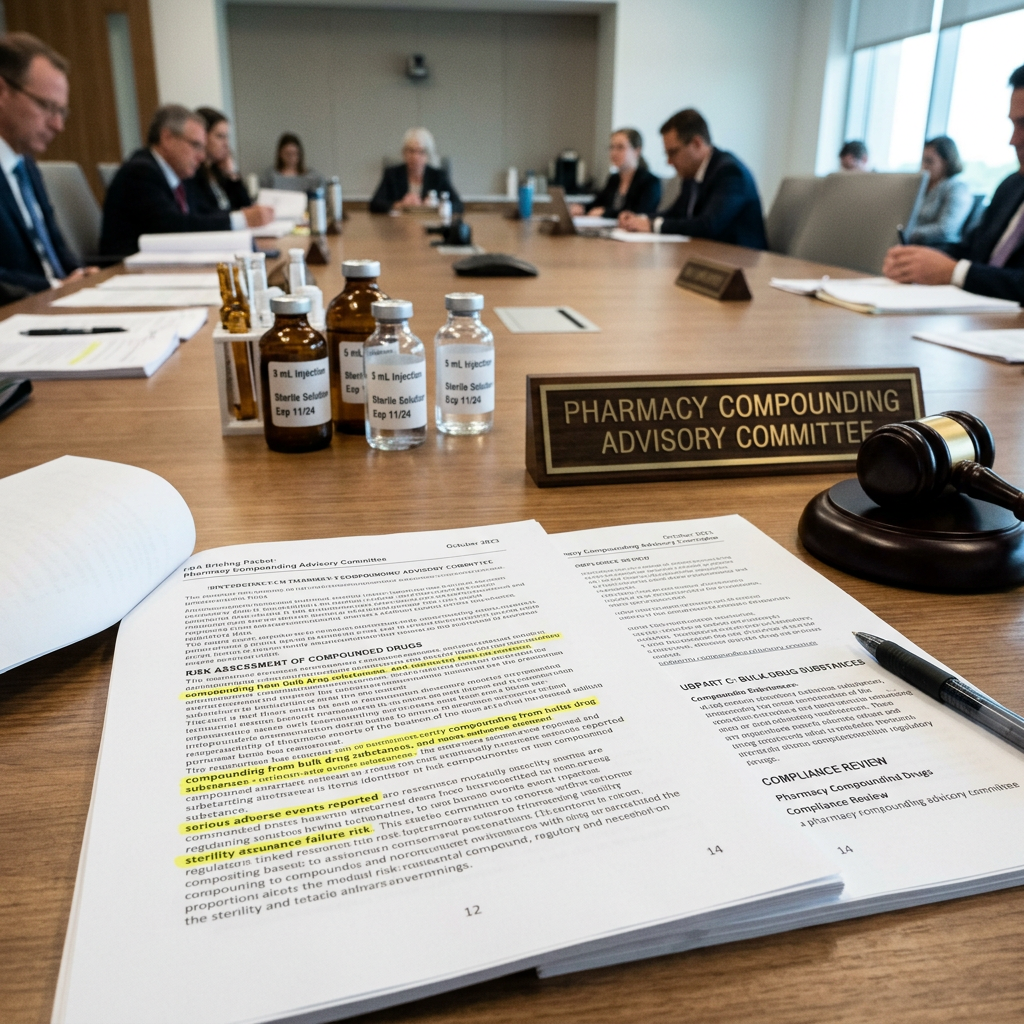
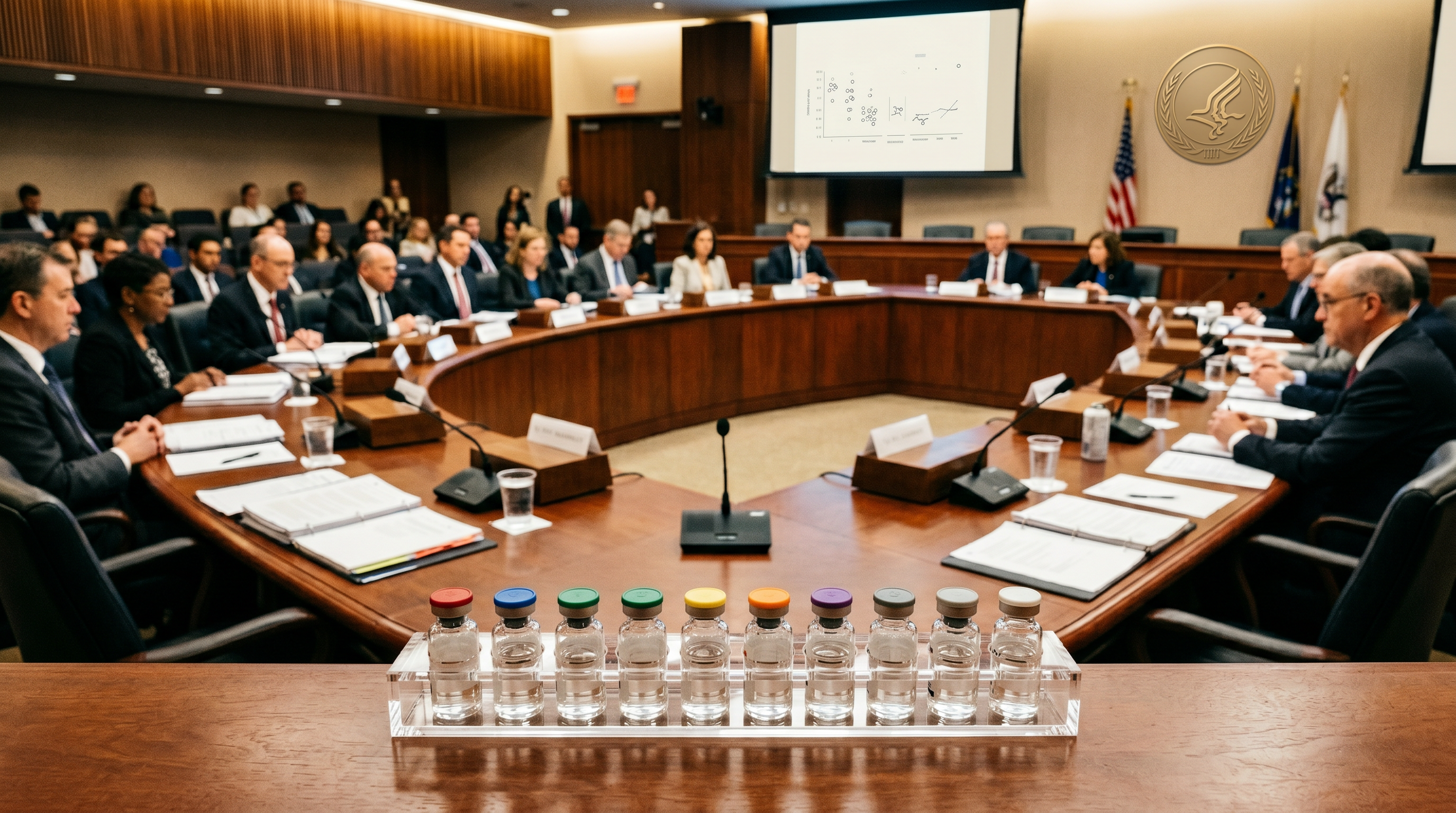
In mid-April 2026, the FDA published new details for a July 23–24, 2026 Pharmacy Compounding Advisory Committee (PCAC) meeting focused on whether several high-demand peptides should be eligible for compounding under section 503A.
The meeting agenda names seven peptides (and their free base/acetate forms) for discussion: BPC-157, KPV, TB-500, MOTS-C, emideltide (DSIP), Semax, and Epitalon.
Why this matters: PCAC deliberations are one of the few transparent windows into how the FDA evaluates peptide nominations for the 503A Bulks List—and they shape what state-licensed compounding pharmacies can legally prepare for individual patients.
Why This PCAC Meeting Is a Big Deal for Peptides
For years, “peptide therapy” has been a mix of legitimate, FDA-approved peptide drugs (like GLP-1s) and a much murkier ecosystem of off-label, compounded, or gray-market peptides.
In that environment, the 503A Bulks List is a key dividing line. If a bulk substance is on the list, it can be compounded by a state-licensed pharmacy under the conditions of 503A. If it isn’t, patient access tends to shift toward less regulated channels.
The July 2026 PCAC meeting is newsworthy because it combines three forces at once:
- Regulatory momentum around peptides in 2026, including renewed political attention and press coverage.
- Clear, peptide-by-peptide framing of the FDA’s reviewed uses (e.g., ulcerative colitis for BPC-157, wound healing for TB-500).
- A concrete public participation pathway, including a public docket and scheduled oral-comment windows.
PCAC, Explained: What the Committee Does (and Doesn’t Do)
The Pharmacy Compounding Advisory Committee (PCAC) is a group of external experts that advises the FDA on compounding-related questions. Its recommendations are non-binding, but historically the agency often follows advisory input.
In plain English: PCAC doesn’t “approve” peptides as drugs. PCAC helps the FDA decide whether a bulk substance may be appropriate to compound under a specific compounding pathway (like 503A).
The July 23–24, 2026 Agenda: Which Peptides Are Up First
According to the FDA’s posted agenda, the committee will cover the following nominated bulk drug substances for potential inclusion on the 503A Bulks List at its July 2026 meeting (FDA meeting page).
Day 1 (July 23): BPC-157, KPV, TB-500, MOTS-c
| Peptide (bulk substance) | PeptideKnow profile | Uses the FDA says it evaluated |
|---|---|---|
| BPC-157 (free base / acetate) | BPC-157 | Ulcerative colitis (UC) |
| KPV (free base / acetate) | KPV | Wound healing and inflammatory conditions |
| TB-500 (free base / acetate) | TB-500 | Wound healing |
| MOTS-c (free base / acetate) | MOTS-C | Obesity and osteoporosis |
Key nuance: these “uses evaluated” are not endorsements. They’re a clue to the evidence packages the FDA reviewed as part of the nomination process.
Day 2 (July 24): Emideltide (DSIP), Semax, Epitalon
| Peptide (bulk substance) | PeptideKnow profile | Uses the FDA says it evaluated |
|---|---|---|
| Emideltide (DSIP) (free base / acetate) | DSIP | Opioid withdrawal, chronic insomnia, and narcolepsy |
| Semax (free base / acetate) | Semax | Cerebral ischemia, migraine, and trigeminal neuralgia |
| Epitalon (free base / acetate) | Epitalon | Insomnia |
What To Watch Between Now and July
If you follow peptides for clinical practice, research, or policy, the details that tend to matter most won’t be headlines—they’ll be in the meeting materials and docket comments.
1) The background packages (posted shortly before the meeting)
The FDA says it intends to post background material and the live webcast link no later than two business days before the meeting (FDA meeting page).
2) The public docket and comment deadlines
The FDA lists a public docket for comments (docket number FDA-2025-N-6895) and says it will close on July 22, 2026 (FDA meeting page).
3) How the FDA frames “clinical need” vs. “drug approval”
A recurring confusion in peptide discussions is the difference between:
- “Appropriate for compounding” under 503A (a compounding pathway with its own legal criteria), and
- “Approved as safe and effective” via a full drug application (a much higher evidentiary bar).
The July meeting will likely sharpen that distinction, especially for peptides with strong popularity but limited human data.
Patient Safety Reality Check (and Why It Will Come Up)
Even if you support broader peptide access, the FDA and outside critics have repeatedly raised concerns about peptides that are widely marketed but lightly studied in humans.
Expect the July discussion to focus on:
- Identity and purity (how reliably the peptide can be characterized from bulk sources)
- Stability (shelf life, degradation products, storage conditions)
- Adverse event signals (especially when peptides spread through non-medical channels)
In other words, the debate may be less about whether peptides are “promising,” and more about whether they can be compounded in a way that’s reproducible and safe enough for real patients.
What This Means for Patients, Providers, and Compounders (Right Now)
For patients
- Don’t assume access changes immediately. A meeting notice and agenda are part of a longer administrative process.
- Watch for official updates (meeting materials, post-meeting summaries, and any follow-on FDA actions).
For clinicians
- Track the “uses evaluated.” They hint at the specific clinical contexts the FDA is weighing.
- Be cautious with claims. Popularity and mechanistic plausibility aren’t substitutes for controlled human data.
For compounding pharmacies
- Documentation and quality systems will matter. Public scrutiny tends to rise when high-demand compounds are discussed.
- Expect a long timeline. Even favorable committee input can take time to translate into durable policy.
FAQ: PCAC July 2026 Peptide Meeting
Is the FDA approving BPC-157 or TB-500 as drugs in July 2026?
No. The meeting is about whether certain peptide bulk drug substances should be considered for inclusion on the 503A Bulks List—a compounding pathway—not full FDA drug approval (FDA meeting page).
Which peptides are on the agenda?
The agenda lists BPC-157, KPV, TB-500, MOTS-c, emideltide (DSIP), Semax, and Epitalon (including free base and acetate forms) (FDA meeting page).
When does the public comment docket close?
The FDA says the docket closes on July 22, 2026 and references docket number FDA-2025-N-6895 (FDA meeting page).
What are the “uses evaluated” (like ulcerative colitis for BPC-157)?
They are the uses the FDA says it reviewed in connection with the nominated bulk substances for the meeting, not an endorsement or an indication of FDA approval (FDA meeting page).
Sources
- FDA — July 23–24, 2026: Meeting of the Pharmacy Compounding Advisory Committee
- Federal Register (April 16, 2026) — Pharmacy Compounding Advisory Committee; Notice of Meeting; Establishment of a Public Docket
- BioPharma Dive — “FDA moves toward easing restrictions on certain peptides”
- PBS NewsHour (AP) — “FDA to weigh easing limits on unproven peptides favored by RFK Jr. and MAHA supporters”
Sources & References
- FDA PCAC Meeting Announcement (July 23-24, 2026)
- PBS: FDA to Weigh Easing Limits on Peptides Favored by RFK Jr.
- BioPharma Dive: FDA Peptides RFK Advisory Committee Restrictions
- RAPS: FDA Considers Adding a Dozen Peptides to Bulk Drug List
- Ars Technica: RFK Jr. Forces FDA to Reconsider 12 Peptides
- ProPublica: Peptide Safety Investigation
- New York Times: Peptide Ban FDA RFK Jr.
- SSRP Institute: FDA Announces Change in Status of 12 Peptides
- CNBC: RFK Jr. Peptides Hims Hers GLP-1
- USA Today: RFK Jr. FDA Peptides Explainer