What Happened
Amylyx Pharmaceuticals opened a U.S. Expanded Access Program on May 5, 2026 for up to 250 adults with post-bariatric hypoglycemia after Roux-en-Y gastric bypass surgery. The drug is avexitide, an investigational, first-in-class glucagon-like peptide-1 receptor antagonist. It is being tested in the Phase 3 LUCIDITY trial (NCT06747468), with topline results expected in Q3 2026 and a possible commercial launch in 2027 if the data support approval.
The story matters for two reasons. First, avexitide would be the first FDA-approved therapy for post-bariatric hypoglycemia — a condition that affects an estimated 160,000 Americans and currently has no on-label treatment. Second, almost every GLP-1 peptide in clinical use today is a receptor agonist designed to amplify the GLP-1 signal: semaglutide, tirzepatide, liraglutide, exenatide, dulaglutide. Avexitide is the inverse molecule. It blocks the receptor. The same biology that makes weight-loss GLP-1 agonists work is the biology that, in PBH patients, drives a dangerous and recurring drop in blood sugar. Avexitide is built to silence it.
Key Facts
- Drug: Avexitide — first-in-class GLP-1 receptor antagonist (formerly Eiger BioPharmaceuticals' EXE-9-39)
- Sponsor: Amylyx Pharmaceuticals (NASDAQ: AMLX); acquired the asset from Eiger in July 2024
- Indication: Post-bariatric hypoglycemia following Roux-en-Y gastric bypass
- Phase 3 trial: LUCIDITY (NCT06747468), 78 participants, 21 U.S. sites, 16-week double-blind period plus 32-week open-label extension, 3:2 randomization to 90 mg subcutaneous daily vs placebo
- Primary endpoint: Reduction in composite of Level 2 and Level 3 hypoglycemic events through Week 16 (FDA-agreed)
- Topline data: Expected Q3 2026
- Expanded Access Program: Up to 250 adults, opened May 5, 2026; initial priority to LUCIDITY completers and prior-trial participants
- Regulatory designations: Breakthrough Therapy (PBH and congenital hyperinsulinism), Orphan Drug (hyperinsulinemic hypoglycemia), Rare Pediatric Disease (congenital HI)
- Phase 2b prior data (90 mg dose): 53% reduction in Level 2 hypoglycemia events (p=0.004); 66% reduction in Level 3 events (p=0.0003)
What Is Post-Bariatric Hypoglycemia
Post-bariatric hypoglycemia is a late complication of gastric bypass surgery, usually appearing one to three years after the operation. Patients have meals, then drop. Blood glucose can fall below 54 mg/dL within an hour or two of eating, and in severe cases the drop produces autonomic symptoms (sweating, palpitations, tremor) followed by neuroglycopenic symptoms (confusion, seizures, loss of consciousness, falls). Some patients lose the ability to drive. Some lose jobs. The condition is rare in absolute terms but disabling for the people who have it.
The mechanism is metabolic. After Roux-en-Y gastric bypass, food bypasses most of the stomach and the proximal small intestine and reaches the L-cells of the distal ileum and colon faster than it would in an unaltered gut. Those L-cells secrete GLP-1 in response to nutrient contact. The post-bypass GLP-1 surge is several times larger than it would be in a non-surgical patient. GLP-1 binds the GLP-1 receptor on pancreatic beta cells and drives insulin release. In a healthy gut, that pulse is matched to the meal. After RYGB, the pulse is exaggerated and mistimed. Insulin keeps dropping glucose well after the meal has been absorbed, and the patient becomes hypoglycemic.
There is no FDA-approved treatment. Dietary management — small frequent meals, low simple carbohydrates, complex carbohydrates first — is the standard recommendation. Off-label, clinicians have used acarbose, diazoxide, octreotide, somatostatin analogs, and in rare refractory cases reversal of the gastric bypass itself. None of these target the underlying GLP-1 hypersecretion. They mute its downstream effects, sometimes well, sometimes poorly. The FDA-recognized clinical need has been on the books since at least 2019, when avexitide first received Breakthrough Therapy designation under its prior owner, Eiger.
How Avexitide Works
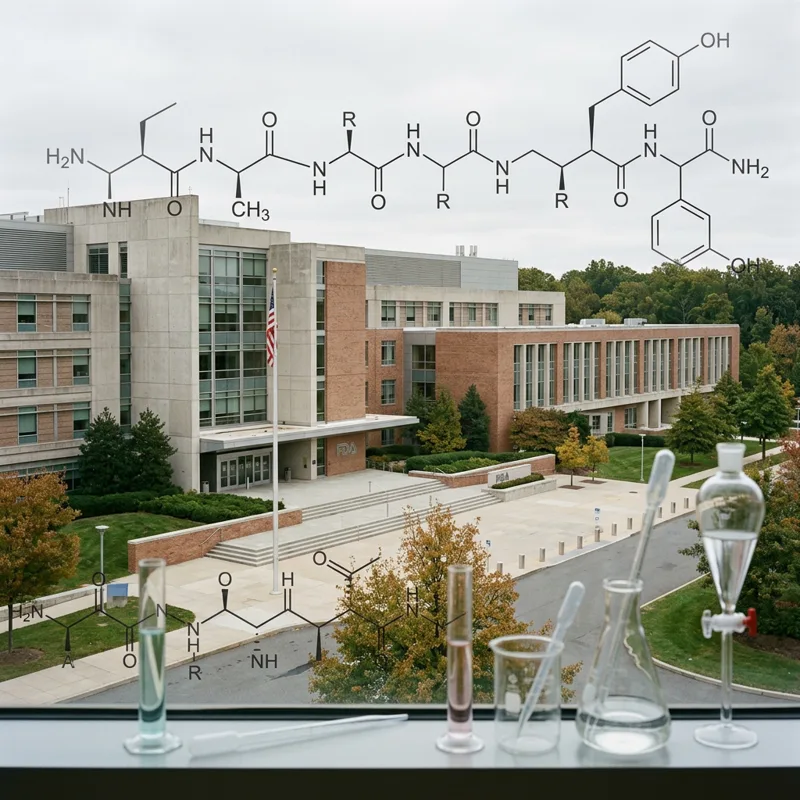
Avexitide is a 31-amino-acid peptide derived from exendin(9-39), a truncated fragment of the same Gila monster venom peptide that gave rise to exenatide. The full-length exendin-4 is a GLP-1 receptor agonist; remove the first eight residues and the molecule becomes an antagonist. It binds the GLP-1 receptor on pancreatic islet beta cells and prevents the receptor from coupling to its downstream Gs protein and cAMP signaling, the pathway that drives glucose-dependent insulin secretion. In a non-PBH person this would be unhelpful and mildly hyperglycemic. In a PBH patient with an exaggerated post-meal GLP-1 surge, blocking the receptor blunts the inappropriate insulin spike that follows. The blood glucose drop becomes a smaller, slower descent that does not cross the hypoglycemia threshold.
The dose in LUCIDITY is 90 mg subcutaneous once daily. Five Phase 1 and Phase 2 trials have been run on the molecule, and across two PBH Phase 2 trials at this dose Amylyx and the prior sponsor reported statistically significant reductions in Level 2 and Level 3 events. The Phase 2b 90 mg arm hit 53% reduction in Level 2 events and 66% reduction in Level 3 events, the latter at p=0.0003. The primary outcome in Phase 3 is the same composite. The endpoint was negotiated with FDA, which is why the wording in the protocol matches it precisely.
Pharmacologically the molecule is unusual. Most peptide drugs in metabolic disease either mimic an endogenous hormone (insulin, GLP-1 agonists, glucagon) or target a receptor that is itself responsive to a peptide hormone the body already makes. Antagonists at peptide hormone receptors are rare in clinical practice. The closest analog is somatostatin antagonism, which is a research tool more than a marketed drug. A successful Phase 3 readout for avexitide would be the first regulatory affirmation of GLP-1 receptor antagonism as a drug strategy — a category that has been theorized for years but never translated into a commercial product.
The LUCIDITY Trial
LUCIDITY enrolled 78 participants across 21 U.S. sites. Enrollment finished March 2026. The design is conventional for the indication: a six-week screening period that includes a three-week run-in to establish baseline hypoglycemia frequency, then a 16-week randomized double-blind treatment period at 3:2 to 90 mg avexitide subcutaneous daily versus placebo, then a 32-week open-label extension in which all participants who finish the double-blind period receive avexitide. The primary endpoint reads out at Week 16. Topline data are expected in Q3 2026.
Two design features deserve attention. The 3:2 randomization gives more participants active drug than placebo, which is conventional for orphan-disease trials where ethical and recruitment pressure favors active arms. The composite of Level 2 plus Level 3 hypoglycemia events as the primary endpoint, rather than a continuous glucose metric or an HbA1c-style time-averaged measure, reflects FDA's view that what matters in PBH is the clinical event itself, not the smoothed average. A drug that prevents the events is the drug that helps the patient.
The trial is small by metabolic-disease standards. Phase 3 GLP-1 agonist trials enroll thousands. PBH is rare, and the trial size reflects that. If the magnitude of effect seen in Phase 2b carries forward, the study should be adequately powered. If the Phase 3 effect is half the Phase 2b effect, the readout becomes ambiguous. This is the core risk every analyst tracking AMLX has flagged in the run-up to the readout.
The Expanded Access Program
Expanded access programs — sometimes called compassionate use — let patients with serious conditions and no satisfactory alternative receive an investigational drug outside a clinical trial, before approval. The FDA regulates these programs under 21 CFR 312.300, and Amylyx's program follows that framework. The size cap is 250 adults. Initial eligibility is restricted to patients who completed the LUCIDITY trial and to participants in a previous avexitide PBH study, which gives those individuals continuous access to the drug while they wait for a possible commercial launch. The program will then open to additional patients who meet the eligibility criteria.
For the patient population, the EAP is a meaningful change. PBH patients have been managing the condition for years on dietary modification and off-label medications. The trial-based access has been geographically narrow — 21 sites in a country of 50 states. The EAP widens that footprint and creates a regulatory pathway through which physicians who are not clinical trial investigators can prescribe avexitide.
For Amylyx, the EAP is also a calculated commercial move. It establishes prescriber familiarity with the product before approval. It generates dosing experience outside the trial protocol. It positions clinical centers that participate in the EAP as launch-readiness partners if the Phase 3 readout supports approval. None of those motivations are unusual; they are the standard playbook for a small biotech with a single Phase 3 asset, and they are the playbook every analyst expected Amylyx to run after the asset was acquired from Eiger.
The Amylyx Context
Amylyx is not a typical orphan-disease biotech. The company's first product, AMX0035 (Relyvrio/Albrioza), was approved for amyotrophic lateral sclerosis in 2022 and withdrawn from the U.S. and Canadian markets in 2024 after the confirmatory Phase 3 PHOENIX trial missed its primary endpoint. The withdrawal was a public and painful event for the company and for the ALS community, and it reset Amylyx's pipeline. The avexitide acquisition closed in July 2024, two months after the AMX0035 withdrawal, and it gave Amylyx a Phase 3-ready asset in a different therapeutic area with a different efficacy track record.
The first quarter 2026 financial results, released May 7, framed avexitide as the company's near-term value driver. Cash runway was reaffirmed into the topline readout. NDA-readiness work is underway. The expanded access program announcement five days earlier was timed to that same investor narrative: Amylyx is a different company than the one that withdrew Relyvrio, and avexitide is the asset that makes that case. Whether the market accepts the case will depend on what Q3 looks like.
One detail worth flagging. The asset's prior owner, Eiger BioPharmaceuticals, filed for Chapter 11 bankruptcy in April 2024. The avexitide sale to Amylyx was a court-supervised transaction. That history matters because it explains why a Phase 3-ready first-in-class molecule with FDA Breakthrough designation was available to a small acquirer at all. The drug had survived a sponsor failure, and the new sponsor inherited both the regulatory work and the obligation to take it across the finish line. The Q3 readout is, in that sense, the last act of a development program that began at Eiger in the late 2010s and has been carried forward by two different companies in two different financial postures.
What This Means If The Trial Reads Out Positive
A positive LUCIDITY readout would do three things at once. It would deliver the first FDA-approved therapy for post-bariatric hypoglycemia, a population that has been managing without one for two decades. It would validate GLP-1 receptor antagonism as a drug class, opening the door to second-generation antagonists for related hyperinsulinemic conditions, including congenital hyperinsulinism, where avexitide already holds Breakthrough designation. And it would shift Amylyx from a one-and-done company with a withdrawn product into a company with a first-in-class commercial asset and a platform thesis around peptide hormone modulation in metabolic disease.
A negative or ambiguous readout would have a different shape. The asset's Phase 2 history is unusually clean for a small-molecule peptide program; if Phase 3 misses, the most likely cause is a placebo response that is higher than the Phase 2 placebo arms saw, which is a known failure mode in symptom-driven trials. Even in that case, the open-label extension would generate continued data, and a partial signal could support a smaller subgroup analysis that the FDA might consider for orphan approval. PBH is rare enough that regulatory flexibility is on the table. None of that is guaranteed; a clean miss is a clean miss. But the all-or-nothing framing some sell-side analysts have used understates how much room there is between Q3 topline and final regulatory disposition.
Frequently Asked Questions
Is avexitide a GLP-1 like Ozempic or Wegovy?
It targets the same receptor — the GLP-1 receptor — but it does the opposite thing. Ozempic and Wegovy are semaglutide, which is an agonist; it binds the receptor and turns it on. Avexitide is an antagonist; it binds the receptor and blocks signaling. In a healthy person, blocking GLP-1 would do almost nothing useful and might cause mild post-meal glucose elevation. In a person with post-bariatric hypoglycemia, where the GLP-1 signal is itself the problem, blocking it is therapeutic. The drugs are pharmacological mirror images.
Can I take avexitide if I am on a GLP-1 weight-loss drug?
Patients on semaglutide or tirzepatide for obesity or type 2 diabetes are not the population this drug is for. The two classes of drugs work in opposite directions; co-administration would be pharmacologically self-defeating. The eligible population is adults with post-bariatric hypoglycemia following Roux-en-Y gastric bypass, and the EAP eligibility criteria reflect that.
How is post-bariatric hypoglycemia different from regular hypoglycemia?
Regular hypoglycemia in someone without surgery is most often related to insulin therapy in diabetes or to a fasting state. PBH is a postprandial syndrome. The drop happens after eating, particularly after high-glycemic-load meals, and it is driven by an exaggerated hormonal response to nutrient delivery in a surgically rerouted gut. The treatments differ. Glucose tablets address the symptom but not the underlying pathology; avexitide is intended to address the pathology.
When could avexitide actually be available by prescription?
If LUCIDITY reads out positive in Q3 2026, Amylyx has stated that commercial launch is anticipated in 2027. That timeline assumes a positive readout, NDA submission, and FDA review under the Breakthrough Therapy framework, which often shortens review timelines for indications without alternatives. Outside of approval, the Expanded Access Program is the route by which adults with PBH following RYGB can potentially receive the drug now.
How do I find an Expanded Access site?
Amylyx has not yet published a public site list. Patients and physicians can ask the LUCIDITY trial site network, contact Amylyx Patient Services, or work through their endocrinologist or bariatric surgery program. Expanded Access programs are administered through individual physicians, who must apply on the patient's behalf, and not through self-enrollment.
Does avexitide help with weight loss?
It is not designed to. Blocking the GLP-1 receptor would, if anything, blunt the appetite-suppressing effect of endogenous GLP-1. Patients on the EAP and in LUCIDITY are being treated for hypoglycemia, not for weight management.
Sources
- Amylyx Pharmaceuticals Reports First Quarter 2026 Financial Results (May 7, 2026)
- Amylyx Pharmaceuticals Announces U.S. Expanded Access Program for Avexitide (Stock Titan, May 5, 2026)
- Amylyx Announces Completion of Enrollment in Pivotal Phase 3 LUCIDITY Trial (March 24, 2026)
- Amylyx Announces Pivotal Phase 3 LUCIDITY Trial Design (December 4, 2024)
- ClinicalTrials.gov: Avexitide for Treatment of Post-Bariatric Hypoglycemia (NCT06747468)
- Endocrine News — Pharma Friday, May 8, 2026
- Amylyx Announces Acquisition of Phase 3-Ready Avexitide (July 10, 2024)
This article is informational and not medical advice. Consult an endocrinologist or bariatric medicine specialist about post-bariatric hypoglycemia diagnosis and treatment options.
Sources & References
- FDA PCAC Meeting Announcement (July 23-24, 2026)
- PBS: FDA to Weigh Easing Limits on Peptides Favored by RFK Jr.
- BioPharma Dive: FDA Peptides RFK Advisory Committee Restrictions
- RAPS: FDA Considers Adding a Dozen Peptides to Bulk Drug List
- Ars Technica: RFK Jr. Forces FDA to Reconsider 12 Peptides
- ProPublica: Peptide Safety Investigation
- New York Times: Peptide Ban FDA RFK Jr.
- SSRP Institute: FDA Announces Change in Status of 12 Peptides
- CNBC: RFK Jr. Peptides Hims Hers GLP-1
- USA Today: RFK Jr. FDA Peptides Explainer