
April 29, 2026 — A press release from FormBlends says it has published a “2026 State of Peptides and GLP-1 Regulation” report, framing the next year as a collision between a fast-moving obesity-drug pipeline and slower, process-heavy FDA decisions about what can be compounded.
The company is not the regulator. But the report is useful because it does two things the public conversation often doesn’t: it separates short-term enforcement realities from longer-term rulemaking, and it tries to anchor hype with concrete identifiers—trial program names and ClinicalTrials.gov numbers—so readers can check what’s real and what’s marketing.
What the report claims—and why it matters
FormBlends says its report maps how policy signals from HHS leadership and FDA’s drug center (CDER) could affect access to peptide therapies and GLP-1–class weight-loss drugs through the end of the decade. That’s a big promise. The near-term value is narrower: it’s a single document that lists the next wave of obesity candidates (including multi-agonist incretins) alongside a narrative about compounding policy and “Category 2” peptides.
The claim to treat carefully is the implicit one: that regulatory momentum equals near-term legal availability. It usually doesn’t. The U.S. compounding framework is built around lists, exemptions, and enforcement priorities, not broad “permission.” That’s why the details matter.
The policy backdrop: GLP-1 supply, compounding, and the rules that still apply
Even when social media frames this as “FDA vs. peptides,” the practical regulatory fights are typically about exemptions: what a pharmacy can do under section 503A (patient-specific prescriptions) versus what an outsourcing facility can do under 503B (batch production with additional restrictions).
In early April, FDA published a statement clarifying its policies for compounders as national GLP-1 supply begins to stabilize. The agency reiterated that compounded drugs must meet conditions to qualify for exemptions under 503A/503B, and it noted that semaglutide and tirzepatide did not appear on the 503B bulks list and were not on the drug shortage list at the time of that update. That kind of language is dry, but it’s the scaffolding that determines what’s legal and what triggers enforcement.
For readers trying to separate “gray market” from regulated pathways, the important point is that availability is not a single switch. It’s a set of gates. And the gates differ depending on whether you’re talking about a compounded copy of an FDA-approved GLP-1 product, or a peptide that has never been approved but is being nominated for a bulk substances list.
Peptides under discussion: what people ask about vs. what’s actually on the table
FormBlends’ press release lists several peptides it says have been treated as “Category 2” (raising significant safety concerns) since 2023, including BPC-157, TB-500 (thymosin beta-4), KPV, Semax, and Epithalon. Those names are familiar because they’ve become a proxy for the broader debate: if these can be compounded, does that legitimize the broader peptide market?
One sober way to frame it: the FDA process is trying to decide, peptide by peptide, whether there’s a basis to allow compounding under specific statutory conditions—not whether peptides as a category are “good” or “bad.” That makes the next year less like a referendum and more like an audit.
Why category labels are not the whole story
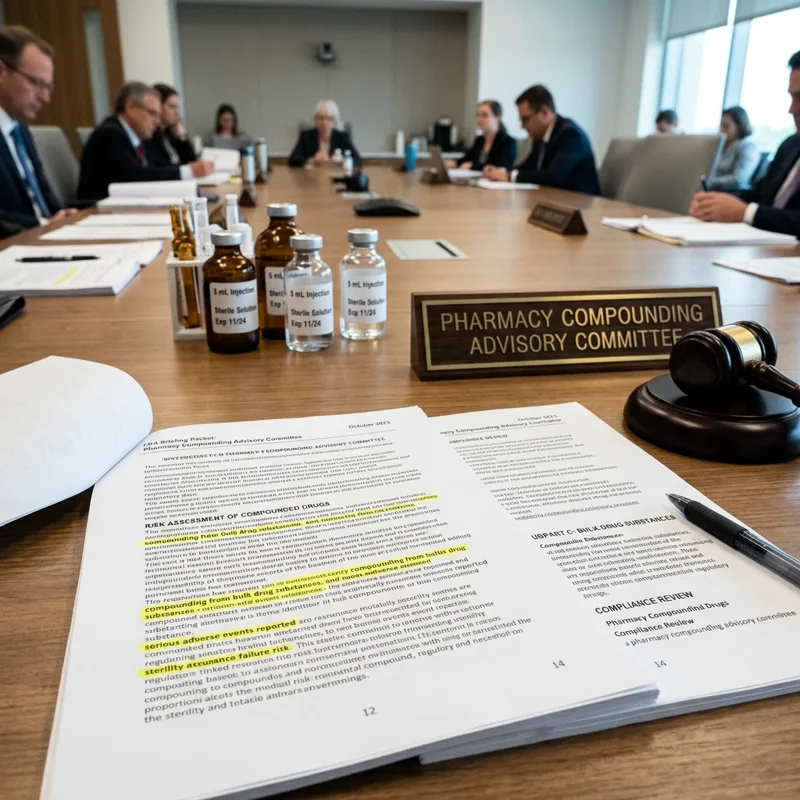
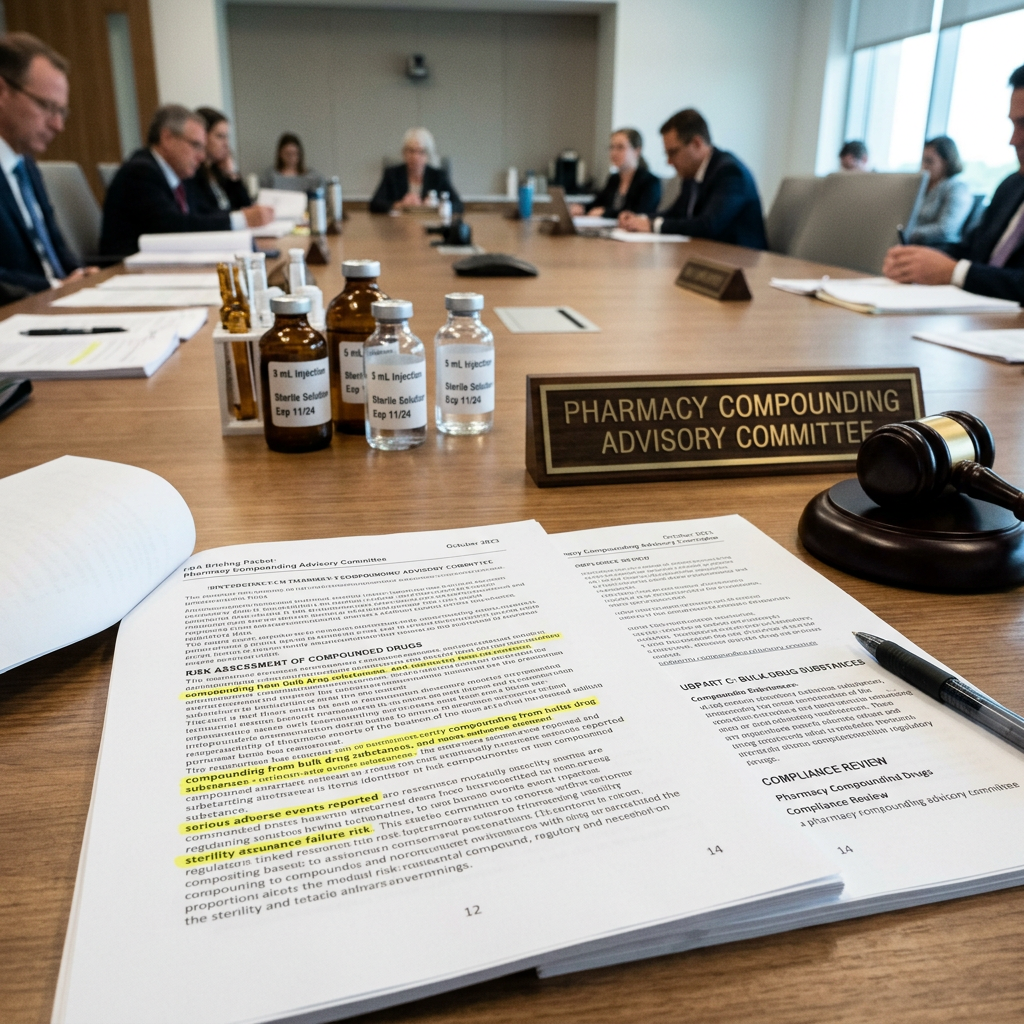
“Category” language gets repeated in headlines because it’s easy. But category status is only one step in a longer sequence that can include advisory committee discussion, recommendations, and potentially rulemaking. The timeline is measured in months to years.
Meanwhile, the health risks don’t pause. If demand shifts into unregulated channels, quality failures become more likely: incorrect dosing, impurities, or mislabeled peptides. That risk exists regardless of whether a peptide becomes legal to compound later.
The GLP-1 pipeline: why the next 18 months could change pricing and behavior
FormBlends’ release emphasizes that semaglutide and tirzepatide won’t be the only reference points for much longer. It highlights a crowded obesity pipeline across multiple “tiers,” from triple agonists (like GLP-1/GIP/glucagon candidates) to amylin analogs and other mechanisms.
For patients, the practical question isn’t the taxonomy. It’s whether more competition reduces the incentives that have fueled off-label prescribing, cross-border sourcing, and compounder demand. For regulators, the question is whether a shifting market makes enforcement easier or harder.
A checkable way to read pipeline claims: follow the trial IDs
When a press release includes ClinicalTrials.gov identifiers, it gives readers a way to verify status, endpoints, and sponsors. The FormBlends release names multiple trial identifiers (for example NCT06077864 and NCT06309992 in its discussion of survodutide programs). Treat these as starting points: read inclusion criteria, primary endpoints, and dates before assuming a result means approval—or even success.
Some “GLP-1 pipeline” headlines also mix peptides and non-peptides. For example, oral small-molecule GLP-1 agonists are not peptides. That distinction matters for manufacturing, cold-chain logistics, and potentially supply stability—and therefore for the economic pressure on compounding.
What to watch next (and what not to assume)
Watch:
- FDA public communications (statements, dockets, advisory committee schedules) that clarify how 503A/503B policies will be applied as shortages change.
- Trial readouts and safety signals for next-generation obesity candidates—especially discontinuation rates and neurological or sensory adverse events, which can shape labeling and uptake.
- Market behavior: whether price and access improve enough that the incentive to seek compounded “copies” shrinks, independent of any peptide-specific policy shift.
Don’t assume:
- That a peptide discussed in a report is legal to compound today.
- That a “pipeline” candidate is a peptide—or that it’s close to approval—without checking the phase and endpoints.
- That looser access automatically solves quality problems. It can shift where those problems show up.
Related reading on PeptideKnow
- PeptideKnow News — FDA, compounding, and policy explainers.
- Weight loss & metabolic — peptides and peptide-like therapies discussed in metabolic health.
- BPC-157, KPV, Semax, Epithalon, MOTS-c, LL-37
Frequently Asked Questions
Is the FormBlends report an FDA document?
No. It’s an industry report described in a FormBlends press release. Treat it as a curated lens, not an authority.
Does “Category 2” mean a peptide is permanently banned?
Not necessarily. Category status reflects FDA’s view of safety concerns in a specific compounding context, and it can change through FDA’s processes. But changes typically take time and may still require rulemaking.
Are all GLP-1 drugs peptides?
No. Some GLP-1 medicines are peptide drugs (like semaglutide). Some newer oral GLP-1 options are small molecules, not peptides. The distinction affects manufacturing and supply constraints.
Can compounding pharmacies legally sell semaglutide or tirzepatide right now?
Legality depends on multiple conditions under sections 503A and 503B, FDA’s shortage determinations, and whether a product is essentially a copy of a commercially available drug. FDA’s statements on compounder policies provide the clearest high-level guidance, but individual scenarios can differ.
Sources (primary)
- FormBlends (press release): FormBlends Publishes 2026 State of Peptides Report (Apr 28, 2026)
- FDA (statement): FDA clarifies policies for compounders as national GLP-1 supply begins to stabilize (Apr 1, 2026)
Sources & References
- FDA PCAC Meeting Announcement (July 23-24, 2026)
- PBS: FDA to Weigh Easing Limits on Peptides Favored by RFK Jr.
- BioPharma Dive: FDA Peptides RFK Advisory Committee Restrictions
- RAPS: FDA Considers Adding a Dozen Peptides to Bulk Drug List
- Ars Technica: RFK Jr. Forces FDA to Reconsider 12 Peptides
- ProPublica: Peptide Safety Investigation
- New York Times: Peptide Ban FDA RFK Jr.
- SSRP Institute: FDA Announces Change in Status of 12 Peptides
- CNBC: RFK Jr. Peptides Hims Hers GLP-1
- USA Today: RFK Jr. FDA Peptides Explainer