What Happened
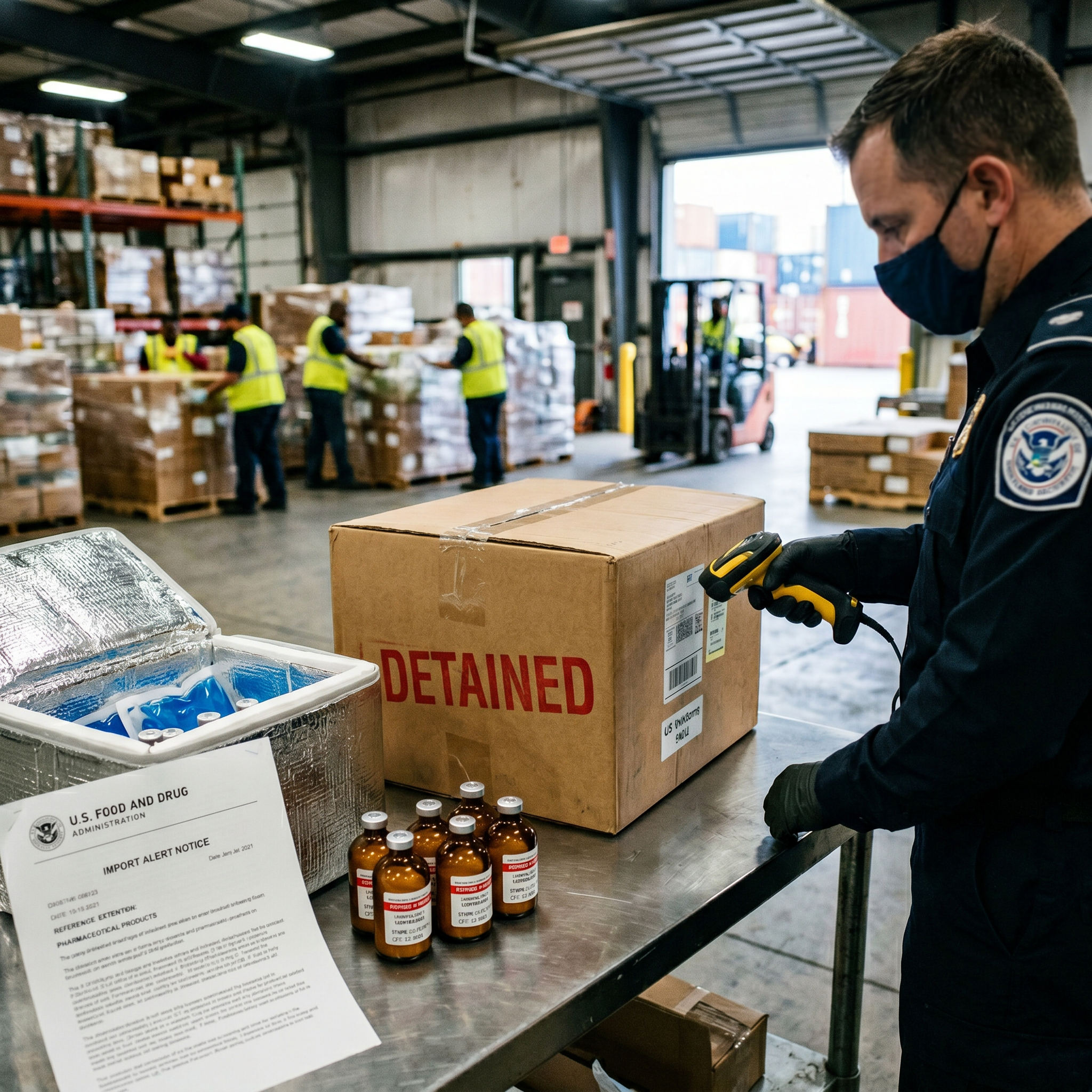
The FDA has updated Import Alert 66-80, “Detention Without Physical Examination (DWPE) of Drug Products Containing GLP-1 Receptor Agonists and Certain Peptide Drug Products,” naming by drug substance semaglutide, tirzepatide, liraglutide, exenatide, dulaglutide, and retatrutide as well as broader peptide drug product codes (FDA Import Alert 66-80).
In plain English: shipments in those categories can now be detained at US ports of entry without the FDA physically inspecting them first. The agency is treating certain foreign manufacturers and shippers as high-risk for adulteration and violations of current good manufacturing practice (CGMP) under Section 801(a)(3) of the FD&C Act, and is pre-authorizing import detention on paperwork alone.
The Fast Version
- Named API substances under DWPE: semaglutide, tirzepatide, liraglutide, exenatide, dulaglutide, retatrutide.
- Scope also includes certain peptide drug product and bulk drug substance codes beyond the six named GLP-1s — meaning the import friction reaches well past GLP-1s into the broader research-peptide API trade.
- DWPE = guilty until proven innocent. Importers must affirmatively rebut the alert with documentation (COAs, CGMP evidence, manufacturer registration, testing data) before product is released. Shipments do not get inspected and then cleared; they get held and the burden is on the importer.
- Who is most affected: 503A compounding pharmacies and 503B outsourcing facilities importing bulk API; telehealth clinics sourcing compounded GLP-1s via those pharmacies; research-peptide resellers importing bulk substance; any entity buying from a manufacturer that appears on the Red List.
- What this is not: a ban on semaglutide, tirzepatide, or any approved FDA drug. Branded finished products (Ozempic, Wegovy, Mounjaro, Zepbound, etc.) are imported through the manufacturers’ established regulatory pathways and are not the target of this alert.
What “Detention Without Physical Examination” Actually Means
DWPE is an administrative tool FDA uses when it believes a particular product, manufacturer, or country poses enough risk that physical sampling of every shipment is not a good use of inspector time. Instead, the agency publishes an Import Alert, which field personnel at ports of entry are authorized to act on without further headquarters approval.
Practically, when a shipment matches an entry on the alert’s Red List (manufacturers and products flagged as violative), CBP and FDA import staff detain the shipment. The importer then has a window to submit evidence showing the product does not in fact appear to be adulterated. Acceptable evidence typically includes:
- A Certificate of Analysis (COA) from a qualified lab verifying identity, potency, impurities, and endotoxin levels.
- Evidence that the foreign manufacturer is registered with FDA under Section 510 of the FD&C Act and is operating under CGMP.
- For bulk drug substances, documentation that the API is not a new drug being imported for commercial distribution absent an NDA/ANDA/IND.
- Chain-of-custody records from origin to port.
Importers can also petition to be added to the Green List, which exempts specific importer/manufacturer/product combinations from detention. That process takes months and requires a sustained record of compliance.
Why GLP-1 Peptides, and Why Now
The GLP-1 compounded market exploded in 2023–2025 during the official FDA drug shortage declarations for semaglutide and tirzepatide. During shortage, Section 503A pharmacies are permitted to compound essentially-copies of commercially available drugs. When the shortages resolved in late 2024 and early 2025, the legal runway for compounded GLP-1s narrowed, but bulk API was still flowing in from foreign manufacturers — including many that had never been inspected by FDA investigators.
A 2025 wave of FDA warning letters targeting compounders and telehealth GLP-1 marketing set the enforcement tone. The new import-level action closes the loop: rather than chase each domestic pharmacy or telehealth promoter, FDA is choking off the upstream API supply at the port. That is cheaper, scales better, and is harder to litigate around because import admissibility is procedurally much friendlier to the agency than domestic enforcement.
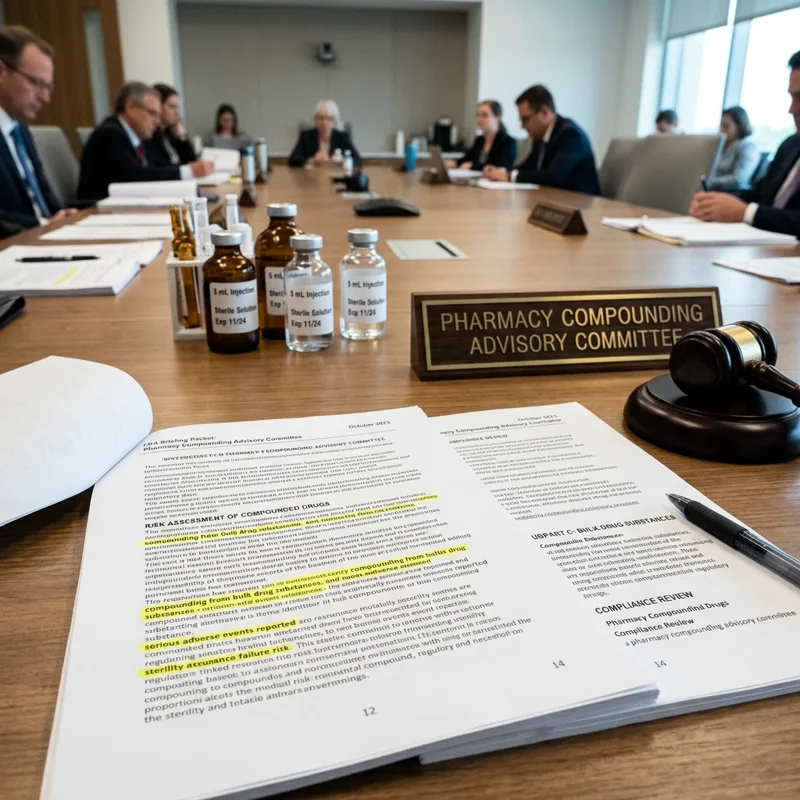
It also dovetails with the broader peptide-compounding policy arc we covered in FDA’s Peptide Rally Update: Supply Chain and Enforcement Are the Real Bottlenecks and the upcoming PCAC July 2026 meeting on BPC-157, TB-500, and related peptides.
What Is (and Isn’t) in Scope
Likely In Scope
- Bulk semaglutide, tirzepatide, liraglutide, exenatide, dulaglutide, retatrutide API powder imported for compounding or resale.
- Finished drug products containing any of those six GLP-1 agonists when imported from a non-approved manufacturer.
- Peptide product-code categories adjacent to the GLP-1 family — the alert language is broader than just the named six, and peptide API importers in unrelated categories should check whether their product codes are enumerated.
- Shipments from manufacturers named on the alert’s Red List, regardless of the specific substance.
Not In Scope
- Branded finished products imported by the originator manufacturer under an approved NDA (Ozempic, Wegovy, Mounjaro, Zepbound, Trulicity, Byetta, Saxenda, etc.).
- Pharmaceutical-grade semaglutide produced domestically by FDA-registered facilities with current CGMP compliance.
- Clinical trial material imported under an IND, which has its own regulatory path.
- Research chemicals clearly labeled and imported under research-use-only exemptions — although those carry their own legal risk and are not a workaround for a clinical supply problem.
Practical Compliance Checklist
If you source, compound, dispense, or resell any GLP-1 or peptide API affected by this alert, run through this before your next purchase order ships.
- Check the Red List. Pull the current manufacturer and product-code list from Import Alert 66-80 directly and cross-reference every active supplier.
- Confirm FDA registration. Every foreign manufacturer you buy from should be registered under Section 510 and listed in FDA’s Drug Establishments Current Registration Site (DECRS). No registration, no import.
- Obtain a current COA for every lot, from a qualified independent lab when possible. Include identity by mass spec, HPLC potency, related substances, endotoxin, and microbial limits.
- Document CGMP. Request the most recent third-party GMP audit report and Quality Management System summary. If the manufacturer will not share them, treat that as a Red Flag in its own right.
- Document the chain of custody. Origin, shipper, cold-chain logs (GLP-1 peptides are heat-sensitive), customs broker, storage — a clean paper trail is what gets a detained shipment released.
- Know your exit plan. If a shipment is detained, you have a short window to respond to the Notice of FDA Action. Have counsel and your testing lab already lined up.
- For 503A compounders, remember that bulk compounding of a commercially available drug without a shortage declaration is itself an enforcement target. A clean import paper trail does not cure a downstream 503A violation.
- For telehealth operators, audit your marketing claims. The GLP-1 warning-letter wave was driven heavily by unsubstantiated weight-loss claims and clinic-level promotions, not only the product itself.
What This Signals About the Enforcement Trajectory
Three observations are worth pulling out.
First, FDA is moving upstream. The agency has learned that playing whack-a-mole with individual compounders and telehealth advertisers is slow and reputationally expensive. Import-level action is faster, cheaper, and has a much higher success rate at administrative review. Expect the peptide and semaglutide supply chain to absorb most of the near-term enforcement pressure, not the marketing end.
Second, “API-grade” is becoming a threshold question. Until now, many compounders could plausibly say they did not know the ultimate provenance of their bulk API. Post-alert, that defense is weaker: a published Import Alert with a named Red List is constructive notice. Due diligence is no longer optional.
Third, this is a template. FDA can and likely will extend the same import-alert approach to other non-GLP-1 peptides if compliance deteriorates. Operators working with BPC-157, TB-500, MOTS-C, Semax, and other Category 2 peptides should assume their supply chain is the next to be scrutinized, especially in the run-up to the July 2026 PCAC meeting.
What to Watch Next
- Red List updates. Import Alerts are living documents. New manufacturers get added monthly. Subscribe to alert change notifications or poll the page weekly.
- First detained-shipment case studies. Industry counsel and trade press will start reporting specific detentions within 30–60 days. Watch which countries and specific manufacturers are surfacing.
- Follow-on warning letters. FDA typically pairs an import-level action with a domestic enforcement campaign. Expect new warning letters to compounders and telehealth clinics citing Import Alert 66-80 as context.
- PCAC July 23–24, 2026. If the FDA Pharmacy Compounding Advisory Committee signals additional peptide-category restrictions, expect a parallel import alert for those substances.
PeptideKnow’s Take
This is the most operationally consequential FDA peptide action of the month. It does not change statutory law, does not require new rulemaking, and took only a Red List update to go live. Its practical effect, however, is to make it meaningfully harder to sustain a bulk-API compounded GLP-1 business without clean documentation — and by extension, harder for the telehealth layer that depends on that supply.
If you are a patient currently receiving compounded GLP-1 therapy: ask your prescriber and pharmacy where their API comes from, whether that manufacturer is on the current Red List, and whether they have independent COAs on file. Those are reasonable questions, and the answers are informative.
If you are on the supplier or pharmacy side: the period of ambient tolerance is over. Documentation and provenance are now table stakes.
Frequently Asked Questions
Does Import Alert 66-80 ban semaglutide or tirzepatide in the US?
No. Branded finished products manufactured by the originator companies (Novo Nordisk for semaglutide, Eli Lilly for tirzepatide, etc.) are not affected. The alert targets bulk API imports and finished products from non-compliant foreign manufacturers, which primarily feed the compounded and research-peptide markets.
Will my compounded GLP-1 prescription stop working?
The prescription itself is unchanged. What may change is whether your pharmacy can continue to source the bulk API it uses to compound your dose. Pharmacies buying from manufacturers on the Red List will need to switch suppliers or stop offering the compounded product.
Can an importer get a shipment released after it’s detained?
Yes — by submitting evidence (COA from a qualified lab, FDA registration proof, CGMP documentation, chain of custody) that rebuts the presumption of adulteration. The burden is on the importer and the review typically takes days to weeks.
What is the Green List?
The Green List is an exception to the import alert: specific importer/manufacturer/product combinations that FDA has determined are low-risk and should not be detained. Getting on the Green List typically requires a sustained compliance record and a formal petition.
Does this affect peptides like BPC-157 or TB-500?
Not directly — those are not GLP-1 agonists. But the alert also covers “certain peptide drug products” by product code, and the regulatory posture signals that FDA is willing to use import-level tools for peptides in general. Compounders of BPC-157 and TB-500 should expect similar scrutiny, especially ahead of the July 2026 PCAC meeting.
Is there a legal way to import peptide API for research?
Research-use-only material imported under the correct customs classification and with proper labeling is a different regulatory category, but it is not a workaround for clinical supply and the “research use only” label does not shield downstream therapeutic use. For clinical research, an IND is the proper path.
Sources
- FDA Import Alert 66-80: Detention Without Physical Examination of Drug Products Containing GLP-1 Receptor Agonists and Certain Peptide Drug Products
- Federal Food, Drug, and Cosmetic Act — Section 801 (Imports)
- FDA Drug Establishments Current Registration Site (DECRS)
- FDA: Frequently Asked Questions About Drug Shortages
- FDA Warning Letters Database
- PeptideKnow: Supply Chain and Enforcement Are the Real Bottlenecks (Apr 22, 2026)
Sources & References
- FDA PCAC Meeting Announcement (July 23-24, 2026)
- PBS: FDA to Weigh Easing Limits on Peptides Favored by RFK Jr.
- BioPharma Dive: FDA Peptides RFK Advisory Committee Restrictions
- RAPS: FDA Considers Adding a Dozen Peptides to Bulk Drug List
- Ars Technica: RFK Jr. Forces FDA to Reconsider 12 Peptides
- ProPublica: Peptide Safety Investigation
- New York Times: Peptide Ban FDA RFK Jr.
- SSRP Institute: FDA Announces Change in Status of 12 Peptides
- CNBC: RFK Jr. Peptides Hims Hers GLP-1
- USA Today: RFK Jr. FDA Peptides Explainer