Liraglutide
Also known as: Victoza, Saxenda, NN2211
Overview
Liraglutide is an FDA-approved GLP-1 receptor agonist peptide with 97% structural homology to human GLP-1, modified with a fatty acid side chain enabling self-aggregation and albumin binding for extended half-life (~13 hours). Approved for type 2 diabetes (Victoza, 2010) and obesity (Saxenda, 2014), it was the pioneering GLP-1 agonist demonstrating meaningful cardiovascular risk reduction (LEADER trial: 13% reduction in MACE). Its relatively shorter half-life than semaglutide requires daily dosing, but it established the GLP-1 class as cardiovascular-protective weight loss agents.
Mechanism of Action
Liraglutide activates GLP-1R on pancreatic beta-cells (glucose-dependent insulin secretion), alpha-cells (glucagon suppression), brain (hypothalamic satiety centers, dopamine reward pathways), heart (direct cardioprotection via RISK pathway), and kidney (GFR preservation). The central effects on arcuate nucleus reduce food intake and energy intake, contributing to 8% average weight loss in clinical trials. Cardioprotection involves reduced inflammation, improved endothelial function, and direct myocardial GLP-1R signaling.
Potential Benefits
- FDA-approved for T2D (Victoza) and obesity/weight management (Saxenda)
- ~8% average weight loss in obesity trials
- 13% reduction in cardiovascular events (LEADER trial)
- HbA1c reduction ~1.5% in T2D
- Kidney disease protection in diabetic patients
- Established long-term cardiovascular safety data (3 years)
- Also studied in non-alcoholic fatty liver disease
Dosage Protocols
The following reflects doses used in published research studies. This is not medical advice. Consult a qualified healthcare professional.
| Beginner | 0.6 mg daily for 1 week (titration to reduce GI side effects) |
| Intermediate | 1.2-1.8 mg daily (T2D as Victoza) |
| Advanced | 3.0 mg daily (obesity as Saxenda) |
| Cycle Duration | Chronic for T2D/obesity |
Titrate weekly by 0.6 mg to reduce nausea. Inject abdomen, thigh, or upper arm.
Use our Reconstitution Calculator to determine exact syringe units for your protocol.
Routes of Administration
Subcutaneous Injection (pen) ~55%
Pre-filled multi-dose pen. Rotate between abdomen, thigh, and upper arm.
Read our full Routes of Administration Guide for detailed comparison of all delivery methods.
Stacking Protocols
Popular research stacks involving Liraglutide:
Obesity + Insulin Sensitizer
Common combination for T2D/obesity. Liraglutide 1.8-3.0 mg daily + metformin 500-2000 mg daily.
Explore our complete Peptide Stacking Guide for more combinations and safety considerations.
Reconstitution
| Storage | Before first use: refrigerate 2-8°C. After first use: room temperature (<30°C) for up to 30 days. |
|---|
No reconstitution needed. Dispose of pen 30 days after first use.
Need exact syringe measurements?
Amino Acid Sequence
34-amino acid GLP-1 analog with C16 fatty acid at Lys26 via glutamic acid spacer
Side Effects & Safety
- Nausea, vomiting, diarrhea (dose-dependent)
- Pancreatitis risk (rare)
- Gallbladder disease
- Thyroid C-cell tumors in animal models
- Injection site reactions
- Tachycardia
Safety & Contraindications
This information is for educational purposes only. Consult a qualified healthcare provider before using any peptide.
Personal or Family History of Medullary Thyroid Carcinoma or MEN 2
Pregnancy / Lactation
Bleeding Disorders
Active Skin Infection at Injection Site
Drug Interactions
- Oral Medications (general):
FDA Safety Information
FDA Boxed Warning: Risk of thyroid C-cell tumors. Contraindicated in patients with personal or family history of medullary thyroid carcinoma (MTC) or Multiple Endocrine Neoplasia syndrome type 2 (MEN 2).
Pharmacokinetics
| Half-Life | ~13 hours |
|---|---|
| Storage | Pens: refrigerate 2-8°C before first use; room temperature (up to 30°C) up to 30 days after first use. Do not freeze. |
Synergistic Compounds
The following compounds have been studied alongside Liraglutide for potential complementary or synergistic effects:
Learn More
References & Further Reading
Latest News & Research
View all articles →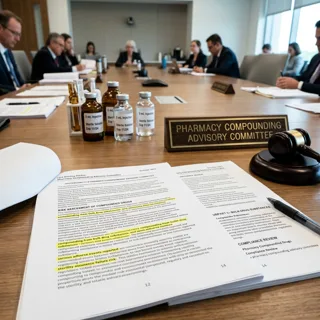
FDA Staff Reviewers Say ‘No’ to 7 Compounded Peptides Ahead of July PCAC Vote
FDA staff reviewers urged against adding seven popular peptides to the 503A bulks list ahead of the July PCAC meeting, citing weak human data and safety uncertainty.

FDA reviewers urge ‘no’ on BPC-157, TB-500, MOTS-c ahead of July 2026 compounding vote
FDA reviewers’ June 29 briefings recommend against listing seven popular peptides for 503A compounding, citing limited human data and immunogenicity risk.

Medicare Starts Paying for Obesity Drugs Today — Bridge Program Opens $50 Access for Millions
Medicare's new $50 Bridge program covering Wegovy, Zepbound, Foundayo, and oral Wegovy for obesity launched July 1 — the first Medicare weight-loss benefit.

FDA staff urges caution on compounded peptides ahead of July advisory meeting
Ahead of the July 23–24 Pharmacy Compounding Advisory Committee meeting, FDA staff briefings recommend against listing seven popular peptides for compounding.