Editor’s note: This article covers U.S. FDA regulatory process and pharmacy compounding policy. It is not medical advice and does not recommend or endorse any compounded product.
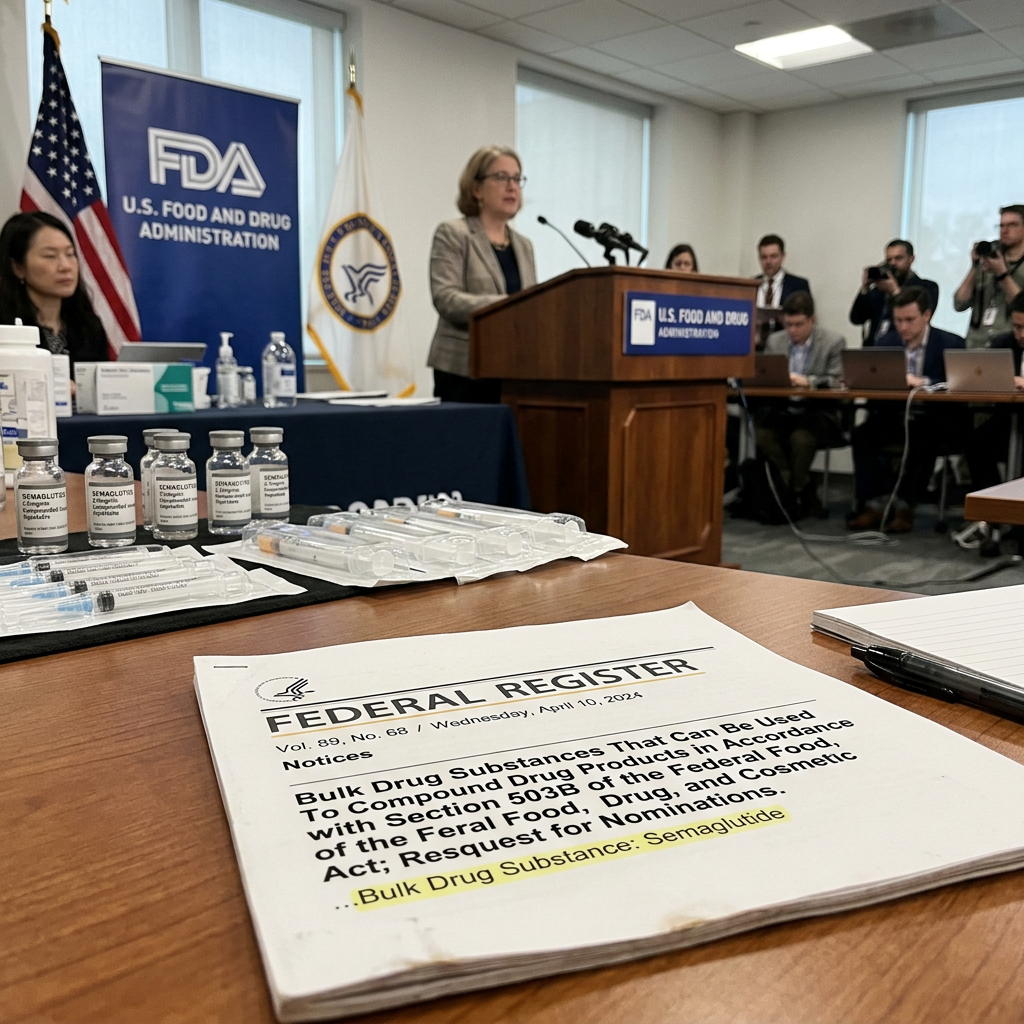
The FDA has put a bright procedural spotlight on three of the most sought-after peptide-adjacent drugs in the U.S. weight-loss market. In a new proposal, the agency said it is considering excluding semaglutide, tirzepatide, and liraglutide from the Section 503B “bulks list”—a move that matters because the 503B list is one of the few pathways outsourcing facilities can use to compound from bulk active ingredients when certain legal conditions are met. The FDA’s stated reason is blunt: after reviewing the nominations, it did not identify a clinical need for outsourcing facilities to compound these drugs from bulk substances and is opening a public comment period through June 29, 2026.
For patients, clinicians, and the peptide-curious internet economy, this is less a single headline than a boundary marker. It signals how the FDA wants the next phase of GLP-1-era compounding to look: narrower, more docket-driven, and less tolerant of “research use only” marketing that reads like consumer drug promotion.
What the FDA actually proposed (and why it’s not just bureaucracy)
On April 30, 2026, the FDA announced it is proposing to exclude semaglutide, tirzepatide, and liraglutide from the 503B bulks list, explaining that the agency did not identify a clinical need for outsourcing facilities to compound these substances from bulk. In the same announcement, the FDA restated a core rule: in most cases, outsourcing facilities can’t compound from bulk unless the substance is on the 503B bulks list or the drug is on the FDA’s shortage list at the time of compounding, distribution, and dispensing.
The commissioner’s quote in the release reads like a message to both industry and the courts: “When FDA-approved drugs are available, outsourcing facilities cannot lawfully compound using bulk drug substances unless there is a clear clinical need.”
Two points are easy to miss if you only read the first paragraph:
- This is a proposal, not a final decision. The FDA is inviting comments and will consider them before making a final determination.
- The mechanism is “clinical need,” not popularity or price. The standard the FDA is leaning on is patient safety and medical necessity as defined under the statute.
If you operate in a world where “peptides” often means gray-market vials, that language may sound remote. It isn’t. This is the FDA describing the evidentiary bar for allowing compounding from bulk for blockbuster incretin drugs—under a process that produces a public docket, an administrative record, and a paper trail that enforcement can cite later.
Why the 503B bulks list matters to peptide and compounding news
Section 503B governs “outsourcing facilities,” a category created to allow certain compounders to produce sterile drugs at scale under specific conditions. The 503B bulks list is the roster of bulk drug substances these facilities may use for compounding when the statute’s conditions are satisfied. Most patients never hear that phrase. They experience it indirectly: availability, pricing, and what shows up in telehealth ads.
GLP-1 medicines are not “peptides” in the research-chemical sense, but the market behavior around them—online ordering, reconstitution culture, social media dosing chatter—has dragged them into the same conversation as injectable peptides. The regulatory treatment is different. The enforcement posture, though, is starting to rhyme.
For readers tracking peptide regulation, the larger story is that FDA is tightening the vocabulary: bulk substance, clinical need, shortage list, intended use. Those terms decide what’s lawful long before a warning letter lands in someone’s inbox.
The June 29 comment deadline: what stakeholders can realistically influence
The FDA is inviting interested parties to submit comments electronically through the docket until June 29, 2026. In practical terms, the record built in that period is what the agency points to when it explains its final determination—especially if that determination is challenged.
What moves an agency record isn’t outrage; it’s evidence that maps to the FDA’s stated standard. If the FDA is saying it did not see a clinical need, the only credible way to push back is to supply clinical and operational specifics: patient subsets, access constraints, documented discontinuations, formulation needs that approved products don’t meet, and safety data that addresses the agency’s likely concerns about variability and sterility.
Compounding stakeholders have made a related point in other peptide contexts: even if FDA opened a pathway, the upstream supply chain (registered manufacturers, certificates of analysis, pharmaceutical-grade sterile inputs) can be a rate-limiting step. That argument doesn’t guarantee a policy outcome. But it does show how the debate is shifting from vibes to infrastructure.
What this could mean for outsourcing facilities and telehealth compounding
There are two ways to misread the proposal.
First misread: “This ends all compounding.” It doesn’t. The FDA itself notes that outsourcing facilities can compound from bulk in limited circumstances, including when a drug is on the shortage list. That pathway has been central to the GLP-1 era. The question is how much room remains if the agency formally concludes there is no clinical need for these substances on the 503B bulks list.
Second misread: “This is only about semaglutide and tirzepatide.” The bigger signal is procedural. The FDA is building an administrative record about what counts as clinical need and reminding the market that “available FDA-approved drugs” changes the legal calculus.
For telehealth brands that have relied on consumer-style marketing language, the incentive shift is obvious: any claim that makes a product sound like a substitute for an approved drug invites the FDA to interpret the product’s intended use as a drug for humans, with all the regulatory consequences that follow.
The parallel crackdown: “Research Use Only” doesn’t inoculate marketing
If the 503B proposal is the policy track, FDA warning letters are the enforcement track—and in 2026 the agency has been unusually explicit about how it reads online peptide marketing.
In a March 31, 2026 warning letter to Gram Peptides, the FDA said it reviewed the company’s website and observed it offered products labeled as “Retatrutide” and “Tirzepatide,” alongside bacteriostatic water for injection. The agency said the products were unapproved new drugs and emphasized a point that shows up again and again in peptide enforcement: even with “Research Use Only” disclaimers, other website statements can establish intended use for humans. The letter also underscored the agency’s public-health concern about injectable drug products, noting they bypass key defenses and can pose risks of serious harm.
That logic matters for anyone watching peptides because it’s portable. It doesn’t only apply to GLP-1s. It applies to any vendor whose product page reads like a dosing guide, a weight-loss pitch, or a disease-treatment claim with a wink.
What peptide clinics and consumers should take from this
In the clinic, policy shifts land as patient questions: “Will this still be available?” “Is my vial legal?” “Should I switch?” A responsible answer starts with separating three buckets that the internet often blends:
- Approved drugs (like branded semaglutide/tirzepatide/liraglutide products) with labeled indications and regulated supply chains.
- Compounded preparations produced under 503A/503B frameworks, where legality depends on details like shortage status, ingredient sourcing, and the compounding pathway.
- Gray-market “research” vials marketed with disclaimers but often described in ways that suggest human use—an enforcement magnet.
If your interest in “peptides” comes from the broader metabolic space, it’s also worth understanding what the GLP-1 family actually is at a biological level. GLP-1 itself is a peptide hormone; the drug versions are engineered analogs. Some people also ask about retatrutide because it shows up in online sales even though it has investigational-drug status in the U.S. Another common point of confusion is that tirzepatide is often discussed like a generic “peptide,” when its lawful distribution depends on drug-approval and compounding rules that are stricter than most supplement narratives.
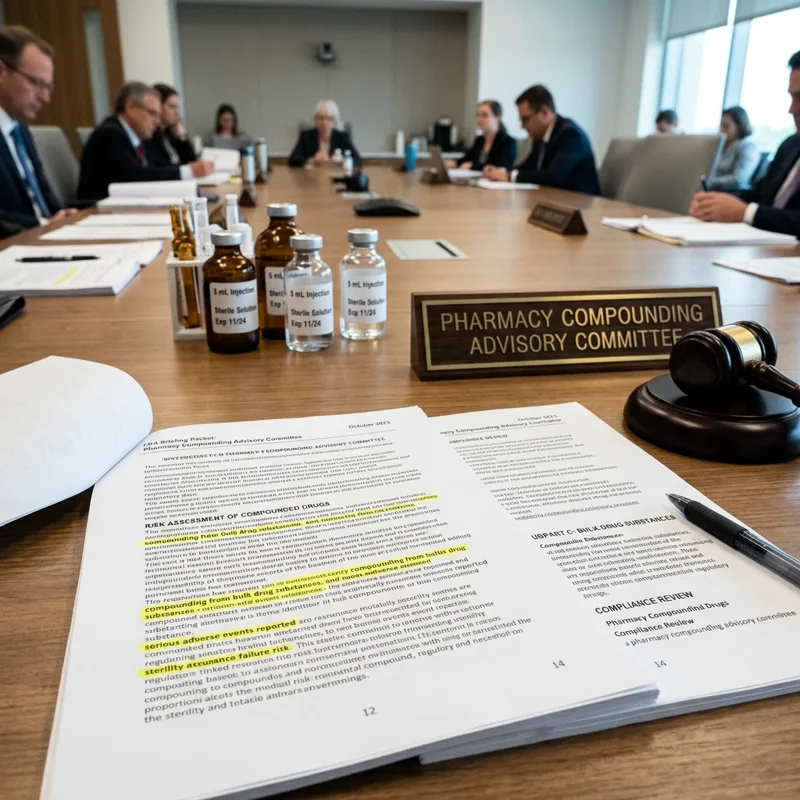
Separately, readers trying to understand what the FDA has been doing with “traditional” peptides may want background on the agency’s 503A discussions and the Pharmacy Compounding Advisory Committee (PCAC) process, which has been active in evaluating certain peptide bulk substances. See: weight loss & metabolic and related compounds.
What to watch next (the practical checklist)
Over the next several weeks, these are the developments most likely to change the story:
- Docket activity and stakeholder comments ahead of June 29, especially evidence framed around “clinical need.”
- Shortage-list changes for GLP-1 products, which can alter compounding pathways independent of the 503B bulks list.
- Additional FDA enforcement aimed at promotional claims and “intended use,” including for sellers using “research only” language while describing human outcomes.
It’s tempting to turn this into a morality play about access. The FDA is doing something more specific: building a record that narrows what it considers legally defensible compounding when FDA-approved drugs are available. Whether the market adjusts by improving compliance or by moving faster into the shadows will be the real test.
Frequently Asked Questions
Does the FDA proposal immediately ban compounded semaglutide or tirzepatide?
No. The FDA described the action as a proposal and opened a public comment period through June 29, 2026. The agency said it will consider submitted comments before making a final determination.
What is the 503B bulks list in plain language?
It’s the list of bulk drug substances that outsourcing facilities may use for compounding under the conditions of Section 503B. If a substance isn’t on the list, compounding from bulk is generally not allowed unless another statutory pathway applies (such as a relevant shortage condition).
Why does the FDA keep focusing on “intended use” for peptides sold online?
Because the FDA’s view is that a website can establish that a product is intended as a drug for humans based on marketing language and context, even if the seller includes “Research Use Only” disclaimers. Warning letters often quote product pages to show that intended use.
Are GLP-1 drugs “peptides”?
GLP-1 is a peptide hormone. Drug products like semaglutide and liraglutide are engineered analogs designed to mimic GLP-1 activity with longer action in the body. They’re regulated as prescription drugs, not as dietary supplements or general “research peptides.”
Sources
- FDA press announcement: “FDA Proposes to Exclude Semaglutide, Tirzepatide, and Liraglutide on the 503B Bulks List” (April 30, 2026)
- FDA warning letter: Gram Peptides (March 31, 2026)
Sources & References
- FDA PCAC Meeting Announcement (July 23-24, 2026)
- PBS: FDA to Weigh Easing Limits on Peptides Favored by RFK Jr.
- BioPharma Dive: FDA Peptides RFK Advisory Committee Restrictions
- RAPS: FDA Considers Adding a Dozen Peptides to Bulk Drug List
- Ars Technica: RFK Jr. Forces FDA to Reconsider 12 Peptides
- ProPublica: Peptide Safety Investigation
- New York Times: Peptide Ban FDA RFK Jr.
- SSRP Institute: FDA Announces Change in Status of 12 Peptides
- CNBC: RFK Jr. Peptides Hims Hers GLP-1
- USA Today: RFK Jr. FDA Peptides Explainer