
A UC Davis stem cell scientist published a sharp essay in STAT on April 29 calling Robert F. Kennedy Jr.'s push to reopen peptide compounding "stacking the deck" against safety. His argument is narrow and specific. He is not arguing that BPC-157 or GHK-Cu are dangerous. He is arguing that the public does not yet have the data to know one way or the other, and that the FDA's procedural moves so far have not produced that data.
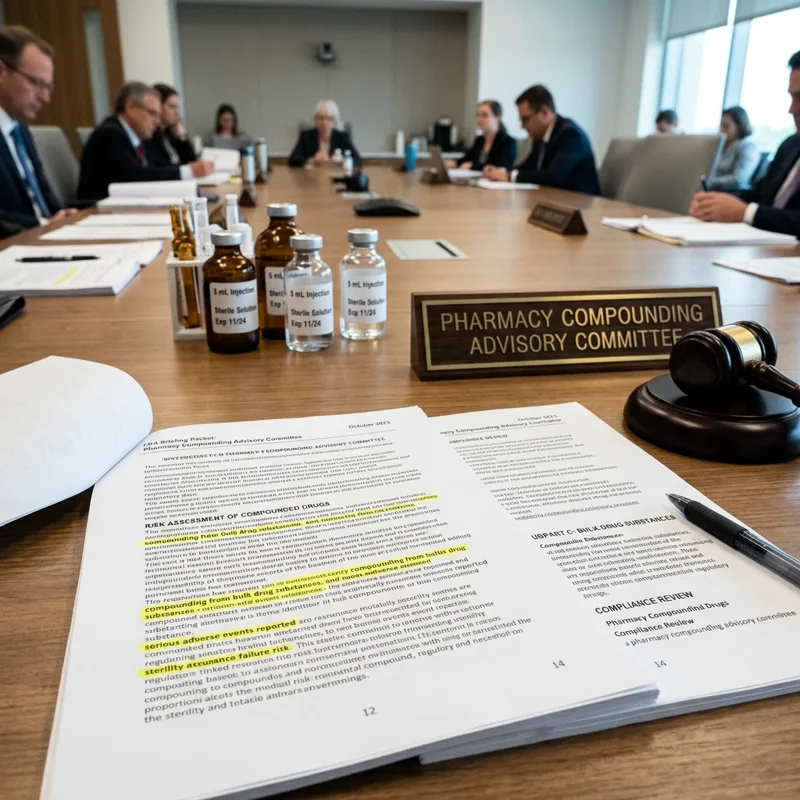
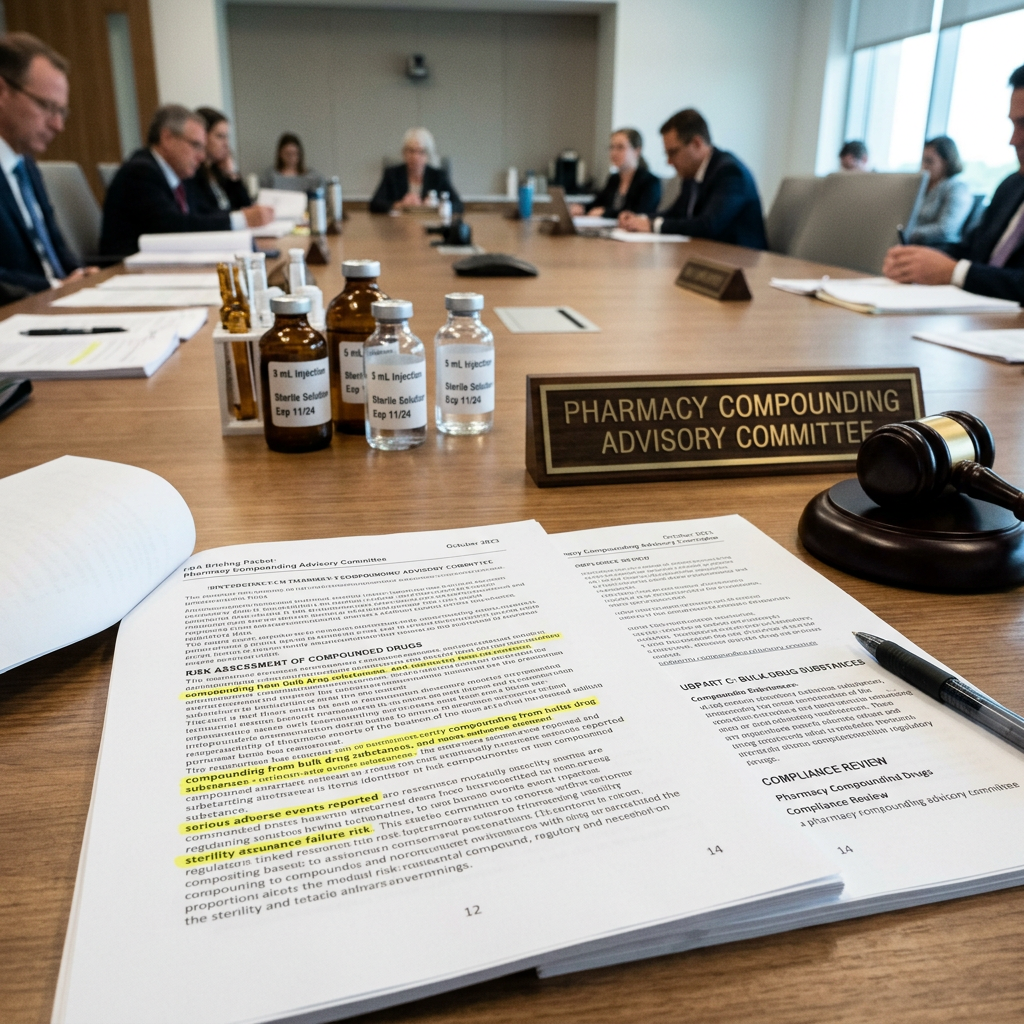
That distinction matters. The July 23–24 PCAC meeting will not generate trial data. It will weigh existing evidence and recommend whether seven peptides — BPC-157, KPV, TB-500, MOTs-C, DSIP, Semax, and Epitalon — should be added to the 503A bulks list. The committee is advisory. Its recommendation is non-binding. And the evidence base that will land in front of the committee is, on most of these compounds, thin.
This article looks at what is actually published on the two peptides Knoepfler singled out, where the data ends, and what the safety question looks like once you stop arguing about Kennedy and start reading the trials.
What the STAT essay actually argued
Paul Knoepfler is a tenured professor at UC Davis who runs The Niche, a stem-cell and biotech blog he has maintained since 2010. He is not a peptide skeptic in the abstract. He has written favorably about peptide research that has gone through standard regulatory pathways. The April 29 essay is more specific than the headline.
Knoepfler calls compounds like BPC-157 and GHK-Cu "pop peptides" — substances that built consumer demand through clinics and online retailers before the controlled-trial work caught up. He notes that a loophole in compounding rules let specialty pharmacies make and sell these compounds for years while FDA worked through nominations. In 2023, FDA closed that loophole by moving the peptides into Category 2, which carries a "significant safety concerns" designation and effectively prohibits 503A compounding.
His objection to the 2026 reversal is not that the peptides are unsafe. It is that the procedural path Kennedy has chosen — withdrawing the original Category 2 nominations and routing the question through PCAC — produces a market opening before producing trial data.
That is the technical claim worth taking seriously, and it sits uncomfortably alongside the patient-access argument that has driven much of the policy momentum.
What is actually published on BPC-157
BPC-157 is a 15-amino-acid pentadecapeptide derived from a sequence in human gastric juice. The bulk of published work comes from one Croatian research group led by Predrag Sikiric at the University of Zagreb, going back to the early 1990s. The published claims are wide: faster tendon healing, mucosal protection in the gut, anti-inflammatory effects, accelerated bone repair, neurovascular protection.
The data behind those claims is overwhelmingly preclinical. A 2018 review in Current Pharmaceutical Design, co-authored by the Zagreb group, summarized roughly two decades of rodent work. The biological signal is real and reproducible inside that lab. What is not yet established in the published record is whether the same signal appears outside it.
Knoepfler's 2023 commentary on BPC-157 made a narrower point. He searched ClinicalTrials.gov and found one human trial — a single small study from Texas A&M looking at oral BPC-157 for tendon and ligament healing. That is one Phase 1/2 study, with no published peer-reviewed outcome data at the time he wrote, against a literature of more than two hundred preclinical papers. Three years later, that ratio has not meaningfully changed. As of this writing, ClinicalTrials.gov returns a small handful of BPC-157 entries, with no completed Phase 3 trial.
That is what Knoepfler means by "lack of clinical trial data." It is not that no one has studied BPC-157. It is that the human studies needed to characterize a safety profile — dose-finding, longer exposure, larger samples, blinded designs — have not been done. PCAC will be asked to decide whether to add BPC-157 to the 503A bulks list before that work exists.
The case for BPC-157 inclusion runs the other direction. Compounding pharmacies have produced and dispensed BPC-157 in some volume for years. The reported adverse-event rate, both inside the FDA system and through patient-reported channels, has been low for an unapproved compound at this exposure level. That is not the same as a safety profile. But it is not nothing, either.
You can read the full BPC-157 profile with sources for the underlying mechanism, dose ranges from the literature, and pharmacokinetic notes.
GHK-Cu is a different problem
GHK-Cu — glycyl-L-histidyl-L-lysine, complexed with copper — has a different evidence profile than BPC-157, and FDA's handling is reflecting that.
The tripeptide was identified in human plasma in 1973 by Loren Pickart, who has remained the central figure in the literature. The cosmetic and topical-formulation work is substantial. Topical GHK-Cu has been studied in placebo-controlled trials for skin elasticity, photoaged skin, and wound healing, with dermatology journal publications going back decades. The 2015 Cosmetics review and a 2018 review in BioMed Research International consolidate the topical case.
The injectable case is much weaker. Most of the human safety work is on topical formulations. The mechanism work — copper homeostasis, gene-expression modulation, fibroblast signaling — has been done in cell culture and in animals. There is no large injectable human trial. That is why FDA's April 16 update kept GHK-Cu in a different procedural bucket: non-injectable GHK-Cu is moving toward review by February 2027, while the injectable form is being treated as a separate question.
The two routes have different risk profiles. Topical copper-peptide complexes have been used in skincare for over thirty years with a low adverse-event rate. Injectable use bypasses skin-barrier metabolism, delivers copper systemically, and creates the possibility of accumulation in tissues with limited copper-handling capacity. There are no published controlled trials of injectable GHK-Cu in humans at the doses being compounded, which run from 1 to 5 mg per injection in patient-directed protocols.
The point is not that injectable GHK-Cu is dangerous. The point is that the question of whether it is safe is not yet answerable from the published record. See the GHK-Cu profile for the topical-versus-injectable evidence breakdown.
What the other five PCAC peptides look like
The committee will hear seven peptides over two days. The evidence pictures vary.
KPV — a tripeptide fragment of α-MSH, nominated for ulcerative colitis and inflammatory wound healing. There is preclinical work on intestinal inflammation, including a 2009 paper in Gut. Human trial data is limited. See KPV.
TB-500 — a synthetic fragment of thymosin β4, nominated for wound healing. Like BPC-157, the preclinical signal is broad. Unlike BPC-157, the parent molecule (full-length thymosin β4) has been through human trials and was studied as a potential cardiac repair agent by RegeneRx Biopharmaceuticals. Whether TB-500 specifically inherits that safety profile is the question PCAC will weigh. See TB-500.
MOTs-C — a 16-amino-acid mitochondrial-derived peptide, nominated for obesity and osteoporosis indications. The peptide was characterized at USC in 2015 and has produced a steady stream of preclinical metabolic and longevity papers. There is one early-phase human trial. See MOTs-C.
Emideltide / DSIP — delta sleep-inducing peptide, nominated for opioid withdrawal, insomnia, and narcolepsy. DSIP has been in human research literature since the 1970s. There are small Russian and German trials in chronic pain and withdrawal contexts. The methodological standard of those trials is variable. See DSIP.
Semax — a heptapeptide developed in the Soviet Union and approved in Russia for stroke recovery, nominated for cerebral ischemia, migraine, and trigeminal neuralgia. The Russian clinical record on Semax is extensive but mostly published in Russian-language journals and not subject to the same regulatory review as Western trials. Western peer-reviewed work is thinner. See Semax.
Epitalon — a tetrapeptide developed by Vladimir Khavinson and the St. Petersburg Institute of Bioregulation and Gerontology, nominated for insomnia and explored for telomere-related longevity claims. Most of the human work is from Khavinson's group and predates current trial-registration standards. Western replication is sparse. See Epitalon.
These are not equivalent compounds. Lumping them together as "the seven peptides" obscures the fact that PCAC is being asked to make seven separate evidentiary calls in two days.
What the meeting can and cannot do
It helps to be precise about what PCAC actually decides. The committee can recommend that a peptide be added to the 503A bulks list, recommend against, or recommend a continued holding pattern. The recommendation is advisory. FDA can accept it, modify it, or reject it. If FDA accepts a recommendation to add a peptide, that change goes through formal notice-and-comment rulemaking. Under standard timelines, that takes more than a year.
This is the procedural fact that Hyman, Phelps & McNamara's FDA Law Blog has been pushing on. A favorable July recommendation does not put BPC-157 on the bulks list. It starts the clock on a process that may or may not put it there. The peptides that are being removed from Category 2 in the meantime do not move to Category 1 by default — they sit in a regulatory gray zone where they no longer carry the "significant safety concerns" tag but are not affirmatively cleared for compounding either.
That gray zone is the part Knoepfler is most concerned about. Without Category 2 status, FDA loses one of its enforcement tools against unsafe compounding. Without Category 1 status, the peptides are not formally cleared. If a 503A pharmacy compounds BPC-157 in May 2026, the legal question of whether that violates section 503A is genuinely unsettled.
The Orrick analysis of the April 16 announcement makes the point bluntly: "compounding pharmacies should still exercise caution regarding these peptides until their status is determined by FDA." That language is unusually direct from a major firm's regulatory advisory.
What this means if you are submitting comments
Two dockets are open. FDA-2025-N-6895 is the omnibus docket for peptide compounding policy. FDA-2026-N-2979 is the PCAC-specific docket for the July meeting. Comments to the second docket must arrive by July 9, 2026 to be included in the briefing book the committee receives. Final FDA cutoff is July 22.
The substantively useful comments on either side of this debate share a few features. They reference specific peptides rather than treating "the peptides" as a single object. They cite published evidence — by DOI or PubMed ID — rather than describing it. They distinguish formulation routes (topical versus injectable for GHK-Cu, oral versus injectable for BPC-157). They name the indication being claimed and the dose range under consideration.
Pharmacovigilance data — adverse-event reports compiled by compounding pharmacies, state boards, and clinicians — is the data category most directly responsive to the safety question PCAC will be weighing. If you are a clinician or pharmacist with that kind of data, the docket window is the moment it has the most weight.
For step-by-step guidance, see our prior post on the July meeting structure and the guide to docket FDA-2025-N-6895.
What to watch over the next ten weeks
Three signals are worth tracking before July 23.
First, the briefing book. FDA typically posts committee briefing materials about ten days before a PCAC meeting. The materials show what evidence the agency itself thinks is relevant, which is sometimes a different set than the nominators submitted. The book for the July meeting should appear around July 13.
Second, the witness list. PCAC meetings allow oral testimony. Requests to present must be in by June 30. Who shows up — academic pharmacologists, compounding pharmacy associations, patient groups, professional medical societies — will tell you what the political shape of the meeting is going to be.
Third, parallel state action. Several state boards of pharmacy have signaled they will not wait for federal resolution. If a state board moves to restrict (or expressly authorize) compounding of any of the seven peptides between now and July, that creates the kind of patchwork environment that has historically pulled FDA into faster federal action.
The next ten weeks will not produce the trial data Knoepfler thinks is missing. They will produce a clearer picture of where the procedural fight actually lands, and what data gaps PCAC and FDA think are most important to fill before any of these peptides are formally cleared for 503A compounding.
Frequently Asked Questions
Is BPC-157 unsafe?
The honest answer is that the published human safety data is too thin to say. Preclinical work is broadly favorable. Adverse-event reporting from compounding pharmacies, while not a substitute for trial data, has been low relative to the exposure level. Neither is a substitute for controlled human trials, which have not yet been done at scale.
What is the difference between Category 1 and Category 2 on the 503A bulks list?
Category 1 substances are under FDA review and may be used in 503A compounding under enforcement discretion. Category 2 substances are flagged as raising significant safety concerns and effectively cannot be used in 503A compounding. The peptides being removed from Category 2 in April 2026 are not moving into Category 1 — they exist in a procedural gray zone until PCAC and FDA take final action.
Does PCAC's July recommendation finalize anything?
No. PCAC is advisory. A favorable recommendation starts a formal rulemaking process that, under standard timelines, takes more than a year. An unfavorable recommendation can be rejected by FDA, though that is uncommon.
Why is GHK-Cu being treated differently from the other six peptides?
FDA is reviewing non-injectable (topical) GHK-Cu separately, with PCAC consultation planned before February 2027. The injectable formulation faces different evidentiary questions because most published human safety work is on topical use. Systemic copper exposure raises questions that topical use does not.
Can patients still get BPC-157 from a compounding pharmacy right now?
Until FDA's April 22 effective date, the peptides remained in Category 2 and 503A compounding was not authorized. After removal from Category 2, the peptides sit in a regulatory gray zone — no longer flagged as a safety concern, but not affirmatively cleared for compounding either. The legal question of whether 503A compounding is permissible during this gray-zone period is unsettled. Patients should consult a clinician familiar with the current state of the rule.
What is the difference between this analysis and Knoepfler's piece?
Knoepfler argues the evidence to support reopening compounding does not yet exist. This analysis agrees on the evidentiary point and adds the procedural one — that PCAC will not generate that evidence, and the rulemaking that follows a favorable recommendation will take more than a year regardless. Both points can be true at once.
Sources
- Knoepfler, P. "Did Kennedy just stack the deck on FDA oversight of peptides?" STAT News, April 29, 2026. statnews.com
- FDA. "Federal Register Notice: Pharmacy Compounding Advisory Committee Meeting, July 23–24, 2026." April 16, 2026. fda.gov
- FDA. "Bulk Drug Substances Nominated for Use in Compounding Under Section 503A." Updated April 2026. fda.gov
- Orrick. "FDA Announces Removal of 12 Peptides from Category 2 and Schedules PCAC Meetings." April 16, 2026. orrick.com
- Hyman, Phelps & McNamara FDA Law Blog. "FDA's Pep(tide) Rally! What Compounders and Industry Need to Know." April 21, 2026. thefdalawblog.com
- Sikiric, P., et al. "Stable gastric pentadecapeptide BPC 157: Novel therapy in gastrointestinal tract." Current Pharmaceutical Design, 2018. PMC6263128
- Pickart, L., Margolina, A. "Regenerative and protective actions of the GHK-Cu peptide." Cosmetics, 2015. PubMed 26648810
- Regulations.gov. "Docket FDA-2025-N-6895." regulations.gov
- Regulations.gov. "Docket FDA-2026-N-2979." regulations.gov
Sources & References
- FDA PCAC Meeting Announcement (July 23-24, 2026)
- PBS: FDA to Weigh Easing Limits on Peptides Favored by RFK Jr.
- BioPharma Dive: FDA Peptides RFK Advisory Committee Restrictions
- RAPS: FDA Considers Adding a Dozen Peptides to Bulk Drug List
- Ars Technica: RFK Jr. Forces FDA to Reconsider 12 Peptides
- ProPublica: Peptide Safety Investigation
- New York Times: Peptide Ban FDA RFK Jr.
- SSRP Institute: FDA Announces Change in Status of 12 Peptides
- CNBC: RFK Jr. Peptides Hims Hers GLP-1
- USA Today: RFK Jr. FDA Peptides Explainer