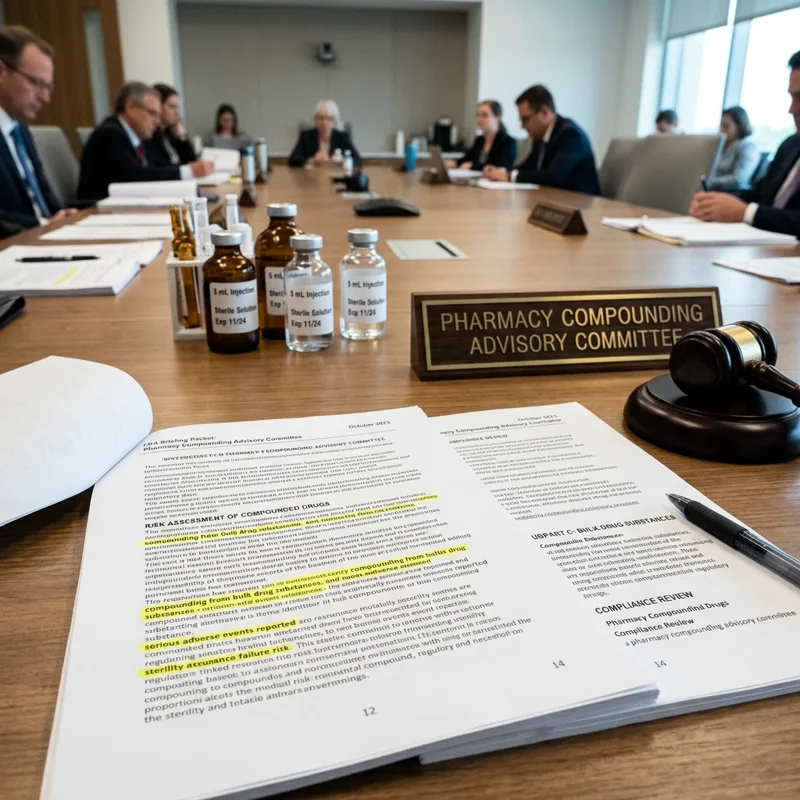

On April 7, 2026, FDA published a batch of seven warning letters that read like a closing argument against the "research peptides" market. Gram Peptides, Prime Sciences, Lovega, FormPour, Guangzhou Huli Technology, Mile High Compounds, and PekCura Labs all received letters dated March 31. The targeted products span retatrutide, tirzepatide, semaglutide, dual GIP/GLP-1 agonists, and triple agonists. The legal theory in each letter is the same, and it has implications that go past the seven companies named.
The recurring pattern is this: a company sells unapproved peptides through a website with a "research use only" or "not for human consumption" disclaimer, and pairs the product with bacteriostatic water for injection. FDA reads the pairing as evidence of intended human use, declares the disclaimer a sham, and treats both items as unapproved drugs under section 505(a) of the Federal Food, Drug, and Cosmetic Act.
This is not new doctrine. What is new is the cadence and the scope. The April 7 batch is the latest of dozens of similar enforcement actions across the past year. The targets have moved from one-off vendors to companies with substantial e-commerce footprints. And the bacteriostatic-water trigger is now the operational signal FDA looks for first.
What the warning letters actually say
The Gram Peptides letter is a good template. FDA reviewed grampeptides.com between January and March 2026. The site offered "Retatrutide" (which the company also called "GLP-1-R peptide") and "Tirzepatide" (called "GLP-2 peptide"), alongside bacteriostatic water for injection. Each product page carried language indicating the product was intended for laboratory research use only.
FDA's analysis runs through three points. First, the product names and the chemical identity match approved drugs (Mounjaro, Zepbound, the investigational retatrutide molecule from Eli Lilly). Second, the company's own marketing — even with disclaimer language present — used phrases like "potential weight management applications" and "metabolic regulation" that read as drug claims. Third, the bacteriostatic-water pairing demonstrates intended use. The letter is explicit: "The sale of these products together demonstrates that you intend for your 'Bacteriostatic Water' to be used in combination for injection. Therefore, your 'Bacteriostatic Water' is a drug."
Once those three findings are made, the products become unapproved new drugs under section 201(p) of the FD&C Act because they are not generally recognized as safe and effective (GRASE) for the conditions described in their labeling. Selling them in interstate commerce violates sections 301(d) and 505(a). The remedies include seizure, injunction, and criminal referral. The letters give recipients 15 working days to respond.
The Prime Sciences letter follows the same pattern with one additional turn — the company labeled some products as "Research peptide with potential in diabetes management and obesity treatment." That phrase is doing legal work the disclaimer cannot undo. FDA quotes it directly as evidence of drug-claim intent.
The RAPS coverage of the April 7 batch consolidates the seven letters into a single picture. Three of the seven (Prime Sciences, Lovega, Gram Peptides) were specifically cited for the bacteriostatic-water pairing. The other four were cited for combinations of unapproved-drug status, drug claims, and labeling violations.
The bacteriostatic-water trigger
Bacteriostatic water for injection is a sterile water product preserved with 0.9% benzyl alcohol. It has one functional purpose: reconstituting lyophilized injectable drugs. It is not used in laboratory research workflows that require ultrapure water free of preservatives. A vendor selling lyophilized peptides plus bacteriostatic water is not selling a research kit.
FDA articulated this clearly in the Lovega letter: "Your firm offers 'Bacteriostatic Water' for sale alongside peptide products, which are drugs intended for injection and require reconstitution. The sale of these products together demonstrates that you intend for your 'Bacteriostatic Water' to be used in combination for injection. Therefore, your 'Bacteriostatic Water' is a drug."
The legal mechanism is "intended use" doctrine, codified at 21 CFR 201.128. A product's intended use is determined by all relevant evidence, including how it is offered for sale, what it is paired with, what claims are made on the labeling, and the context of the sale. The "research use only" sticker is one piece of evidence. The bacteriostatic-water pairing is another. When the second outweighs the first, the disclaimer fails.
This is why "research peptide" sellers who decoupled the bacteriostatic water — selling peptides only, with no injection ancillaries — have historically drawn fewer letters. It does not make the underlying sale lawful. It makes the intended-use case harder to prove. The April 7 batch makes clear FDA is now willing to file the case anyway.
What this means for people buying these products
The warning letters target sellers, not buyers. There is no enforcement action against individual purchasers. But the underlying products are still unapproved drugs, and the safety question that drove their unapproved status does not change because the FDA is going after the seller rather than the user.
Three points worth being clear about. First, "research grade" is a marketing term, not a regulatory category. There is no FDA-recognized purity, potency, or sterility standard that "research peptide" products meet. The COA documents posted on these vendor websites are produced by third-party labs whose work is not subject to FDA oversight. Whether the vial actually contains what the label says — and whether it is sterile and pyrogen-free at the levels required for injection — is not independently established.
Second, the dose accuracy problem is real and well-documented. Independent third-party testing of research-peptide products over the past three years has repeatedly found discrepancies between labeled and actual content, ranging from underdosed (less than 50% of label) to overdosed and to contamination with related sequences. None of this is exposed in the package insert because there is no package insert.
Third, the legal status of the buyer's possession is more complicated than vendor marketing suggests. Personal importation of unapproved drugs has narrow allowances. None of those allowances apply to GLP-1 receptor agonists. The "for research use only" framing on the vendor side does not transfer to the buyer if the buyer is using the product on themselves.
If the underlying clinical interest is weight management or metabolic disease, the regulated pathway exists. Semaglutide (Wegovy, Ozempic) and tirzepatide (Mounjaro, Zepbound) are FDA-approved with documented manufacturing standards, defined dosing, and a defined safety surveillance system. Retatrutide is in late-stage clinical trials and not yet available outside study enrollment.
What this means for clinicians and 503A pharmacies
The April 7 batch sits inside a larger regulatory frame. Branded semaglutide and tirzepatide came out of FDA shortage status in February 2025, which narrowed 503A compounding eligibility. FDA's April 30, 2026 proposal to exclude semaglutide, tirzepatide, and liraglutide from the 503B bulks list — covered in our prior post — narrows it further on the outsourcing-facility side.
The combined effect: legal lanes for compounded GLP-1 RAs are narrower in May 2026 than at any point in the previous five years. A clinician writing for compounded semaglutide today is operating in a meaningfully smaller legal space than a clinician who wrote for it in 2024. The April 7 enforcement letters are the consumer-facing edge of the same regulatory contraction.
For 503A pharmacies, the relevance is indirect but specific. A pharmacy that holds prescriptions for compounds it no longer has clear authority to prepare creates a documentation problem in any future inspection. Pharmacies that have moved their GLP-1 compounding volume off semaglutide and tirzepatide and onto other approved or compoundable molecules are looking at the April 7 batch for confirmation that the regulatory direction is what they read it as.
This article does not cover the seven peptides under PCAC review for the July 23–24 meeting. Those substances — BPC-157, KPV, TB-500, MOTs-C, DSIP, Semax, Epitalon — are a separate procedural track and a separate regulatory question. See our PCAC meeting overview and evidence-base analysis.
The longer enforcement pattern
FDA has issued dozens of similar warning letters over the past year. The targets have rotated through several categories of seller:
- Domestic e-commerce vendors selling lyophilized peptides via their own websites, often with "research use only" framing. These are the most common letter recipients.
- Domestic compounding pharmacies that continued to compound GLP-1 RAs after the FDA shortage status ended. These are typically handled through 483 inspection findings rather than warning letters, but the underlying issue is the same.
- Foreign manufacturers shipping into the U.S. — Guangzhou Huli Technology in the April 7 batch is one. These letters are harder to enforce but provide notice that products entering U.S. commerce will be subject to import action.
- Wellness clinics marketing peptide injections to walk-in patients, sometimes with cosmetic or sports-medicine framing. These have drawn enforcement only when the marketing crossed clearly into drug-claim territory.
The cumulative effect across these letters is to draw the perimeter of "research peptides" tighter. Five years ago the category functioned as a regulatory gray zone where vendors operated openly. The 2025–2026 enforcement cadence has converted the gray zone into something closer to active enforcement risk for any vendor doing meaningful sales volume.
What to watch over the next quarter
Three signals worth tracking. First, the consent decrees and follow-up actions. Warning letters that go unanswered or that draw inadequate corrective action typically progress to consent decrees, seizures, or criminal referral. Whether any of the seven April 7 recipients move to that next phase will indicate how far FDA is willing to push individual cases.
Second, the retailer-side pressure. Payment processors, search engines, and shipping carriers have historically responded to FDA warning-letter cadence by tightening their own policies. If Stripe, PayPal, or Shopify update their acceptable-use policies on peptide sellers in Q2 or Q3, the operational impact on the category will be larger than the letters themselves.
Third, parallel state action. State attorneys general have moved into peptide enforcement in states with active wellness-clinic markets. Whether the April 7 federal action triggers parallel state cases will indicate whether enforcement is consolidating or fragmenting across jurisdictions.
The PCAC meeting on July 23–24 will dominate the policy conversation. The enforcement track is moving on a separate timeline.
Frequently Asked Questions
Why did the FDA target these specific companies?
The seven companies named on April 7 share a fact pattern: they sold lyophilized peptide products that match approved drug ingredients (or investigational drugs), they used marketing language that implied human use, and several paired the products with bacteriostatic water for injection. FDA's intended-use analysis found that the combination of evidence overcame the "research use only" disclaimers.
Does "research use only" labeling protect a seller?
Not by itself. Under 21 CFR 201.128, intended use is determined by all relevant evidence, not just the disclaimer. When marketing language, product pairings (especially with bacteriostatic water), or chemical identity to approved drugs point toward human use, the disclaimer can be set aside.
Are buyers of "research peptides" being prosecuted?
The April 7 warning letters target sellers. There is no announced enforcement action against individual buyers. Personal importation of unapproved drugs has narrow allowances that do not generally cover GLP-1 receptor agonists. The risk to a buyer is more about product quality, dosing accuracy, and sterility than about prosecution.
Is this related to the PCAC meeting in July?
No. PCAC is reviewing seven specific peptides — BPC-157, KPV, TB-500, MOTs-C, DSIP, Semax, Epitalon — for possible addition to the 503A compounding bulks list. The April 7 warning letters are about unapproved sales of GLP-1 receptor agonists and related compounds. Different track, different products, different legal framework. See our PCAC meeting overview.
What is the safe alternative for someone who wants GLP-1 therapy?
The FDA-approved GLP-1 receptor agonists — semaglutide (Wegovy, Ozempic), tirzepatide (Mounjaro, Zepbound), liraglutide (Saxenda, Victoza), dulaglutide (Trulicity), and exenatide (Bydureon) — are obtained through a clinician prescription and a licensed pharmacy. They are manufactured to FDA standards, have defined dosing protocols, and operate inside the post-marketing surveillance system. Cost and access remain real obstacles. Prescription-discount programs and the FDA-approved generic pathway (when one exists) are the legitimate cost-reduction routes.
What about retatrutide?
Retatrutide is a GLP-1/GIP/glucagon triple agonist still in late-stage clinical trials. Eli Lilly announced positive Phase 3 TRANSCEND-T2D-1 results on March 19, 2026, with up to 2.0% A1C reduction and 16.8% weight loss versus placebo. It is not yet available outside study enrollment. Any vendor selling "retatrutide" today is selling an unapproved investigational drug, which is what FDA cited in the Gram Peptides letter. See the retatrutide profile.
Sources
- FDA. "Warning Letter to Gram Peptides (CMS Case 721806)." March 31, 2026; published April 7, 2026. fda.gov
- FDA. "Warning Letter to Prime Sciences (CMS Case 721805)." March 31, 2026; published April 7, 2026. fda.gov
- RAPS. "FDA warning letters target marketers of unapproved weight loss drugs." April 7, 2026. raps.org
- 21 CFR § 201.128 — Meaning of "intended uses." ecfr.gov
- 21 U.S.C. § 355(a) — New drugs. law.cornell.edu
- FDA. "GLP-1 Compounding Policy Update." April 1, 2026. fda.gov
- Eli Lilly. "TRANSCEND-T2D-1 Phase 3 retatrutide results." March 19, 2026. Investor announcement.
Sources & References
- FDA PCAC Meeting Announcement (July 23-24, 2026)
- PBS: FDA to Weigh Easing Limits on Peptides Favored by RFK Jr.
- BioPharma Dive: FDA Peptides RFK Advisory Committee Restrictions
- RAPS: FDA Considers Adding a Dozen Peptides to Bulk Drug List
- Ars Technica: RFK Jr. Forces FDA to Reconsider 12 Peptides
- ProPublica: Peptide Safety Investigation
- New York Times: Peptide Ban FDA RFK Jr.
- SSRP Institute: FDA Announces Change in Status of 12 Peptides
- CNBC: RFK Jr. Peptides Hims Hers GLP-1
- USA Today: RFK Jr. FDA Peptides Explainer