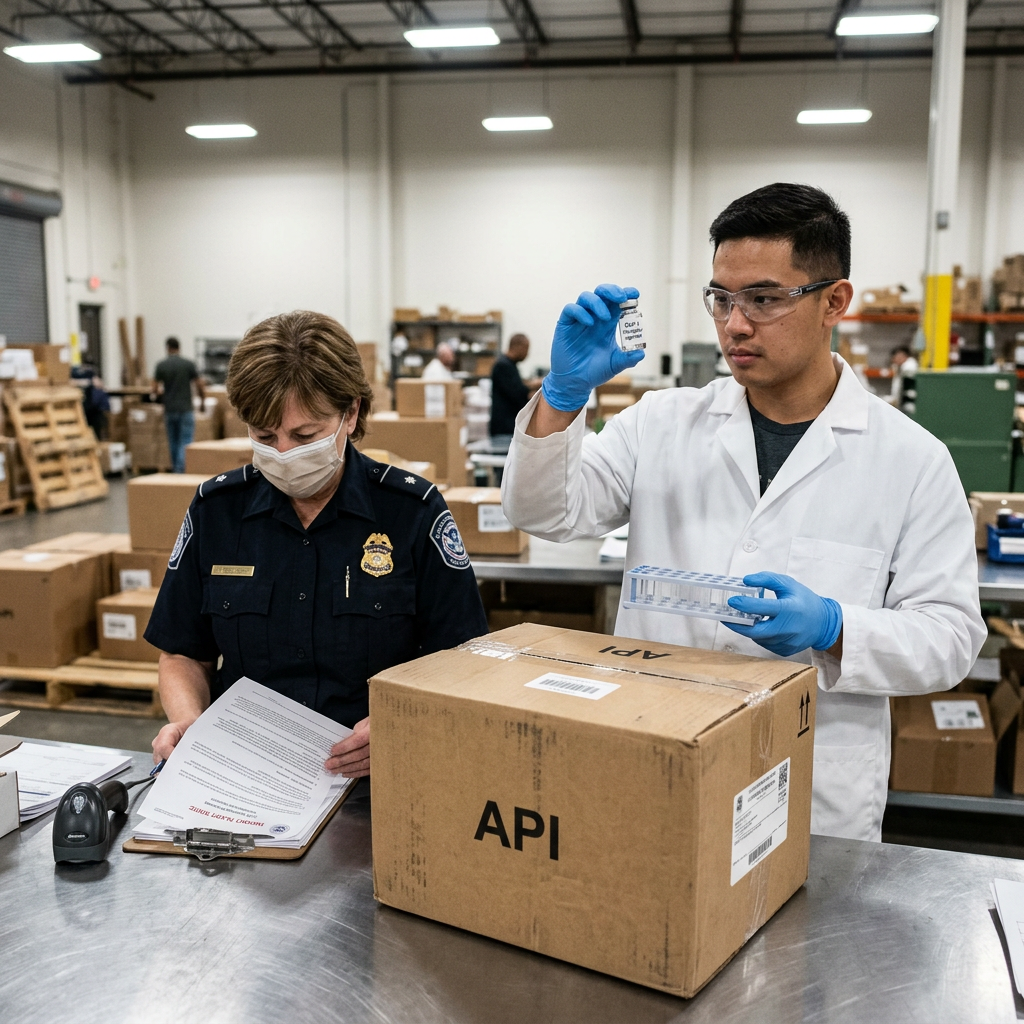
A quiet update on an FDA index page can move more product than a headline. On June 22, 2026, the agency published Import Alert 66-80: “Detention Without Physical Examination of Glucagon-Like Peptide-1 (GLP-1) Receptor Agonist Bulk Drug Substances.” It’s a small line item with a big implication: regulators are explicitly signaling that the bulk-ingredient supply chain for GLP-1 peptides is now a frontline enforcement target. For a market still arguing about where compounded semaglutide ends and counterfeit “research peptide” begins, that matters.
This piece explains what an import alert is, why “DWPE” (detention without physical examination) changes the economics of bringing GLP-1 active ingredients into the U.S., and what compounding pharmacies, telehealth brands, and patients should watch next. It’s not a prediction of a crackdown; it’s a map of what the FDA has already put on paper.
What FDA Import Alert 66-80 actually says (and what it doesn’t)
FDA’s import alert list is an operational tool. It’s where the agency tells field staff how to handle certain products at the border. Import Alert 66-80 is labeled “DWPE,” short for “Detention Without Physical Examination,” and its title is explicit: it covers GLP-1 receptor agonist bulk drug substances. The entry appears on FDA’s “Import Alerts by Publish Date” page with a publish date of June 22, 2026. That’s the “freshness” here: not a rumor, not a leak—an enforcement category being formalized.
What the index page does not provide is a list of specific firms, lots, or countries. Import alerts usually have attachments that define scope. But even the title alone is meaningful because it narrows the question regulators are asking at ports of entry. Instead of “is this an unapproved finished weight-loss drug,” the question becomes “is this a bulk drug substance that should be detained.”
Why the phrasing matters: GLP-1 receptor agonists are peptides (or peptide-like molecules) used in diabetes and obesity treatment. When those same molecules show up as unlabeled powders, third-party “research” vials, or bulk API with shaky paperwork, the line between legitimate pharmaceutical supply and gray-market “not for human use” becomes easy to game. A DWPE posture is a way to stop the game earlier.
DWPE: the border tool that doesn’t require a lab test first
Detention Without Physical Examination is exactly what it sounds like: the default flips. Instead of a shipment being released unless the FDA has a reason to stop it, the shipment is detained unless the importer can demonstrate it meets requirements. Practically, that can mean delays, extra documentation, and the risk that inventory becomes unsellable while it sits.
In a business where margins depend on fast fulfillment—telehealth subscription funnels, weekly pharmacy batches, “office stock” myths—the cost of delay is the enforcement. Even before a seizure, DWPE can act like a tax.
It also changes incentives for substitute products. If legitimate supply becomes harder to import, demand often migrates to domestic gray markets. That’s the paradox: border tightening can protect patients while also making the counterfeit ecosystem more profitable. Regulators know this. The question is whether enforcement is paired with clarity about what’s legal to compound—and what isn’t.
Why this showed up now: GLP-1 compounding is in a “regulatory narrowing” phase
The last two years turned GLP-1 peptides into a supply-chain story. Shortages created space for compounding. Then supply stabilized. As that happened, FDA attention shifted from “access during shortage” to “marketing, safety, and counterfeit API.”
You can see the enforcement posture in parallel documents. For example, in a June 17, 2026 warning letter to a Florida firm called Wholesale Peptide, FDA said it identified violations during a review of the company’s website in May 2026 and alleged that products labeled “Prostamax” and “Gonadorelin” were unapproved new drugs. The agency cited disease and structure/function claims on the website and told the firm to respond within 15 business days. That warning letter wasn’t about GLP-1 specifically. But it shows how FDA is treating “peptide seller” sites when they drift from research language into therapeutic claims.
Put those together: an import alert about GLP-1 bulk substances and a warning letter about peptide marketing. The throughline is supply chain plus intended use. FDA doesn’t have to win a philosophical debate about compounding to make the gray market expensive. It can tighten entry points: borders, payments, advertising claims.
Who gets hit first: three tiers of the GLP-1 supply chain
Tier 1: API importers and brokers
The most direct impact is on firms importing GLP-1 receptor agonist bulk drug substances—whether for legitimate pharmaceutical use, for research, or for “research” that is not really research. DWPE can force importers to prove provenance, testing, and intended use. If documentation is weak, the shipment becomes a liability.
Tier 2: outsourcing facilities and compounders that rely on bulk inputs
Outsourcing facilities (503B) and traditional compounding pharmacies (503A) are different creatures legally, but they can share a practical dependency: raw bulk supply. When bulk supply is delayed, both the “legit” and the “gray” operations feel it. The visible effect is usually inconsistent availability. The hidden effect is pressure to source from whoever can deliver.
Tier 3: telehealth brands and clinics selling “GLP-1 programs”
Most patients never see the supply chain. They see a checkout page. When the supply chain tightens, marketing often becomes more aggressive. That’s why FDA has been sensitive to claims that compounded products are equivalent to approved drugs. Even without naming specific firms here, the pattern is clear: the closer a website’s language gets to “FDA-approved,” the closer it gets to a compliance problem.
Patient safety: why GLP-1 “bulk peptide” risk isn’t abstract
With peptides, the hard part isn’t the idea—it’s the manufacturing. GLP-1 receptor agonists are potent, dose-sensitive drugs. Small errors in concentration, sterility, or degradation products can mean real harm. Those risks are magnified when a product is sold as a low-friction subscription and shipped across state lines.
Regulators tend to focus on two failure modes:
- Mislabeling and dosing errors (what the vial says vs what the vial contains)
- Contamination and sterility issues (especially if a product is injectable)
Import controls are aimed upstream. Stop questionable bulk input, and fewer questionable finished products get made. That’s the theory. The market response determines whether the theory holds.
What to watch next (practical signals, not vibes)
If you’re trying to understand where FDA is headed, the best signals are bureaucratic and boring. Here are the ones that tend to precede visible change:
1) The detailed Import Alert 66-80 page: scope, firms, and product descriptions
The publish-date index confirms the alert exists. The next question is what the FDA specifies inside the alert—how it defines “GLP-1 receptor agonist bulk drug substances,” which evidence is used for detention, and whether it lists firms. When those details appear, supply-chain behavior changes fast.
2) A continued stream of warning letters targeting “peptide” marketing language
The Wholesale Peptide letter is a reminder that disclaimers don’t neutralize intended-use claims. FDA explicitly said that “RESEARCH USE ONLY” language does not override other labeling and website evidence showing intended use as drugs for human use. If more letters follow, they’ll likely cite the same structure: product pages, disease claims, and a short response deadline.
3) State board actions and pharmacy accreditation moves
Federal enforcement gets headlines. State-level enforcement shapes day-to-day availability. If a board begins treating GLP-1 compounding as a priority, you’ll see pharmacy discipline and ordering restrictions even before FDA actions land.
Where PeptideKnow fits: keeping the links between policy, peptides, and real products
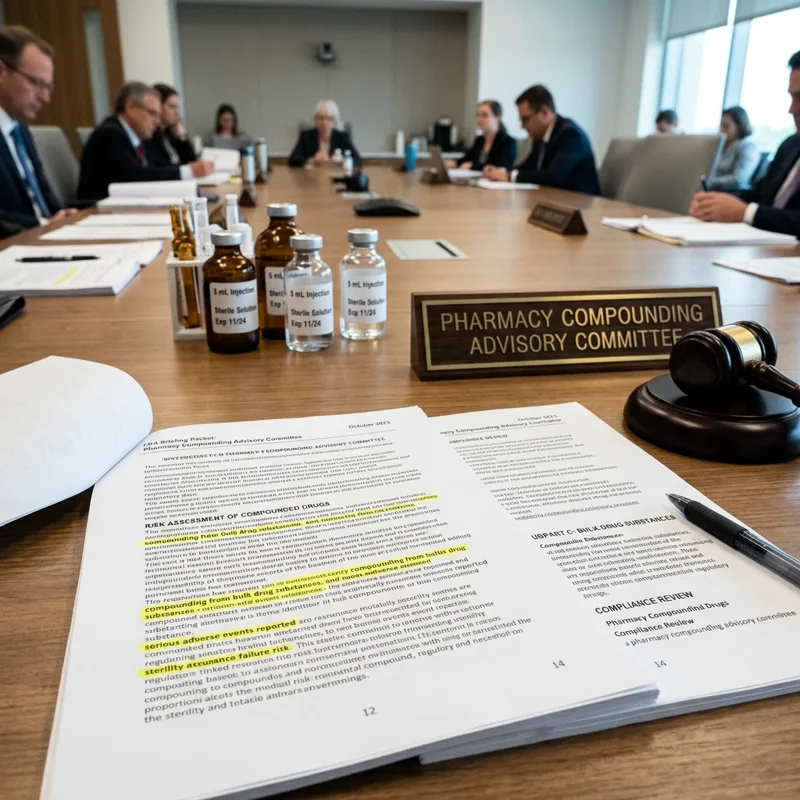
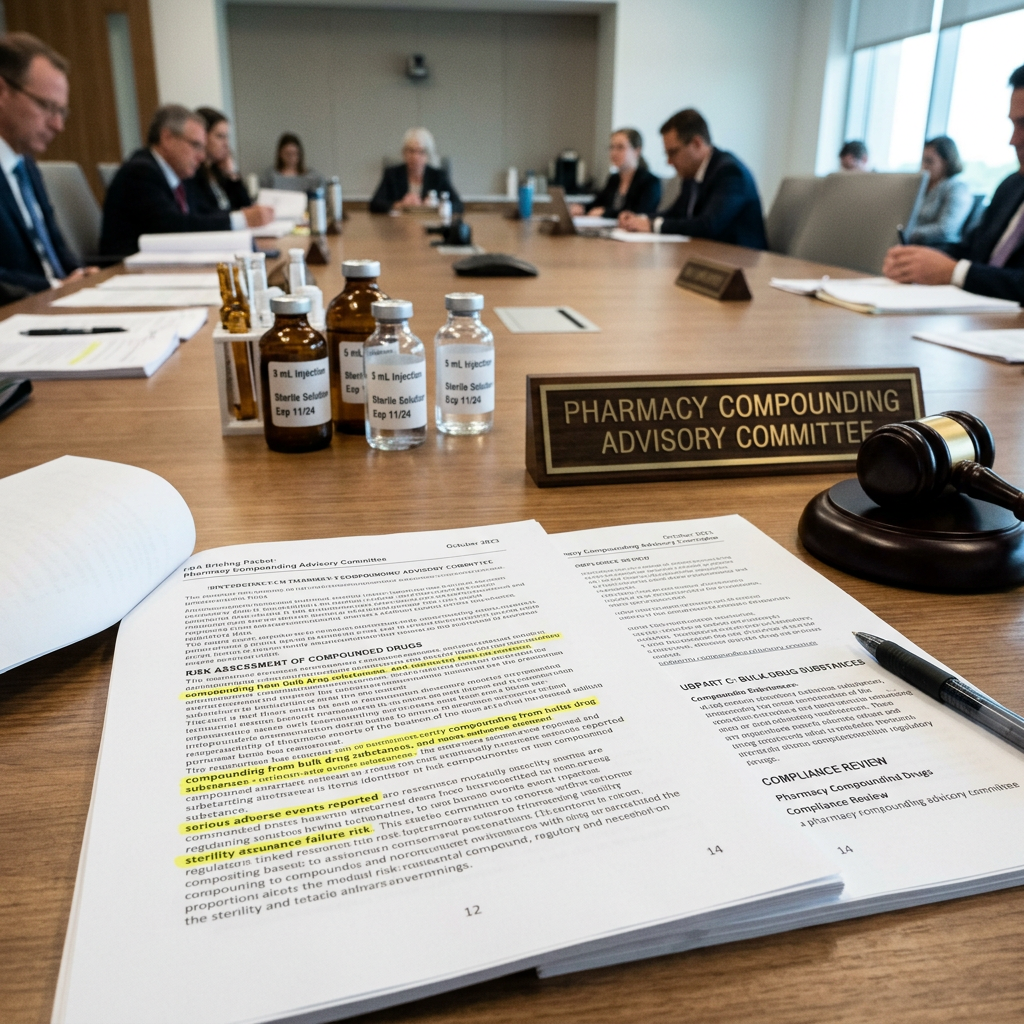
This isn’t just “GLP-1 news.” It’s peptide supply-chain news. And it sits next to other peptide categories where legality, purity, and marketing claims are constantly blurred. If you’re following the July 2026 FDA Pharmacy Compounding Advisory Committee (PCAC) meeting on peptides like BPC-157 or MOTS-c, the GLP-1 import alert is a reminder of the bigger enforcement toolkit. One committee meeting addresses what can be compounded. Import alerts address what can enter.
If you’re newer to GLP-1 biology, start with our peptide-specific background pages:
- Weight loss & metabolic peptides (category overview)
- GLP-1 (mechanism and receptor signaling)
- Semaglutide (GLP-1 receptor agonist profile)
- Tirzepatide (GIP/GLP-1 dual agonist profile)
Frequently Asked Questions
Is an FDA import alert a ban?
No. An import alert is an enforcement instruction. It tells FDA staff how to handle certain categories of products at the border. But in practice, a DWPE import alert can function like a severe restriction because it makes release harder and detention more likely.
Does this end compounded semaglutide or tirzepatide?
Not directly. Import Alert 66-80 focuses on bulk drug substances entering the U.S. Compounding legality is governed by other parts of the FD&C Act and FDA policy, including whether an ingredient is permitted for compounding and whether a compounded product is essentially a copy of a commercially available drug.
Why would FDA focus on imports instead of clinics?
Because upstream controls scale. A single bulk shipment can feed many downstream sellers. Border enforcement is also evidence-driven: paperwork, origin, test results, and labeling can be evaluated without a patient ever being harmed.
Does “research use only” protect a peptide seller?
Not automatically. In the Wholesale Peptide warning letter, FDA wrote that despite “RESEARCH USE ONLY” and “not for human consumption” statements, it considered other labeling and website evidence in determining intended use. If a site makes disease-treatment claims, FDA can still treat the product as an unapproved drug.
Sources (primary)
- FDA. “Import Alerts by Publish Date” (entry for Import Alert 66-80, published 06/22/2026). https://www.accessdata.fda.gov/cms_ia/iapublishdate.html
- FDA. “Wholesale Peptide - 729447 - 06/17/2026 - Warning Letter.” https://www.fda.gov/inspections-compliance-enforcement-and-criminal-investigations/warning-letters/wholesale-peptide-729447-06172026
Sources & References
- FDA PCAC Meeting Announcement (July 23-24, 2026)
- PBS: FDA to Weigh Easing Limits on Peptides Favored by RFK Jr.
- BioPharma Dive: FDA Peptides RFK Advisory Committee Restrictions
- RAPS: FDA Considers Adding a Dozen Peptides to Bulk Drug List
- Ars Technica: RFK Jr. Forces FDA to Reconsider 12 Peptides
- ProPublica: Peptide Safety Investigation
- New York Times: Peptide Ban FDA RFK Jr.
- SSRP Institute: FDA Announces Change in Status of 12 Peptides
- CNBC: RFK Jr. Peptides Hims Hers GLP-1
- USA Today: RFK Jr. FDA Peptides Explainer