The U.S. Food and Drug Administration cleared Ascletis Pharma to start a Phase 1 clinical trial of ASC35, a once-monthly subcutaneous peptide that activates both the GLP-1 and GIP receptors. The Hong Kong-listed company announced the clearance on June 23, 2026. In its preclinical pitch deck, ASC35 outperformed once-weekly tirzepatide by about 71% in diet-induced obese mice and showed a half-life roughly six times longer than tirzepatide in non-human primates. The trial will run 84 participants and put ASC35 head-to-head against the FDA-approved tirzepatide weekly formulation in a multiple-ascending-dose arm.
It joins a quickening race toward dosing intervals patients can actually live with. Enicepatide, Roche's once-monthly GLP-1/GIP agonist, posted 22.5% placebo-adjusted weight loss in Phase 2 earlier this month. Pfizer's monthly berobenatide is in Phase 3. Lilly's retatrutide reset the efficacy ceiling at 28.3% in TRIUMPH-1 in May. ASC35 is the entry from a relatively small Asian biotech, betting on a novel depot formulation that pours in as a liquid and gels in the tissue.
What ASC35 is
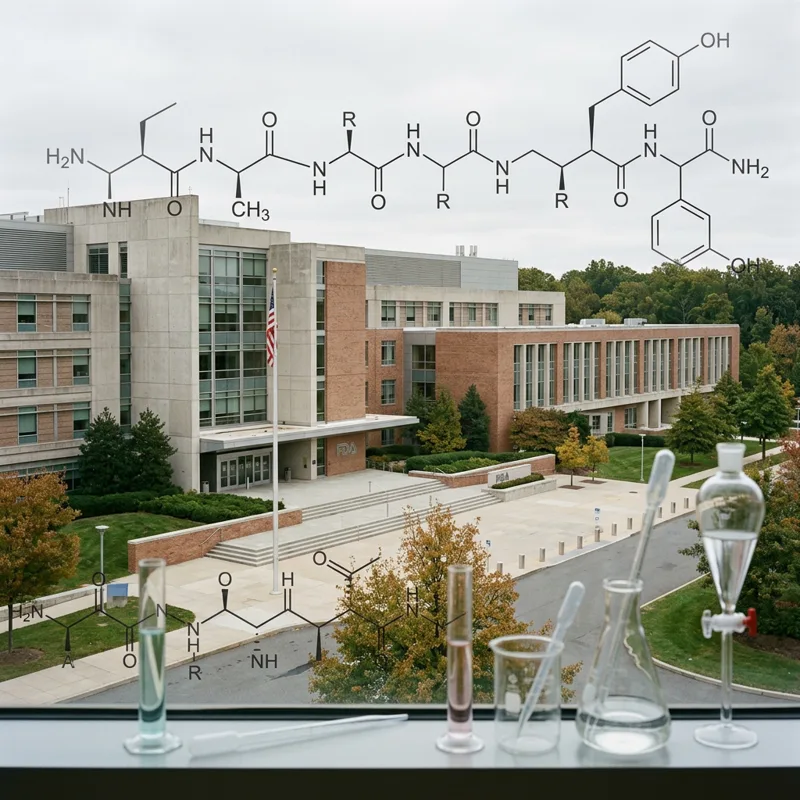
ASC35 is a peptide. That distinguishes it from orforglipron and AstraZeneca's elecoglipron, which are small molecules. As a peptide, ASC35 cannot survive the stomach, so it is injected. The injection is monthly. The peptide is a dual agonist hitting two receptors: GLP-1 and GIP. That is the same combination tirzepatide uses, and the same combination Roche's enicepatide and Lilly's investigational retatrutide use (retatrutide adds a third — glucagon).
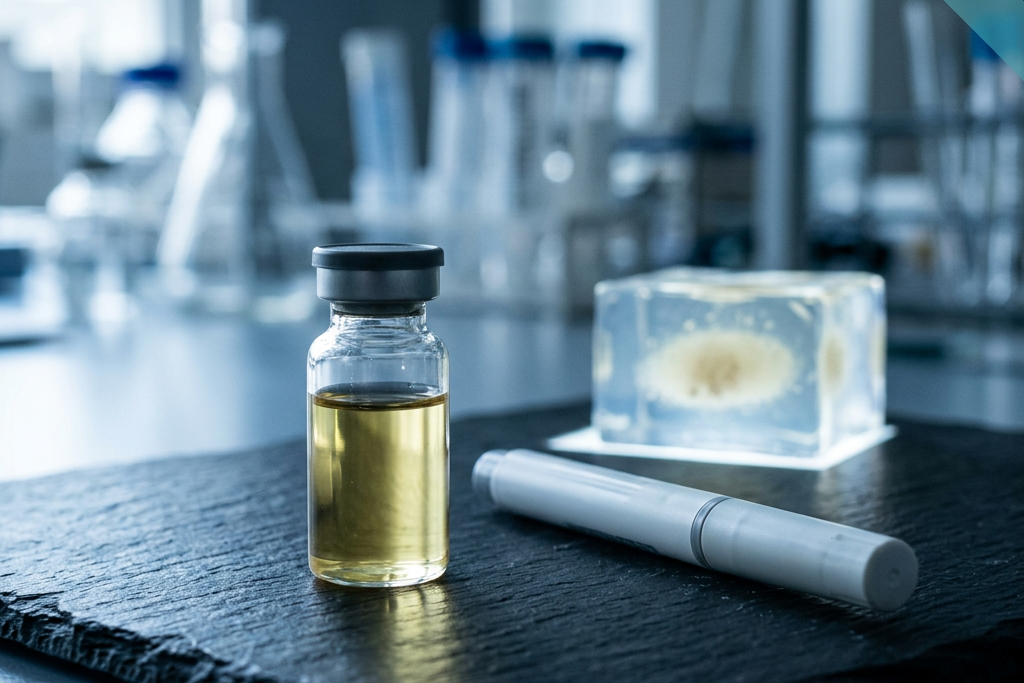
The novelty is the formulation, not the receptor profile. Ascletis built a proprietary lipid system it calls a Self-Assembling Lipid Depot (SALD). Before injection, the SALD is a low-viscosity liquid — thin enough to draw into an auto-injector and inject through a 29-gauge needle, the same gauge insulin pens use. Once it enters the subcutaneous tissue, the lipids self-organize into a gel. Body enzymes then chip away at the gel slowly, releasing the peptide over a month or longer.
The platform matters because it solves a problem long-acting peptides have had. Injectable depots typically need a thick suspension that requires a larger-gauge needle and hurts to inject. Older monthly contraceptive depots and antipsychotic depots have used this trade-off for decades. Patients tolerate the needle because the dosing interval is what they want. SALD's pitch is: liquid going in, gel after; thin needle, monthly dose.
The Phase 1 design
The study is a randomized, double-blind, placebo-controlled trial of 84 participants. Two parts.
Part A is a single-ascending-dose study. Healthy adults with obesity (BMI at least 30) or overweight (BMI at least 27 with a weight-related comorbidity) receive escalating single doses of ASC35 to characterize safety, tolerability, pharmacokinetics, and pharmacodynamics. Part B follows. It's a multiple-ascending-dose study, but the design puts ASC35 directly against the FDA-approved tirzepatide once-weekly formulation. Both arms run in parallel, both blinded. Endpoints will cover the standard pharmacokinetic profile, plus pharmacodynamic markers that include weight change.
The Phase 1 head-to-head against tirzepatide is unusual. Most Phase 1 obesity trials run against placebo and let cross-trial comparisons sort out the relative efficacy. Putting an investigational once-monthly directly against the dominant once-weekly in the same protocol is a confidence move. Ascletis is asking the trial to answer not just whether ASC35 is safe but whether it can match or beat the standard of care on a comparable dose schedule. Phase 1 isn't powered to make superiority claims, but the comparative data will inform the Phase 2 dose-finding plan.
Dose levels and the trial site weren't disclosed in the company's release.
What the preclinical data showed
Two animal studies anchored the IND.
The first was a diet-induced obese mouse study. Mice fed a high-fat diet to obesity were randomized to ASC35 or tirzepatide. The two compounds were dosed to deliver comparable receptor exposure. The result Ascletis reported: ASC35 produced approximately 71% greater relative body-weight reduction than tirzepatide. The trial was head-to-head; the comparison was direct.
The second was a non-human primate study. The endpoint there was half-life. Ascletis observed an average ASC35 half-life roughly six times longer than tirzepatide's in the same animals. Tirzepatide's terminal half-life in humans is about 5 days; the once-weekly schedule comes from a combination of that half-life and the steady-state concentration the formulation produces. A six-fold longer half-life in primates — if it translates to humans — is exactly the duration Ascletis would need to justify a monthly dosing interval.
Preclinical numbers don't always carry to humans. Cross-species pharmacokinetics shift with body mass, enzymatic clearance, and protein binding. The Phase 1 head-to-head will be the first read on whether the mouse weight-loss gap and the primate half-life translate.
The once-monthly race
Three serious entrants are now in clinical development for monthly GLP-1-class obesity drugs.
Pfizer's berobenatide is the most advanced. The peptide is in 10 simultaneous Phase 3 trials covering obesity, type 2 diabetes, and obesity-related comorbidities. Phase 2b data showed weight loss in the high teens at six months. Pfizer has positioned berobenatide as the first monthly GLP-1 likely to seek approval.
Roche's enicepatide (CT-388) is the strongest on raw efficacy. Phase 2 data presented at ADA 2026 showed 22.5% placebo-adjusted weight loss at 48 weeks with no plateau, 54% obesity resolution versus 13% on placebo, and 87% of participants reaching at least 10% loss. Roche advanced enicepatide to Phase 3 in March 2026 with two registrational trials, NCT07351045 and NCT07351058. The drug is a GLP-1/GIP dual agonist, same receptor profile as tirzepatide and now ASC35. Enicepatide's monthly schedule is achieved through molecular engineering, not a depot formulation.
ASC35 is the newest. Phase 1 just cleared. The bet is on the SALD depot platform.
There's a structural reason monthly matters. Semaglutide and tirzepatide weekly schedules look easy on paper. The lived reality is messier. Patients miss doses. Cold-chain logistics break down. Co-pays and prior authorizations cause refill gaps. Monthly cuts the number of injections from 52 a year to 12. The data on adherence to weekly injectables is poor; monthly cadence is the gap the industry believes it can close.
Ascletis isn't the only company chasing depot technology. Lilly's ASC30 — confusingly named, no relation to Ascletis ASC35 — sorry, different molecule entirely — Lilly's portfolio includes investigational quarterly injectables. Novo Nordisk has discussed depot research. But Ascletis is the first to publicly file an IND for a once-monthly GLP-1/GIP peptide depot in this round.
The Ascletis platform
Ascletis Pharma is a Hong Kong-listed (1672.HK) biotech focused on metabolic disease. The company describes three internal platforms: AI-Assisted Structure-Based Drug Discovery (AISBDD), Ultra-Long-Acting Platform (ULAP), and Peptide Oral Transport Enhancement Technology (POTENT). The three feed a pipeline that runs broader than ASC35 alone.
ASC30 is a small-molecule GLP-1 receptor agonist designed for once-daily oral dosing as induction therapy, then once-monthly to once-quarterly subcutaneous dosing as maintenance — an approach that mimics the way some patients today step down from injectables to less frequent maintenance. ASC36 is an amylin receptor peptide agonist. ASC37 is a GLP-1/GIP/glucagon triple agonist — the same receptor profile as Lilly's retatrutide. ASC39 is an oral amylin receptor agonist. ASC30_39 is a fixed-dose combination of ASC30 and ASC39 targeting chronic weight management.
The whole pipeline is built around long-acting and oral delivery, two of the three open problems in metabolic peptide drugs. Ascletis raised $107 million in late May 2026 — a placement to fund advancement of its oral GLP-1 program and to support the lead injectable depot programs through Phase 1 readouts.
The regulatory backdrop
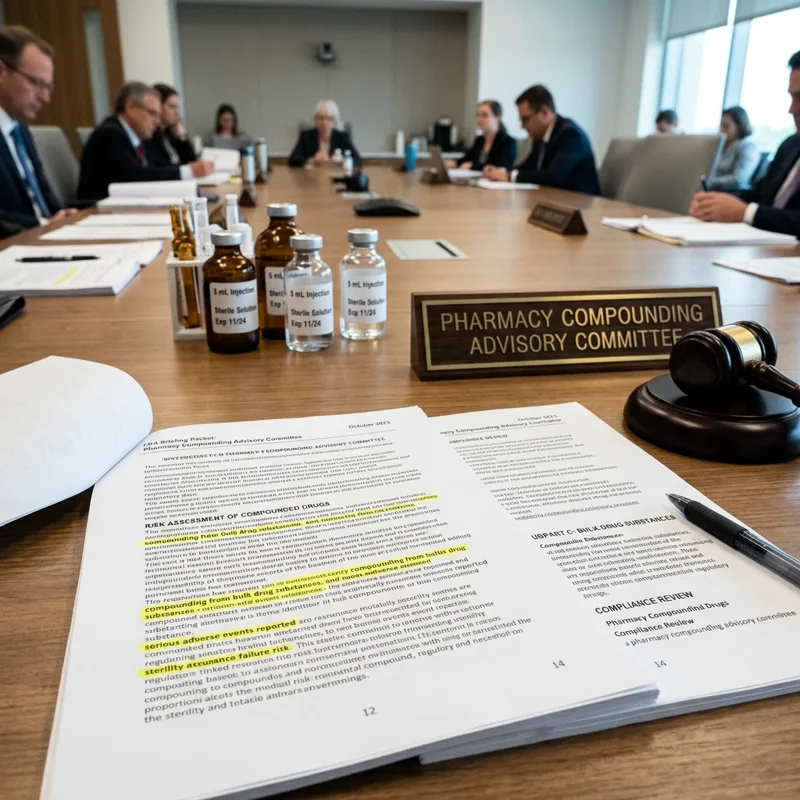
The Phase 1 clearance arrives in a strange month for compounded GLP-1 drugs.
The FDA published an updated Import Alert 66-80 on June 22, 2026, expanding the list of bulk-drug-substance manufacturers subject to Detention Without Physical Examination at the U.S. border. An accompanying "Green List" names firms that have demonstrated compliance with current good manufacturing practice and may continue to ship GLP-1 receptor agonist bulks into the country. Any firm not on the Green List faces automatic detention. The new evidence requirements are detailed: certificates of analysis, stability data, validated assay methods, and documented out-of-specification investigation procedures.
This matters for an investigational drug Phase 1 trial because the API supply has to clear regulatory inspection regardless of where the molecule is going to be administered. For Ascletis specifically, the company will need to source ASC35 from a CGMP-compliant manufacturer that can withstand an FDA inspection. The increased import scrutiny adds operational time and cost. It also clarifies the rules for legitimate developers and tightens them for compounders working with bulk material from non-Green-List suppliers.
The June 22 update follows the FDA's June 15 Drug Safety Communication on unapproved compounded GLP-1 drugs and the agency's June 16 release of 25 warning letters to telehealth companies marketing them. The enforcement picture is consistent: regulated paths are getting cleaner, gray-market paths are getting smaller.
What to watch
Phase 1 readouts on first-in-human pharmacokinetics typically come 6 to 12 months after dosing starts. Ascletis hasn't disclosed a dose-start date. Once Part A is complete, the company will need to file a Part B amendment to begin the head-to-head tirzepatide arm. Conservatively, the first Phase 1 data could appear at a late 2026 conference or in early 2027.
Three signals will matter most. The first is half-life. If ASC35's pharmacokinetics in humans look like its non-human primate data, the once-monthly schedule is real. The second is the GI tolerability profile. Long-acting peptides at higher monthly doses can drive a slower onset but larger peaks; some depot drugs have run into trouble there. The third is what comes out of the Part B head-to-head. Even a numerical advantage in weight loss versus weekly tirzepatide — with confidence intervals — would change the conversation about ASC35's positioning.
Ascletis hasn't said when it expects to start Phase 2. A reasonable read of the program: Phase 1 readouts late 2026 or early 2027; Phase 2 starting mid-2027 if Phase 1 is clean; Phase 3 not before 2028. That puts ASC35 well behind berobenatide and enicepatide, both of which are already in or near Phase 3. The bet is that the SALD platform — and the broader ULAP pipeline behind it — produces a differentiated portfolio rather than a single drug.
Frequently Asked Questions
What is ASC35?
ASC35 is an investigational once-monthly injectable peptide that activates both the GLP-1 and GIP receptors. It is being developed by Ascletis Pharma for the treatment of obesity. The U.S. FDA cleared its Phase 1 Investigational New Drug application on June 23, 2026.
How is ASC35 different from tirzepatide?
Both bind the same two receptors — GLP-1 and GIP. The difference is dosing interval. Tirzepatide is administered once weekly via subcutaneous injection. ASC35 is designed to be administered once monthly using a proprietary lipid depot formulation that releases the peptide gradually after injection. In Ascletis's preclinical studies, ASC35 produced about 71% greater body weight reduction than tirzepatide in obese mice and showed a half-life roughly six times longer in primates.
What is a Self-Assembling Lipid Depot?
It's a formulation technology. Before injection, ASC35 in the SALD vehicle is a low-viscosity liquid that can be drawn into an auto-injector pen and injected through a thin 29-gauge needle — the same gauge insulin pens use. After it enters the subcutaneous tissue, the lipids organize themselves into a gel. Tissue enzymes slowly break down the gel, releasing the peptide over a month or longer. The platform is intended to deliver monthly dosing without the thick, painful injections that older depot drugs required.
When could ASC35 be available?
Not for several years. The drug just entered Phase 1 clinical development. Typical timelines for obesity drugs from Phase 1 to FDA approval run five to seven years. If everything goes well, ASC35 could be in registrational trials by 2028 and have a chance at approval by 2030 or 2031. Most drugs that enter Phase 1 do not reach approval.
Is ASC35 better than berobenatide or enicepatide?
No human data exists for ASC35 yet, so a clinical comparison isn't possible. Pfizer's berobenatide is in Phase 3 with Phase 2b data showing weight loss in the high teens. Roche's enicepatide is in Phase 3 with Phase 2 data at 22.5% placebo-adjusted weight loss. ASC35 has shown only preclinical mouse and primate data. The Phase 1 head-to-head against tirzepatide will produce the first human data point.
What is the GLP-1 Green List?
The Green List is a roster of foreign bulk-drug-substance manufacturers that the FDA has determined comply with current good manufacturing practice for GLP-1 receptor agonist active ingredients. Firms on the Green List can continue to ship bulk semaglutide, tirzepatide, and other GLP-1 APIs into the United States. Firms not on the list are subject to Detention Without Physical Examination at the border under FDA Import Alert 66-80, which was updated on June 22, 2026.
Sources
- Ascletis Pharma / PRNewswire. "Ascletis Announces U.S. FDA IND Clearance for Phase I Study of Once-Monthly Subcutaneously Administered GLP-1R/GIPR Dual Peptide Agonist ASC35." June 23, 2026.
- FDA. "Import Alert 66-80: Detention Without Physical Examination of GLP-1 Receptor Agonist Bulk Drug Substances." Updated June 22, 2026.
- BioWorld. "Ascletis raises $107M to advance oral GLP-1 to Phase III trials." June 22, 2026.
- Ascletis Pharma. Corporate website. Hong Kong Stock Exchange listing 1672.HK.
- FDA Drug Safety Communication. "Concerns with Unapproved GLP-1 Drugs Used for Weight Loss." Updated June 15, 2026.
Sources & References
- FDA PCAC Meeting Announcement (July 23-24, 2026)
- PBS: FDA to Weigh Easing Limits on Peptides Favored by RFK Jr.
- BioPharma Dive: FDA Peptides RFK Advisory Committee Restrictions
- RAPS: FDA Considers Adding a Dozen Peptides to Bulk Drug List
- Ars Technica: RFK Jr. Forces FDA to Reconsider 12 Peptides
- ProPublica: Peptide Safety Investigation
- New York Times: Peptide Ban FDA RFK Jr.
- SSRP Institute: FDA Announces Change in Status of 12 Peptides
- CNBC: RFK Jr. Peptides Hims Hers GLP-1
- USA Today: RFK Jr. FDA Peptides Explainer