U.S. peptide demand is no longer a niche hobby. It has become a freight problem: pallets, parcels, and temperature-controlled boxes moving through ports fast enough that oversight starts to look like triage.
New analysis of U.S. import records published this week argues that a large share of declared peptide shipments in early 2026 originated from manufacturers operating outside meaningful FDA oversight—and that border action appears selective, with some unapproved “research” peptides facing higher refusal rates than bulk shipments tied to blockbuster metabolic drugs. The report lands as federal officials signal renewed interest in tightening the rules around compounding and the gray market that has grown up around it.
This post explains what the import-data analysis actually says, why “FDA-registered” doesn’t mean what many consumers think it means, and what to watch as the FDA regulation debate around peptides and compounding heads into the summer.
What the Q1 2026 import-data analysis says (and what it doesn’t)
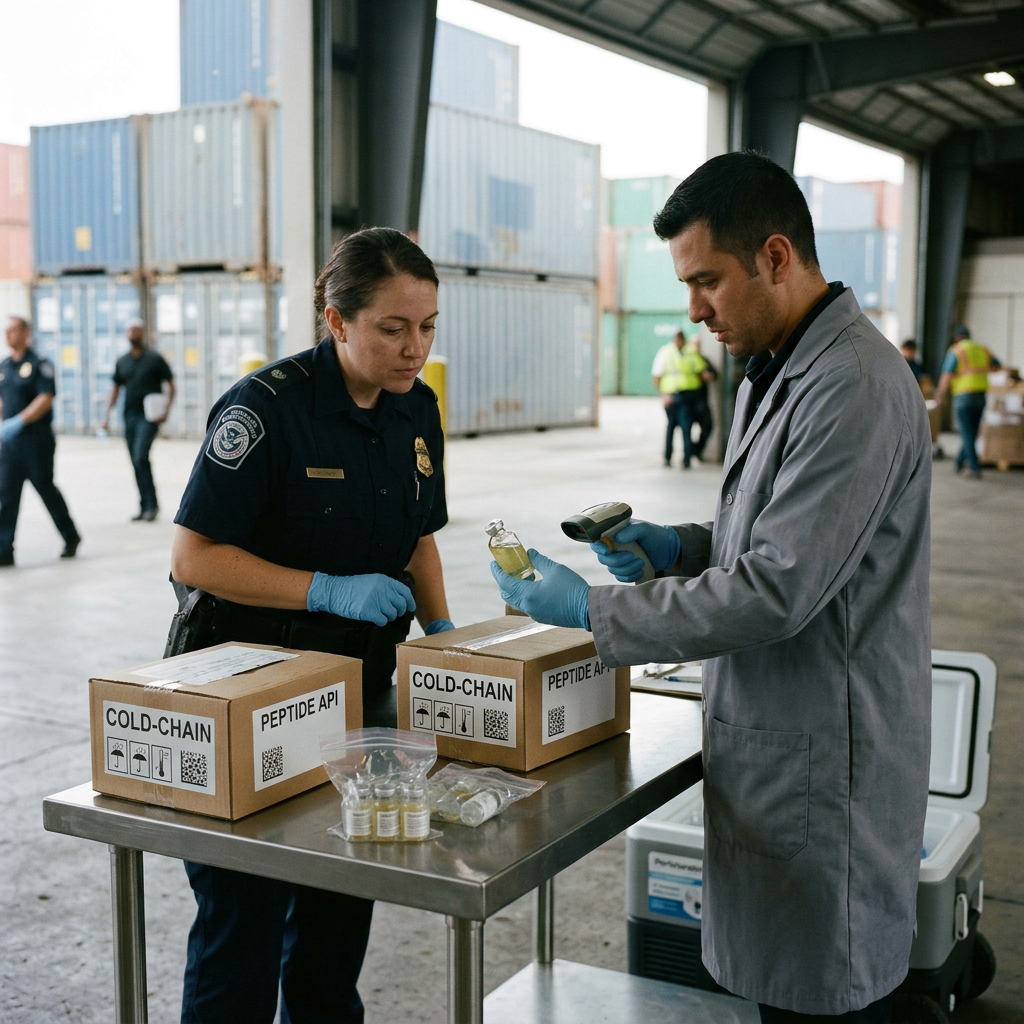
A June 9 report from the Partnership for Safe Medicines reviewed U.S. import data for “peptides n.e.c.” (not elsewhere classified) from January 1 through March 31, 2026, and highlighted three headline points: (1) a substantial portion of declared peptide shipments were tied to manufacturers the authors call “illegitimate,” (2) only a minority of shipments were refused at the border, and (3) refusals appeared disproportionately concentrated among those “illegitimate” sources. The report emphasizes limitations: it cannot capture smuggling and it cautions that an “FDA-registered” facility is not the same thing as an FDA-audited, FDA-approved peptide manufacturer.
Those caveats matter. Import databases are messy; product descriptions are inconsistent; and a single declared commodity code can bundle together very different substances. But the reason the report is being shared so widely is simple: it points to a supply-chain mismatch. The U.S. appetite for peptide injectables—especially metabolic drugs and their look-alikes—has accelerated faster than the compliance story most consumers assume exists.
In the same dataset, the report describes shipments of semaglutide and tirzepatide active ingredients originating from registered manufacturers in China, with many shipments released into the U.S. It also highlights shipments of investigational obesity drug retatrutide, arguing that third-party bulk imports likely reflect diversion into gray/black-market channels rather than legitimate sponsor supply.
Why “FDA-registered” is not “FDA approved” (and why marketers blur the line)
One of the most persistent tricks in peptide marketing is linguistic: “FDA-registered facility” gets presented as if it were a stamp of quality. Registration often means a facility is known to the agency—not that it has been inspected recently, not that it is authorized to export active pharmaceutical ingredients to the U.S., and certainly not that its products have been evaluated for quality, identity, purity, potency, or sterility.
That gap becomes risky fast when the product is an injectable peptide. Quality failures aren’t theoretical. If the active ingredient isn’t what the label claims, dosing becomes a guess. If sterility is compromised, the clinical downside can be immediate.
For readers trying to separate compliance theater from real signals, the best practical move is to treat “registered” as a starting point, not an endpoint: look for independent testing, batch-level documentation, transparent sourcing, and medical supervision. And remember that a large portion of the U.S. peptide market is simply not structured like conventional pharmaceuticals.
Compounding, the summer regulatory calendar, and the peptides getting singled out
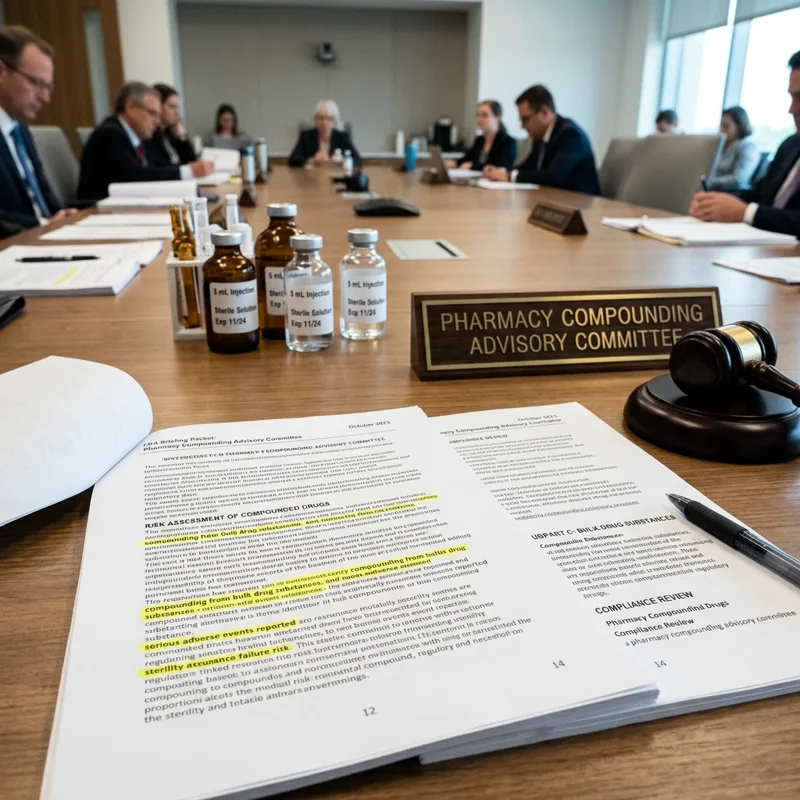
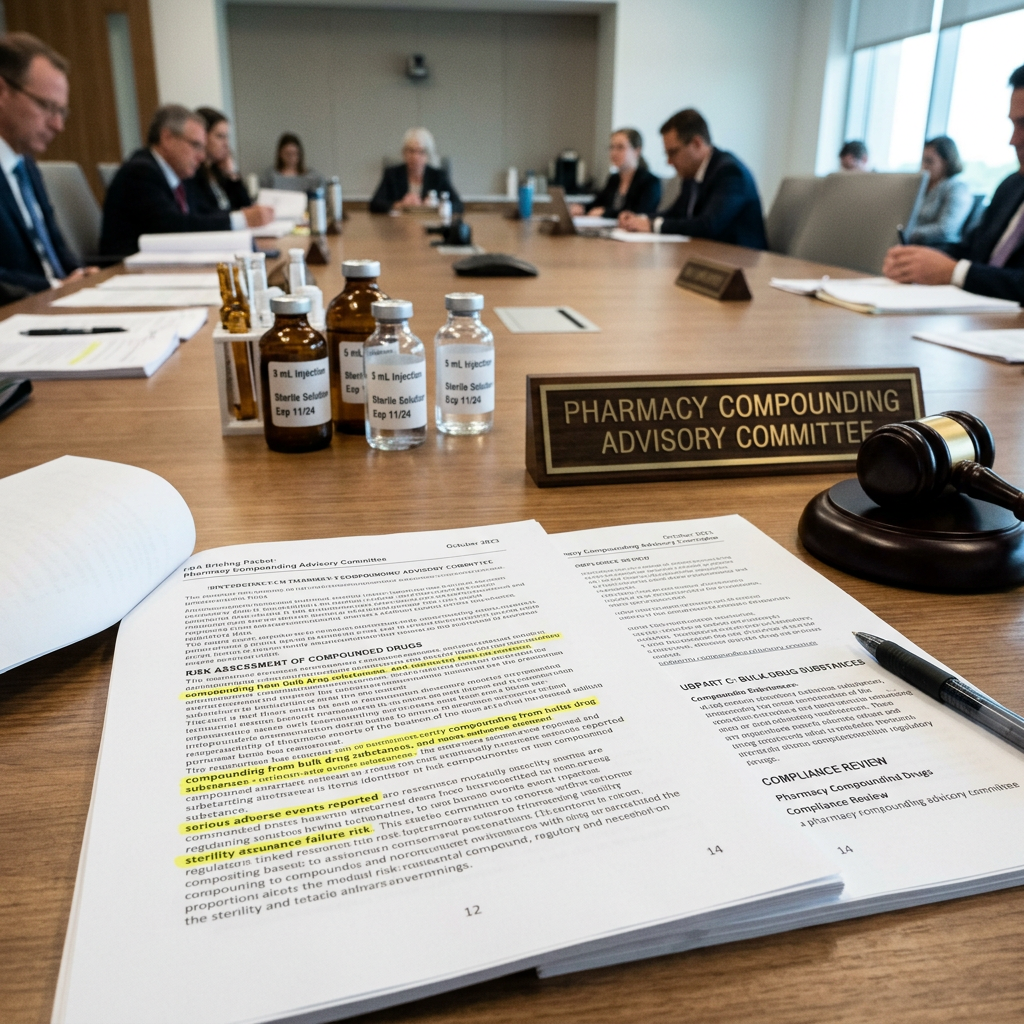
The same Partnership for Safe Medicines report connects the import story to U.S. compounding policy, noting that the Pharmacy Compounding Advisory Committee (PCAC) is expected to meet this summer to discuss whether certain peptides should be eligible for compounding. In the background is a larger political argument about how strictly FDA should constrain compounding when demand is high, commercial products are costly, and online sellers are willing to fill the gap.
The report also describes how certain unapproved peptides—particularly BPC-157, TB-500, and epithalon—appear more likely to be refused at the border when linked to unverified suppliers, while bulk metabolic shipments appear to face less friction in the same period. That doesn’t mean enforcement is “lenient.” It may mean enforcement is targeted, and that the targets don’t always match public attention.
If you’re trying to forecast where regulators will focus next, two themes keep showing up: (1) the jump from “research-only” labeling to widespread human use, especially injections sold through non-traditional channels, and (2) supply chains that rely on overseas manufacturing and re-labeling steps that are hard to audit.
Why this matters to patients (even if you never buy a peptide online)
It’s tempting to treat the peptide gray market as a self-contained world. It isn’t. First, adverse events don’t stay private; they create public pressure that can reshape access for everyone, including patients using legitimate prescriptions and legitimate compounding under medical supervision.
Second, the economic incentives are obvious. When a blockbuster class of drugs has intense demand, supply constraints, and high prices, counterfeit and diversion pressure rises. The import-data story is best read as a symptom of that incentive landscape, not as a niche scandal.
What to watch next
Watch the agenda and documents around PCAC meetings—not just headlines. If a peptide is discussed for compounding eligibility, the arguments tend to revolve around safety, clinical need, and whether the substance has a sufficient evidence base to justify compounding access.
Watch how enforcement language changes. When agencies shift from warning language to criminal penalties, it usually follows a pattern: documented harm, repeated violations, or clear evidence of deliberate mislabeling.
Watch the science pipeline. The most important “peptide news” isn’t always the loudest. For example, while the import report focuses on gray-market channels, legitimate metabolic innovation is also moving fast. This week, Mass General Brigham highlighted phase 2b results for the oral small-molecule GLP-1 receptor agonist elecoglipron (SOLSTICE), published in The Lancet and presented at the American Diabetes Association Scientific Sessions.
Frequently Asked Questions
Is importing peptides legal if they’re labeled “research use only”?
Labeling can’t override how a product is actually marketed and used. “Research use only” language is often used to distance sellers from medical claims, but regulators look at the totality of conduct: promotional claims, distribution patterns, and whether products are plausibly intended for human use.
Does “FDA-registered facility” mean the peptide is safe?
No. Registration can mean the FDA knows a facility exists. It does not guarantee the facility has been inspected recently or that a specific peptide lot has been evaluated for identity, purity, potency, or sterility. Treat it as a minimal baseline, not a quality certificate.
Why would some peptides get refused more often than others?
Refusals can reflect targeted enforcement priorities, differences in documentation quality, known risk signals, or the supplier’s compliance history. The Partnership for Safe Medicines report argues that refusals were disproportionately linked to manufacturers it considered illegitimate, especially for certain unapproved peptides.
Are semaglutide and tirzepatide peptides?
Yes. Both are peptide-based drugs used for type 2 diabetes and weight management. They are FDA-approved as finished products, but bulk active ingredient supply chains and compounding practices are separate regulatory questions.
Sources (updated June 10, 2026)
- Partnership for Safe Medicines. “Fishy Peptide Freight: What Q1 2026 import data reveals.” (June 9, 2026) https://www.safemedicines.org/2026/06/fishy-peptide-freight.html
- Mass General Brigham. “New GLP-1 Oral Pill Lowers Blood Sugar and Reduces Bodyweight.” (June 9, 2026) https://www.massgeneralbrigham.org/en/about/newsroom/press-releases/glp-1-pill-benefits-type-2-diabetes
Medical note: PeptideKnow is a reference site. This article is for informational purposes only and is not medical advice. Discuss any peptide use with a licensed clinician.
Sources & References
- FDA PCAC Meeting Announcement (July 23-24, 2026)
- PBS: FDA to Weigh Easing Limits on Peptides Favored by RFK Jr.
- BioPharma Dive: FDA Peptides RFK Advisory Committee Restrictions
- RAPS: FDA Considers Adding a Dozen Peptides to Bulk Drug List
- Ars Technica: RFK Jr. Forces FDA to Reconsider 12 Peptides
- ProPublica: Peptide Safety Investigation
- New York Times: Peptide Ban FDA RFK Jr.
- SSRP Institute: FDA Announces Change in Status of 12 Peptides
- CNBC: RFK Jr. Peptides Hims Hers GLP-1
- USA Today: RFK Jr. FDA Peptides Explainer