
AstraZeneca's once-daily oral GLP-1 receptor agonist elecoglipron hit both efficacy endpoints in a pair of Phase 2b trials. In adults with obesity, average weight loss reached 10.5% at 26 weeks and kept climbing to 11.8% at 36 weeks. In adults with type 2 diabetes, HbA1c fell by 1.9 percentage points and 90% of patients on the top dose reached the guideline target of below 7%. The trials, called VISTA and SOLSTICE, were presented June 8, 2026 at the American Diabetes Association Scientific Sessions in New Orleans and published the same day in The Lancet. AstraZeneca said it is now moving the drug into a full Phase 3 program including cardiovascular and renal outcome trials.
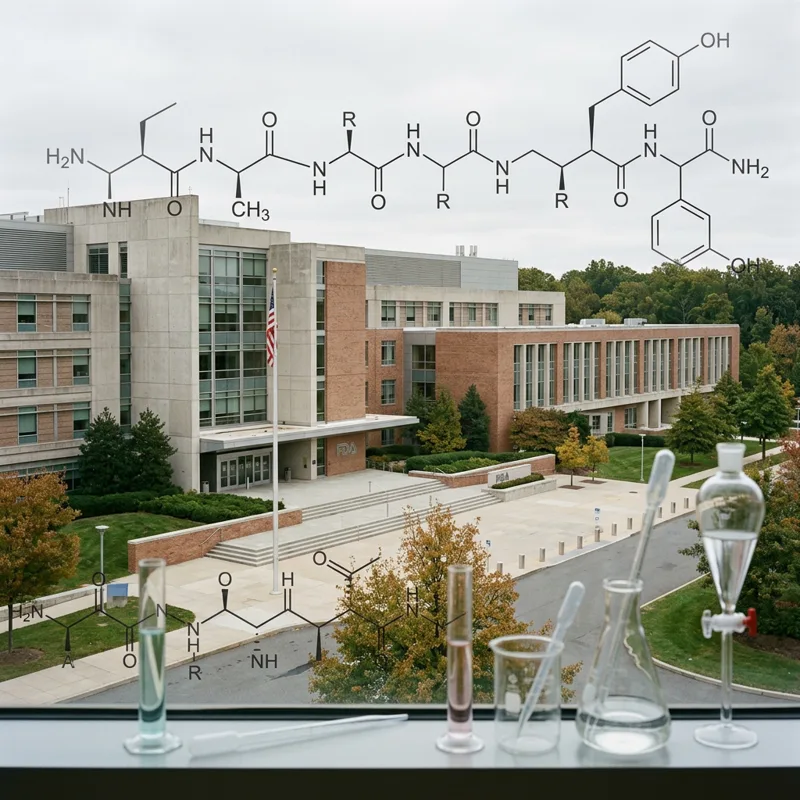
The drug is not a peptide. Elecoglipron is a small molecule that binds the same receptor the injectable peptide GLP-1 agonists target, including Novo Nordisk's semaglutide (Wegovy and Ozempic) and Eli Lilly's tirzepatide (Mounjaro and Zepbound). That distinction matters. Peptide drugs in this class need cold storage and subcutaneous injection. A tablet does not. Whether elecoglipron clears Phase 3 will help decide how much of the obesity market shifts from injections to pills.
What the trials measured
Two trials. Same drug. Two populations.
SOLSTICE enrolled 404 adults with type 2 diabetes whose glucose control was inadequate on diet, exercise, metformin, or an SGLT2 inhibitor. Mean baseline HbA1c was 7.9%. Mean BMI was 34.9. Median diabetes duration was 6.2 years. The 26-week trial randomized participants to placebo, elecoglipron at fixed doses of 5, 15, or 25 mg, or to escalation regimens targeting 50 mg or 75 mg. An exploratory arm received open-label oral semaglutide titrated to 14 mg daily as an active comparator.
VISTA enrolled 310 adults with obesity or overweight, with at least one weight-related comorbidity but without diabetes. Mean age was 48.4. Mean BMI was 38.2. Mean baseline weight was 106.9 kg. The trial randomized participants to placebo or to one of several elecoglipron doses, with the headline arm reaching 75 mg through a weekly titration schedule. Co-primary endpoints were percent body weight change at 26 weeks and the proportion reaching at least 5% weight loss.
Both trials were sponsored by AstraZeneca. The drug was originally discovered by Eccogene, a Shanghai-based biotech, which retains co-development rights in Greater China. AstraZeneca licensed global rights outside that region in November 2023.
The numbers
In SOLSTICE, the highest dose of elecoglipron — 75 mg with every-2-week escalation — produced a 1.9-percentage-point reduction in HbA1c from baseline at 26 weeks, against a 0.2-percentage-point reduction with placebo. Up to 89.6% of patients on elecoglipron achieved an HbA1c below 7%, compared to 24.9% on placebo. The 75-mg arm also produced average body weight loss of 7.7%, versus 1.7% with placebo. Lower doses showed dose-dependent responses: A1c reductions ranged from 0.91% at 5 mg up to the 1.88% headline figure at 75 mg.
In an exploratory comparison against oral semaglutide titrated to 14 mg daily, elecoglipron at 75 mg produced similar or greater glucose lowering and greater weight reduction at 26 weeks (7.61% vs 5.1%). The trial wasn't powered for a head-to-head conclusion; AstraZeneca is careful to call this a numerical comparison rather than a superiority claim.
In VISTA, the highest dose drove average weight loss of 10.5% at 26 weeks against 0.6% on placebo. By week 36, that figure had grown to 11.8% with no plateau in sight. Up to 88.8% of participants on elecoglipron reached at least 5% weight loss, compared to 15.6% on placebo. Sixty-three percent achieved at least 10% weight loss at 36 weeks. Improvements in blood pressure and C-reactive protein, a marker of systemic inflammation, were also reported.
The lack of a plateau matters. Phase 2 trials of obesity drugs typically cut off at 6 months because that's the standard duration for early signal-generation. Weight loss with GLP-1 receptor agonists tends to continue well past 6 months in longer trials. The 36-week VISTA data suggest elecoglipron is no exception, and the planned Phase 3 trials will run 72 weeks or longer.
The mechanism, in plain English
GLP-1 is a hormone the gut releases after a meal. It tells the pancreas to release insulin, tells the stomach to empty more slowly, and tells the brain you've had enough to eat. The brain side of that signal is what drives the weight loss seen with this drug class. Receptors in the hypothalamus and brainstem read the signal and reduce appetite.
Injectable peptide GLP-1 agonists like semaglutide and liraglutide are essentially modified versions of the natural hormone — long-chain amino acid sequences engineered to resist degradation in the body and bind the GLP-1 receptor for hours or days. Peptides at that size cannot survive the stomach intact. That's why they're injected. Novo Nordisk's oral semaglutide tablet (Rybelsus, recently approved in the UK as a weight-loss formulation at 25 mg) gets around that by combining the peptide with an absorption enhancer called SNAC, and it works only when taken on an empty stomach with strict fluid-timing rules.
Elecoglipron takes a different route. It is a non-peptide small molecule — a synthetic compound small enough to absorb through the gut without an enhancer. It binds the same receptor and triggers similar downstream signaling. The mechanism is shared with two other oral small-molecule GLP-1 agonists already in clinical development: orforglipron (Eli Lilly, approved earlier in 2026), and danuglipron (Pfizer, discontinued in 2025 after a liver-safety signal). Like those compounds, elecoglipron can be taken with or without food and without water-timing restrictions.
"This pill doesn't require fasting or fluid restrictions, so it could fit more naturally into daily life," Vanita R. Aroda, director of diabetes clinical research at Brigham and Women's Hospital and the SOLSTICE first author, said in a statement accompanying the ADA presentation.
Safety and tolerability
Gastrointestinal side effects, the class signature, showed up at predictable rates.
In VISTA, the 75-mg arm reported nausea in 55% (vs 20% placebo), constipation in 41% (vs 6%), diarrhea in 35% (vs 25%), and vomiting in 29% (vs 5%). In SOLSTICE, the same dose reported nausea in 37% (vs 3%), constipation in 29% (vs 4%), diarrhea in 21% (vs 15%), and vomiting in 18% (vs 1%). Most events were mild to moderate. Discontinuations for adverse events were infrequent. No liver safety signals were observed — a relevant detail given Pfizer abandoned danuglipron in 2025 over a single Phase 3 hepatic event. Hypoglycemia in the diabetes trial was uncommon, with no severe events.
AstraZeneca said Phase 2 tolerability data informed a revised dose-escalation schedule for the Phase 3 program, intended to flatten the early GI burden. That's a standard playbook for the class. Lilly used the same approach with orforglipron, and Pfizer is doing it with monthly enicepatide in Phase 3.
Where elecoglipron sits in the pipeline
The obesity drug market in 2026 looks nothing like it did three years ago. Semaglutide and tirzepatide carved out the first wave. Lilly's retatrutide, a triple agonist hitting GLP-1, GIP, and glucagon, posted 28.3% average weight loss in TRIUMPH-1 Phase 3 results in May. Boehringer Ingelheim's survodutide cleared SYNCHRONIZE-1 with 13% weight loss at 76 weeks. Roche's enicepatide hit 22.5% placebo-adjusted weight loss in Phase 2. Pfizer's monthly berobenatide is on its way through 10 Phase 3 trials.
Elecoglipron isn't the most efficacious drug in that list. The 11.8% weight loss at 36 weeks in VISTA is real, and it will likely keep climbing in Phase 3, but it sits below the injectable peptides on raw efficacy. What it has is delivery. The Phase 3 program — branded EMBOLD for obesity and ELUMINATE for diabetes — will test elecoglipron as monotherapy and in combination with AstraZeneca's existing SGLT2 inhibitor Farxiga (dapagliflozin). Outcome trials targeting cardiovascular and kidney endpoints are also planned.
"This is a middle-potency drug," Klara Klein of the University of North Carolina told Medscape. The wording is careful. It's also accurate. Patients tolerating an injection well and seeking maximum weight loss will likely stay on the high-potency peptides. The patients for whom elecoglipron has the most pull are the ones who never started a GLP-1 because of needle aversion, who couldn't afford the injectables, or who couldn't follow the fasting protocol for oral semaglutide. That's a large population.
AstraZeneca paid Eccogene up to $2 billion in milestone-tied payments for the global license in 2023. Two years later, the company is now sitting on positive Phase 2b data, a planned Phase 3 program, and the bigger question of how to position a tablet against an injection market that crossed $50 billion in 2025.
Why a small molecule changes the supply story
The 2024–2025 GLP-1 shortage came down to manufacturing. Semaglutide and tirzepatide are recombinant peptides; their production requires fermentation, chemical synthesis, complex purification, and cold-chain logistics. Capacity took years to build, and shortage-list status kept compounding pharmacies in the market through 2025.
Small-molecule drugs scale differently. They can be produced through conventional chemical synthesis at much higher throughput. An oral tablet ships without refrigeration. The unit cost, once a small molecule clears regulatory approval, is dramatically lower than a recombinant peptide. AstraZeneca didn't put a number on production cost in its release, but the analyst community has been modeling small-molecule GLP-1 manufacturing at roughly an order of magnitude cheaper per dose than the peptides. That's the implicit pitch to global health systems: a tablet that does most of what semaglutide does, at a fraction of the cost of producing it.
The downside is that an oral small molecule typically achieves lower peak efficacy than a long-acting injectable peptide. That tradeoff is the central question in obesity drug development right now.
What to watch next
Three timelines stand out.
EMBOLD enrollment begins in the second half of 2026. The Phase 3 obesity program will run longer than VISTA — likely 72 weeks at minimum — and will need to show that weight loss does not plateau early and that the GI profile holds up over time. ELUMINATE for type 2 diabetes is on a parallel track, including a combination arm with dapagliflozin.
The cardiovascular and renal outcome trials will not read out before the late 2020s, but they're how elecoglipron earns a label that goes beyond glycemic control and weight management. The competing class has set the bar: semaglutide has cardiovascular and kidney outcome data; tirzepatide has SURMOUNT-MMO underway; the FDA has signaled it expects every new entrant in obesity to come with cardiometabolic outcome evidence.
And then there's the head-to-head question. Phase 2b SOLSTICE included an exploratory oral semaglutide arm. Phase 3 will not be designed as a superiority study against semaglutide or orforglipron, but the comparative numbers from the trials will be read closely by formularies and global health agencies trying to decide which drug deserves which slot.
Frequently Asked Questions
Is elecoglipron a peptide?
No. Elecoglipron is a small-molecule drug — a synthetic compound, not a peptide. It binds the same GLP-1 receptor as injectable peptide GLP-1 agonists like semaglutide and liraglutide, but its chemistry is fundamentally different. That difference is what lets it be formulated as an oral tablet without the absorption-enhancer chemistry that oral semaglutide requires.
How does elecoglipron compare to oral semaglutide (Rybelsus)?
Both are tablets, but oral semaglutide is a peptide combined with an absorption enhancer called SNAC, and it requires fasting and water-timing restrictions to absorb properly. Elecoglipron is a non-peptide small molecule and can be taken with or without food. In the SOLSTICE exploratory comparison at 26 weeks, the 75-mg elecoglipron dose produced 7.61% body weight reduction versus 5.1% with 14-mg oral semaglutide, though the trial wasn't designed to make a head-to-head superiority claim.
When will elecoglipron be available?
Not soon. The drug is still in Phase 2 of clinical development. AstraZeneca said the Phase 3 EMBOLD and ELUMINATE programs will start in the second half of 2026. Those trials typically run 18 to 24 months. Allowing time for regulatory review, the earliest possible FDA approval would be 2028 or 2029. Outcome trials supporting cardiovascular and kidney labeling will continue past that date.
What weight loss should I expect from elecoglipron?
VISTA reported average 11.8% body weight reduction at 36 weeks at the highest dose. That number is from a 310-person Phase 2 trial. Individual results varied widely, and Phase 3 trials at longer durations may show higher or lower averages. For context, semaglutide produced about 14.9% weight loss in STEP 1, tirzepatide produced about 22.5% in SURMOUNT-1, and retatrutide produced 28.3% in TRIUMPH-1.
Will elecoglipron be cheaper than injectable GLP-1 drugs?
Small-molecule manufacturing scales differently than recombinant peptide manufacturing. Oral tablets ship without cold-chain logistics. The class of small-molecule oral GLP-1 agonists is broadly expected to be priced lower than the injectable peptides, but neither AstraZeneca nor anyone else has committed to specific pricing. Final cost will depend on label, payer negotiations, and competition from other small-molecule entrants like orforglipron.
Who is Eccogene?
Eccogene is a Shanghai-based clinical-stage biotech that discovered elecoglipron, originally coded ECC5004 or AZD5004. In November 2023, Eccogene licensed global rights outside Greater China to AstraZeneca in a deal worth up to $2 billion in milestone payments. Eccogene retains co-development and co-commercialization rights in Greater China and is running a separate Phase 1b trial of elecoglipron in Chinese patients.
Sources
- AstraZeneca press release. "Elecoglipron, an oral small molecule GLP-1 RA, moves to Phase III programme." June 8, 2026.
- Aroda VR et al. "Elecoglipron, an oral small molecule GLP-1 receptor agonist in adults with type 2 diabetes (SOLSTICE): a multicentre, phase 2b, randomised, placebo-controlled trial." The Lancet. DOI:10.1016/S0140-6736(26)00802-0. Published June 8, 2026.
- Davies MJ et al. VISTA Phase 2b trial. The Lancet. Published June 8, 2026, presented at ADA Scientific Sessions, New Orleans.
- Medscape. "Novel Oral GLP-1 Shows A1c and Weight-Loss Benefits." June 12, 2026.
- STAT News. "AstraZeneca GLP-1 pill shows promise in obesity, diabetes trials." June 8, 2026.
- Eccogene/AstraZeneca. "Multiple Clinical Trial Data for Elecoglipron (AZD5004/ECC5004)." BioSpace, June 2, 2026.
- Leicester Diabetes Centre. "Results from study pave the way for tablet weight loss medication." June 9, 2026.
- VISTA trial registration. ClinicalTrials.gov NCT06579092.
Sources & References
- FDA PCAC Meeting Announcement (July 23-24, 2026)
- PBS: FDA to Weigh Easing Limits on Peptides Favored by RFK Jr.
- BioPharma Dive: FDA Peptides RFK Advisory Committee Restrictions
- RAPS: FDA Considers Adding a Dozen Peptides to Bulk Drug List
- Ars Technica: RFK Jr. Forces FDA to Reconsider 12 Peptides
- ProPublica: Peptide Safety Investigation
- New York Times: Peptide Ban FDA RFK Jr.
- SSRP Institute: FDA Announces Change in Status of 12 Peptides
- CNBC: RFK Jr. Peptides Hims Hers GLP-1
- USA Today: RFK Jr. FDA Peptides Explainer