Danuglipron (Pfizer Discontinued Oral GLP-1)
Also known as: PF-06882961, Pfizer oral GLP-1
Overview
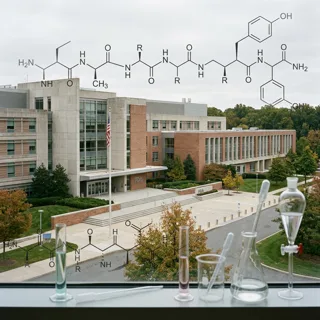
Danuglipron is a non-peptide small-molecule GLP-1 receptor agonist that Pfizer advanced through clinical development for obesity and type 2 diabetes before discontinuing the program in April 2025 over liver-safety concerns observed in a single Phase 3 participant. Like Eli Lilly's orforglipron, danuglipron binds human GLP-1 receptor by docking against a pocket that requires the tryptophan side chain at position 33 of the extracellular domain. Mice carry a serine at that position, and danuglipron does not bind the mouse receptor at meaningful concentrations. Studying danuglipron pharmacology in vivo therefore required the humanized GLP-1 receptor mouse models developed by groups including the Guler lab at the University of Virginia. In the Godschall et al. Nature paper published May 6, 2026, danuglipron was used alongside orforglipron and liraglutide to demonstrate that small-molecule oral GLP-1 receptor agonists recruit a previously uncharacterized central amygdala circuit that suppresses dopamine release in the nucleus accumbens and selectively reduces hedonic feeding. Although Pfizer halted danuglipron development, the molecule remains a critical reference compound for the small-molecule oral GLP-1 class and is used in academic preclinical studies of GLP-1 receptor pharmacology. Danuglipron is not approved for any indication, was never marketed, and is not available outside research settings.
Mechanism of Action
Non-peptide small-molecule agonist at the human GLP-1 receptor. Binds an extracellular pocket adjacent to the orthosteric site, with a critical contact at tryptophan-33 of the receptor. Activates Gs-coupled signaling and cAMP production. In humanized GLP-1 receptor mouse models, danuglipron engages canonical hypothalamic and hindbrain GLP-1 receptor networks that suppress homeostatic feeding, and additionally recruits a central amygdala circuit that reduces dopamine release in the nucleus accumbens to suppress hedonic feeding.
Potential Benefits
- Oral bioavailability (twice-daily formulation as tested in Pfizer trials)
- Significant reductions in body weight and HbA1c in Phase 2 trials
- Non-peptide manufacturing avoids the cost structure of recombinant peptide GLP-1s
- Used as a reference compound for understanding small-molecule GLP-1 brain pharmacology
Research Dosage Notes
The following reflects doses used in published research studies. This is not medical advice.
Twice-daily oral dosing was used in Phase 2 trials at doses up to 120 mg BID. Not applicable for clinical use as the drug is unapproved.
Routes of Administration
Oral (tablet, as formulated in Pfizer trials)
Read our full Routes of Administration Guide for detailed comparison of all delivery methods.
Reconstitution
Need exact syringe measurements?
Amino Acid Sequence
Not applicable - non-peptide small molecule
Side Effects & Safety
- Gastrointestinal: nausea, vomiting, diarrhea (class effect)
- Hepatic enzyme elevations reported in Phase 2 and Phase 3 trials
- Single Phase 3 participant developed drug-induced liver injury leading to program discontinuation
Safety & Contraindications
This information is for educational purposes only. Consult a qualified healthcare provider before using any peptide.
Not applicable - unapproved compound
Drug Interactions
- Likely class effects similar to other GLP-1 agonists: delayed gastric emptying may affect oral drug absorption
FDA Safety Information
Not approved by FDA. Hepatic adverse event observed in Phase 3 trial led to program discontinuation in April 2025.
Pharmacokinetics
| Half-Life | Approximately 5 to 6 hours, consistent with twice-daily dosing |
|---|---|
| Storage | Not applicable - no commercial product |
Synergistic Compounds
The following compounds have been studied alongside Danuglipron (Pfizer Discontinued Oral GLP-1) for potential complementary or synergistic effects:
Learn More
References & Further Reading
Latest News & Research
View all articles →
FDA Staff Reviewers Say ‘No’ to 7 Compounded Peptides Ahead of July PCAC Vote
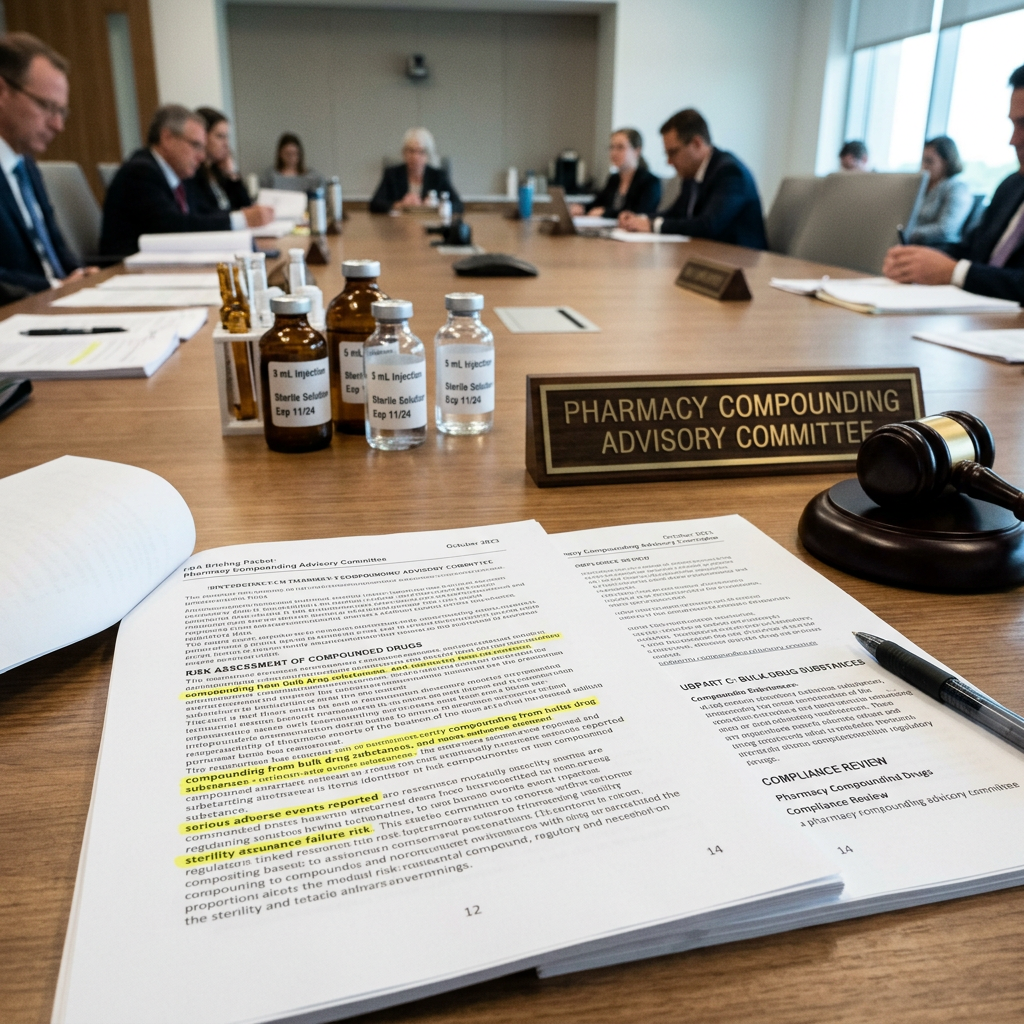
FDA staff reviewers urged against adding seven popular peptides to the 503A bulks list ahead of the July PCAC meeting, citing weak human data and safety uncertainty.

FDA reviewers urge ‘no’ on BPC-157, TB-500, MOTS-c ahead of July 2026 compounding vote
FDA reviewers’ June 29 briefings recommend against listing seven popular peptides for 503A compounding, citing limited human data and immunogenicity risk.

Medicare Starts Paying for Obesity Drugs Today — Bridge Program Opens $50 Access for Millions
Medicare's new $50 Bridge program covering Wegovy, Zepbound, Foundayo, and oral Wegovy for obesity launched July 1 — the first Medicare weight-loss benefit.
FDA staff urges caution on compounded peptides ahead of July advisory meeting
Ahead of the July 23–24 Pharmacy Compounding Advisory Committee meeting, FDA staff briefings recommend against listing seven popular peptides for compounding.