Vasoactive Intestinal Peptide
Also known as: VIP, Vasoactive Intestinal Polypeptide
Overview
Vasoactive Intestinal Peptide (VIP) is a naturally occurring 28-amino acid neuropeptide found in the nervous system and immune cells throughout the body. It acts as both a neurotransmitter and a hormone with diverse physiological roles including smooth muscle relaxation, vasodilation, regulation of gastrointestinal secretions, and insulin secretion. VIP's immunomodulatory properties, particularly its potent anti-inflammatory effects, have made it a research target for autoimmune and inflammatory diseases, including experimental arthritis and multiple sclerosis.
Mechanism of Action
VIP binds to VPAC1 and VPAC2 receptors (GPCRs), activating adenylyl cyclase and elevating intracellular cAMP levels. In immune cells, this drives reduction of pro-inflammatory cytokines (TNF, IL-1) and upregulation of anti-inflammatory mediators (IL-10, IL-1RA). In pancreatic beta-cells, VPAC2 activation in a glucose-dependent manner stimulates insulin secretion via PKA and Epac signaling, closing ATP-dependent K+ channels and enabling Ca2+ influx. In inflammatory arthritis models, VIP reduces inflammatory infiltrate, pannus formation, cartilage destruction, bone erosion, and lowers CD4:CD8 ratio in synovium.
Potential Benefits
- Potent anti-inflammatory: prevention and treatment of experimental rheumatoid arthritis
- Glucose-dependent insulin secretion stimulation without hypoglycemia risk
- Smooth muscle relaxation in GI, vascular, and respiratory systems
- Suppression of inflammatory cytokines (TNF, IL-1) in synovium
- Upregulation of anti-inflammatory IL-10 and IL-1RA
- Protection against inflammatory bowel disease
- Potential neuroprotective effects via PACAP-related pathways
Dosage Protocols
The following reflects doses used in published research studies. This is not medical advice. Consult a qualified healthcare professional.
| Beginner | 50 mcg intranasal daily |
| Intermediate | 100 mcg intranasal 1-2x daily |
| Advanced | 200 mcg intranasal 2x daily |
| Cycle Duration | Variable — can be used long-term under supervision |
Popularized for CIRS/mold illness (Shoemaker protocol). Must rule out pulmonary hypertension first. Prescription-compounded only.
Use our Reconstitution Calculator to determine exact syringe units for your protocol.
Routes of Administration
Intranasal Moderate — preferred clinical route
Standard Shoemaker CIRS protocol route.
Subcutaneous Injection High systemic — but rapid degradation
Less common due to very short plasma half-life.
Read our full Routes of Administration Guide for detailed comparison of all delivery methods.
Stacking Protocols
Popular research stacks involving Vasoactive Intestinal Peptide:
CIRS/Mold Recovery Stack
Shoemaker protocol adjunct. VIP restores hypothalamic regulation, Thymosin Alpha-1 modulates immunity, BPC-157 supports tissue repair.
Explore our complete Peptide Stacking Guide for more combinations and safety considerations.
Reconstitution
| Storage | Refrigerate at 2-8°C after reconstitution |
|---|
For nasal peptides (Semax, Selank, PT-141 nasal), reconstitute in sterile saline and transfer to a metered nasal spray device.
Need exact syringe measurements?
Amino Acid Sequence
His-Ser-Asp-Ala-Val-Phe-Thr-Asp-Asn-Tyr-Thr-Arg-Leu-Arg-Lys-Gln-Met-Ala-Val-Lys-Lys-Tyr-Leu-Asn-Ser-Ile-Leu-Asn-NH2
Side Effects & Safety
- Hypotension at high doses (vasodilation effect)
- Tachycardia
- Flushing
- Very short half-life limits clinical utility
Safety & Contraindications
This information is for educational purposes only. Consult a qualified healthcare provider before using any peptide.
Pregnancy / Lactation
Bleeding Disorders
Active Skin Infection at Injection Site
Pharmacokinetics
| Half-Life | Not well characterized for this peptide; consult primary literature |
|---|---|
| Storage | Store lyophilized peptide at -20°C (long-term) or 2-8°C (short-term, under 30 days). Reconstituted: refrigerate at 2-8°C and use within 28-30 days. Protect from light. Do not freeze reconstituted solution. |
Synergistic Compounds
The following compounds have been studied alongside Vasoactive Intestinal Peptide for potential complementary or synergistic effects:
Learn More
References & Further Reading
Latest News & Research
View all articles →
FDA Staff Reviewers Say ‘No’ to 7 Compounded Peptides Ahead of July PCAC Vote
FDA staff reviewers urged against adding seven popular peptides to the 503A bulks list ahead of the July PCAC meeting, citing weak human data and safety uncertainty.

FDA reviewers urge ‘no’ on BPC-157, TB-500, MOTS-c ahead of July 2026 compounding vote
FDA reviewers’ June 29 briefings recommend against listing seven popular peptides for 503A compounding, citing limited human data and immunogenicity risk.

Medicare Starts Paying for Obesity Drugs Today — Bridge Program Opens $50 Access for Millions
Medicare's new $50 Bridge program covering Wegovy, Zepbound, Foundayo, and oral Wegovy for obesity launched July 1 — the first Medicare weight-loss benefit.

FDA staff urges caution on compounded peptides ahead of July advisory meeting
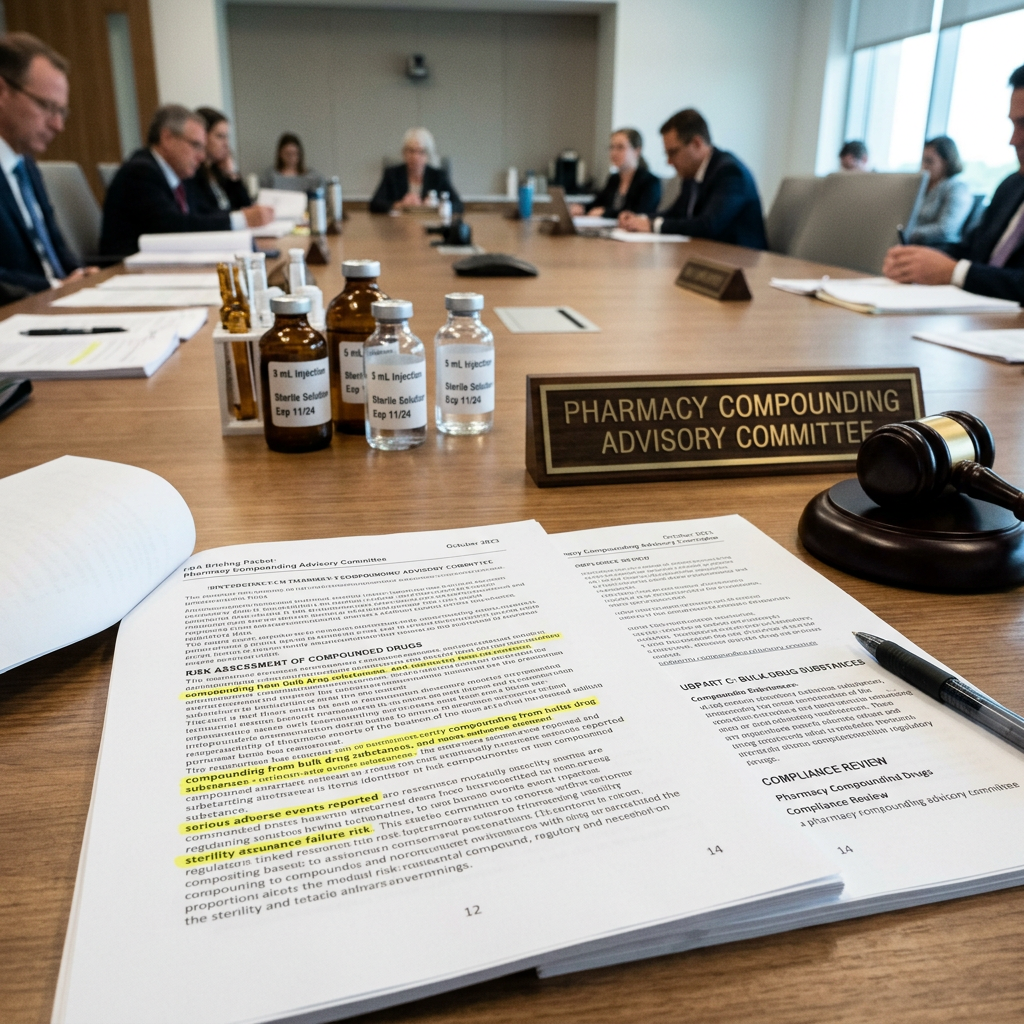
Ahead of the July 23–24 Pharmacy Compounding Advisory Committee meeting, FDA staff briefings recommend against listing seven popular peptides for compounding.