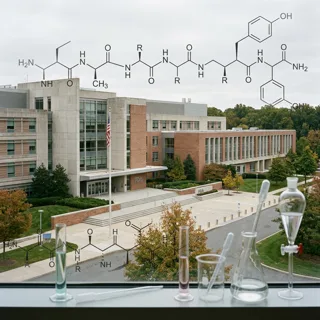
Cagrilintide
Also known as: AM833, Long-acting amylin analog
Overview
Cagrilintide is a long-acting acylated amylin analog developed by Novo Nordisk. Amylin is a 37-amino acid peptide co-secreted with insulin from pancreatic beta cells that suppresses postprandial glucagon, slows gastric emptying, and promotes satiety. Cagrilintide's extended half-life allows once-weekly subcutaneous dosing. When combined with semaglutide (as CagriSema), the dual amylin/GLP-1 mechanism produced up to 25.2% weight loss in Phase II trials, with Phase III data anticipated in 2025–2026.
Mechanism of Action
Cagrilintide binds amylin receptors (AMY1, AMY2, AMY3 — complexes of calcitonin receptor with receptor activity-modifying proteins RAMP1-3) in the area postrema and nucleus accumbens, activating cAMP-mediated signaling. This suppresses postprandial glucagon secretion, delays gastric emptying to reduce postprandial glycemic excursions, and activates hypothalamic satiety circuits via POMC neurons. The amylin mechanism is complementary and additive to GLP-1 receptor agonism, explaining the superior weight loss of the CagriSema combination.
Potential Benefits
- Sustained appetite suppression via amylin receptor activation
- Postprandial glucagon suppression
- Gastric emptying delay reducing postprandial glucose excursions
- Significant weight loss as monotherapy (10–15%)
- Superior weight loss in combination with semaglutide (up to 25.2% in Phase II)
Dosage Protocols
The following reflects doses used in published research studies. This is not medical advice. Consult a qualified healthcare professional.
| Beginner | 0.16 mg weekly titrating upward |
| Intermediate | 1.2 mg weekly |
| Advanced | 2.4 mg weekly (Phase II dose) |
| Cycle Duration | Chronic use for weight management (trial protocol) |
Novo Nordisk amylin analog. Typically co-administered with semaglutide ('CagriSema').
Use our Reconstitution Calculator to determine exact syringe units for your protocol.
Routes of Administration
Subcutaneous Injection High
Once-weekly SC injection. As part of CagriSema fixed-dose combination at 2.4 mg. Also studied as monotherapy (2.4 mg/week in Phase 2). Dose escalation protocol over ~16 weeks.
Read our full Routes of Administration Guide for detailed comparison of all delivery methods.
Stacking Protocols
Popular research stacks involving Cagrilintide:
CagriSema (Cagrilintide + Semaglutide)
Phase III combination therapy for obesity — ~15-20% weight loss in Phase II. Co-formulated once-weekly injection.
Explore our complete Peptide Stacking Guide for more combinations and safety considerations.
Reconstitution
| Storage | Refrigerate at 2-8°C after reconstitution. Do not freeze reconstituted solution. |
|---|
Typical vial sizes: 5-10 mg. Add bac water slowly down the side of the vial, swirl gently — do not shake. Use insulin syringe for precise dosing.
Need exact syringe measurements?
Amino Acid Sequence
Modified 37 AA amylin sequence with fatty acid acylation for half-life extension
Side Effects & Safety
- Nausea and vomiting (class effect)
- Injection site reactions
- Diarrhea
- Decreased appetite (intended but can be excessive)
Safety & Contraindications
This information is for educational purposes only. Consult a qualified healthcare provider before using any peptide.
Pregnancy / Lactation
Bleeding Disorders
Active Skin Infection at Injection Site
Drug Interactions
- Oral Medications (general):
Pharmacokinetics
| Half-Life | ~7 days (acylated amylin analog with long-chain fatty acid for albumin binding; once-weekly dosing) |
|---|---|
| Storage | Refrigerate at 2–8°C; do not freeze; protect from light; administered as part of CagriSema fixed-dose pen |
Synergistic Compounds
The following compounds have been studied alongside Cagrilintide for potential complementary or synergistic effects:
Learn More
References & Further Reading
Latest News & Research
View all articles →
FDA Staff Reviewers Say ‘No’ to 7 Compounded Peptides Ahead of July PCAC Vote
FDA staff reviewers urged against adding seven popular peptides to the 503A bulks list ahead of the July PCAC meeting, citing weak human data and safety uncertainty.

FDA reviewers urge ‘no’ on BPC-157, TB-500, MOTS-c ahead of July 2026 compounding vote
FDA reviewers’ June 29 briefings recommend against listing seven popular peptides for 503A compounding, citing limited human data and immunogenicity risk.

Medicare Starts Paying for Obesity Drugs Today — Bridge Program Opens $50 Access for Millions
Medicare's new $50 Bridge program covering Wegovy, Zepbound, Foundayo, and oral Wegovy for obesity launched July 1 — the first Medicare weight-loss benefit.
FDA staff urges caution on compounded peptides ahead of July advisory meeting
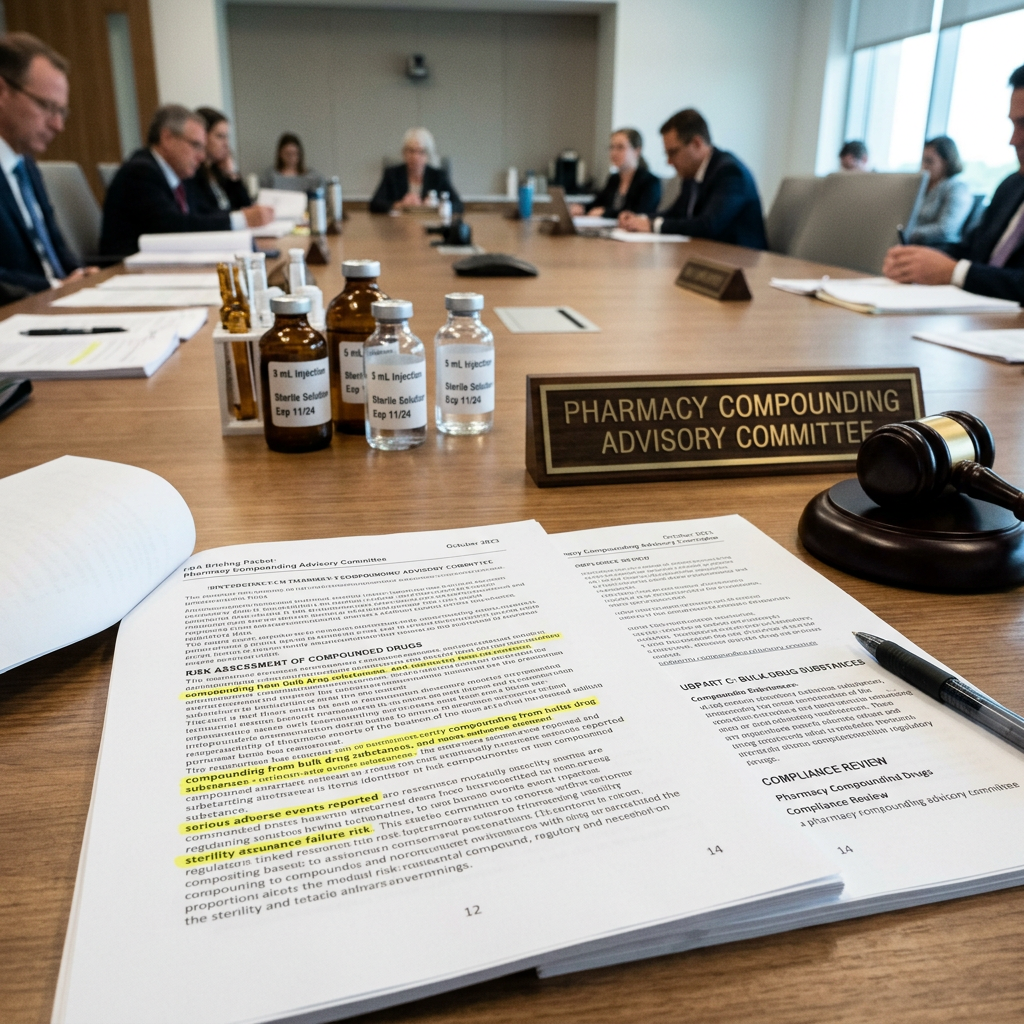
Ahead of the July 23–24 Pharmacy Compounding Advisory Committee meeting, FDA staff briefings recommend against listing seven popular peptides for compounding.