Bivalirudin
Also known as: Angiomax, Angiox, Hirulog, Synthetic Hirudin Analog
Overview
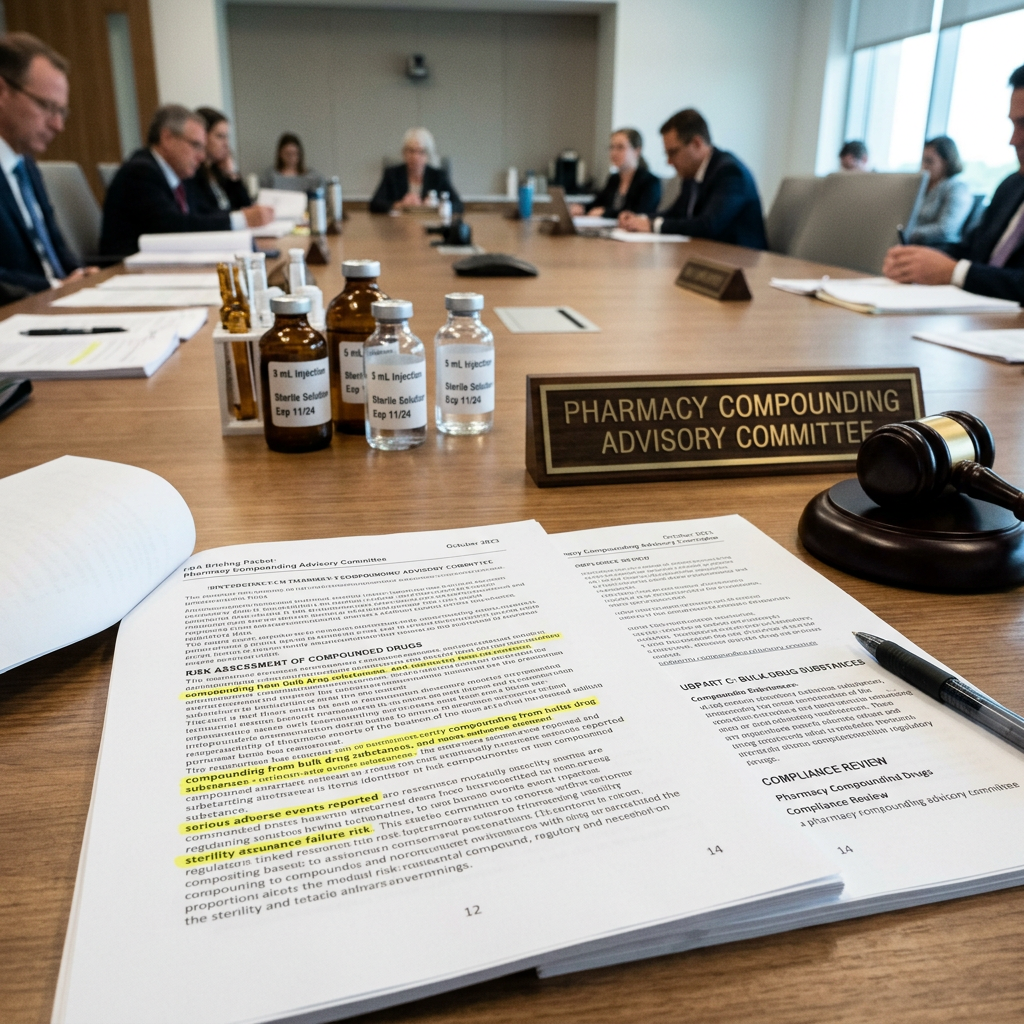
Bivalirudin (Angiomax) is a synthetic 20-amino acid bivalent direct thrombin inhibitor derived from hirudin, the natural anticoagulant peptide produced by the medicinal leech Hirudo medicinalis. Unlike heparin (which requires antithrombin cofactor), bivalirudin directly and reversibly inhibits both free circulating thrombin and clot-bound thrombin. FDA-approved for anticoagulation in percutaneous coronary intervention (PCI) and acute coronary syndromes, bivalirudin offers predictable pharmacokinetics, brief duration of action, and no requirement for laboratory monitoring in most settings.
Mechanism of Action
Bivalirudin contains two functional domains: a hirudin-derived C-terminal sequence that binds the fibrin-recognition (exosite 1) of thrombin, and a D-Phe-Pro-Arg-Pro N-terminal sequence that occupies the thrombin active site serine. This bivalent binding creates reversible direct thrombin inhibition. Unlike hirudin, after active site binding thrombin slowly cleaves the Arg3-Pro4 bond in bivalirudin, releasing the active site portion and producing transient self-inactivation that gives bivalirudin its characteristic short half-life (~25 minutes) and predictable anticoagulant offset.
Potential Benefits
- Direct thrombin inhibition without antithrombin cofactor requirement
- Inhibition of both free and clot-bound thrombin (advantage over heparin)
- Predictable pharmacokinetics and short half-life (~25 min)
- Reduced major bleeding compared to heparin+GP IIb/IIIa inhibitors in PCI
- Alternative anticoagulant in heparin-induced thrombocytopenia (HIT)
Dosage Protocols
The following reflects doses used in published research studies. This is not medical advice. Consult a qualified healthcare professional.
| Beginner | Per-protocol — not used outside clinical settings |
| Intermediate | 0.75 mg/kg bolus + 1.75 mg/kg/hr infusion (standard PCI protocol) |
| Advanced | Dose adjusted for renal impairment (CrCl <30: reduce infusion to 1 mg/kg/hr) |
| Cycle Duration | Procedure duration (typically 1-4 hours during PCI) |
Direct thrombin inhibitor used during PCI/cardiac procedures. Not a self-administered or research-community peptide. Hospital use only.
Use our Reconstitution Calculator to determine exact syringe units for your protocol.
Routes of Administration
Intravenous (bolus + infusion) 100% (IV)
Administered as IV bolus followed by continuous IV infusion during PCI. Monitor ACT (activated clotting time).
Read our full Routes of Administration Guide for detailed comparison of all delivery methods.
Stacking Protocols
Popular research stacks involving Bivalirudin:
PCI Anticoagulation Protocol
Standard PCI antithrombotic regimen: bivalirudin for procedural anticoagulation plus dual antiplatelet therapy. Not a recreational or research stack.
Explore our complete Peptide Stacking Guide for more combinations and safety considerations.
Reconstitution
| Storage | Reconstituted solution: use within 24 hours at 2-8°C. Diluted solution: use within 24 hours at room temperature. |
|---|
Hospital pharmacy preparation. Follow manufacturer's package insert for dilution protocols.
Need exact syringe measurements?
Amino Acid Sequence
D-Phe-Pro-Arg-Pro-Gly-Gly-Gly-Gly-Asn-Gly-Asp-Phe-Glu-Glu-Ile-Pro-Glu-Glu-Tyr-Leu (20 AA)
Side Effects & Safety
- Bleeding (primary risk; managed by dose adjustment and activated clotting time monitoring)
- Acute thrombosis with abrupt discontinuation
- Mild nausea
- Back pain
Safety & Contraindications
This information is for educational purposes only. Consult a qualified healthcare provider before using any peptide.
Pregnancy / Lactation
Bleeding Disorders
Active Skin Infection at Injection Site
Drug Interactions
- Other Anticoagulants / Antiplatelets:
FDA Safety Information
FDA labeling warns of bleeding as the most common adverse event; contraindicated in patients with active major bleeding.
Pharmacokinetics
| Half-Life | ~25 minutes (normal renal function); prolonged in renal impairment |
|---|---|
| Storage | Store lyophilized vials at 2-8°C. Protect from light. Do not freeze. |
Synergistic Compounds
The following compounds have been studied alongside Bivalirudin for potential complementary or synergistic effects:
Learn More
References & Further Reading
Latest News & Research
View all articles →
FDA Staff Reviewers Say ‘No’ to 7 Compounded Peptides Ahead of July PCAC Vote
FDA staff reviewers urged against adding seven popular peptides to the 503A bulks list ahead of the July PCAC meeting, citing weak human data and safety uncertainty.

FDA reviewers urge ‘no’ on BPC-157, TB-500, MOTS-c ahead of July 2026 compounding vote
FDA reviewers’ June 29 briefings recommend against listing seven popular peptides for 503A compounding, citing limited human data and immunogenicity risk.

Medicare Starts Paying for Obesity Drugs Today — Bridge Program Opens $50 Access for Millions
Medicare's new $50 Bridge program covering Wegovy, Zepbound, Foundayo, and oral Wegovy for obesity launched July 1 — the first Medicare weight-loss benefit.
FDA staff urges caution on compounded peptides ahead of July advisory meeting
Ahead of the July 23–24 Pharmacy Compounding Advisory Committee meeting, FDA staff briefings recommend against listing seven popular peptides for compounding.