Terlipressin
Also known as: Glypressin, Triglycyl-lysine vasopressin, Lucassin
Overview
Terlipressin is a synthetic vasopressin analog and prodrug designed for selective splanchnic vasoconstriction with reduced systemic vasopressor effects compared to vasopressin. FDA-approved in 2022 for hepatorenal syndrome type 1 (HRS-1) and widely used in Europe for esophageal variceal bleeding, terlipressin is cleaved in vivo to lysine-vasopressin, which acts on V1a receptors to produce prolonged, preferential splanchnic vasoconstriction. This reduces portal hypertension, limits variceal bleeding, and in HRS-1 improves renal perfusion by redirecting blood flow from the splanchnic circulation.
Mechanism of Action
Terlipressin is a prodrug metabolized by endopeptidases to lysine-vasopressin, which binds V1a receptors (vascular smooth muscle) with high affinity, stimulating Gq/11-phospholipase C-IP3-calcium signaling and strong vasoconstriction. Splanchnic arterioles are highly sensitive to V1a activation, resulting in splanchnic vasoconstriction that reduces portal venous inflow, lowers portal pressure, and compresses varices. This hemodynamic shift also redirects blood flow to the systemic circulation, improving renal perfusion in the setting of HRS-1 where renal vasoconstriction is triggered by splanchnic vasodilation.
Potential Benefits
- FDA-approved treatment for hepatorenal syndrome type 1
- Variceal bleeding control (EU approved)
- Selective splanchnic vasoconstriction reducing portal pressure
- Improved renal perfusion in HRS-1 (reduces need for dialysis)
- Longer duration of action than vasopressin (bolus dosing possible)
Dosage Protocols
The following reflects doses used in published research studies. This is not medical advice. Consult a qualified healthcare professional.
| Beginner | Hospital use only |
| Intermediate | N/A |
| Advanced | N/A |
| Cycle Duration | Up to 14 days (hepatorenal syndrome) |
FDA-approved (Terlivaz, 2022) for hepatorenal syndrome type 1. Also used in Europe/Asia for variceal bleeding.
Use our Reconstitution Calculator to determine exact syringe units for your protocol.
Routes of Administration
Intravenous Bolus 100%
Slow IV push every 6 hours. Hospital setting only.
Continuous Intravenous Infusion 100%
Alternative dosing protocol used in Europe.
Read our full Routes of Administration Guide for detailed comparison of all delivery methods.
Stacking Protocols
Popular research stacks involving Terlipressin:
Hepatorenal Syndrome Protocol
FDA-approved HRS-1 protocol — terlipressin + IV albumin.
Variceal Bleeding (ex-U.S.)
European acute variceal bleeding protocol — terlipressin + prophylactic antibiotics.
Explore our complete Peptide Stacking Guide for more combinations and safety considerations.
Reconstitution
| Storage | Refrigerate 2-8°C. Use reconstituted solution within 24 hours. |
|---|
Hospital pharmacy preparation.
Need exact syringe measurements?
Amino Acid Sequence
Gly-Gly-Gly-Cys-Tyr-Phe-Gln-Asn-Cys-Pro-Lys-Gly-NH2 (prodrug; cleaved to Lys-vasopressin)
Side Effects & Safety
- Hyponatremia
- Abdominal cramps and diarrhea
- Peripheral ischemia (skin, fingers) at high doses
- Hypertension
- Rare: mesenteric ischemia
Safety & Contraindications
This information is for educational purposes only. Consult a qualified healthcare provider before using any peptide.
Pregnancy / Lactation
Bleeding Disorders
Active Skin Infection at Injection Site
FDA Safety Information
FDA Boxed Warning: Serious or fatal respiratory failure; also carries warnings for ischemic events and fluid overload.
Pharmacokinetics
| Half-Life | ~50 minutes (parent); active metabolite lysine-vasopressin ~6 hours |
|---|---|
| Storage | Refrigerate vials at 2-8°C. Protect from light. |
Synergistic Compounds
The following compounds have been studied alongside Terlipressin for potential complementary or synergistic effects:
Learn More
References & Further Reading
Latest News & Research
View all articles →
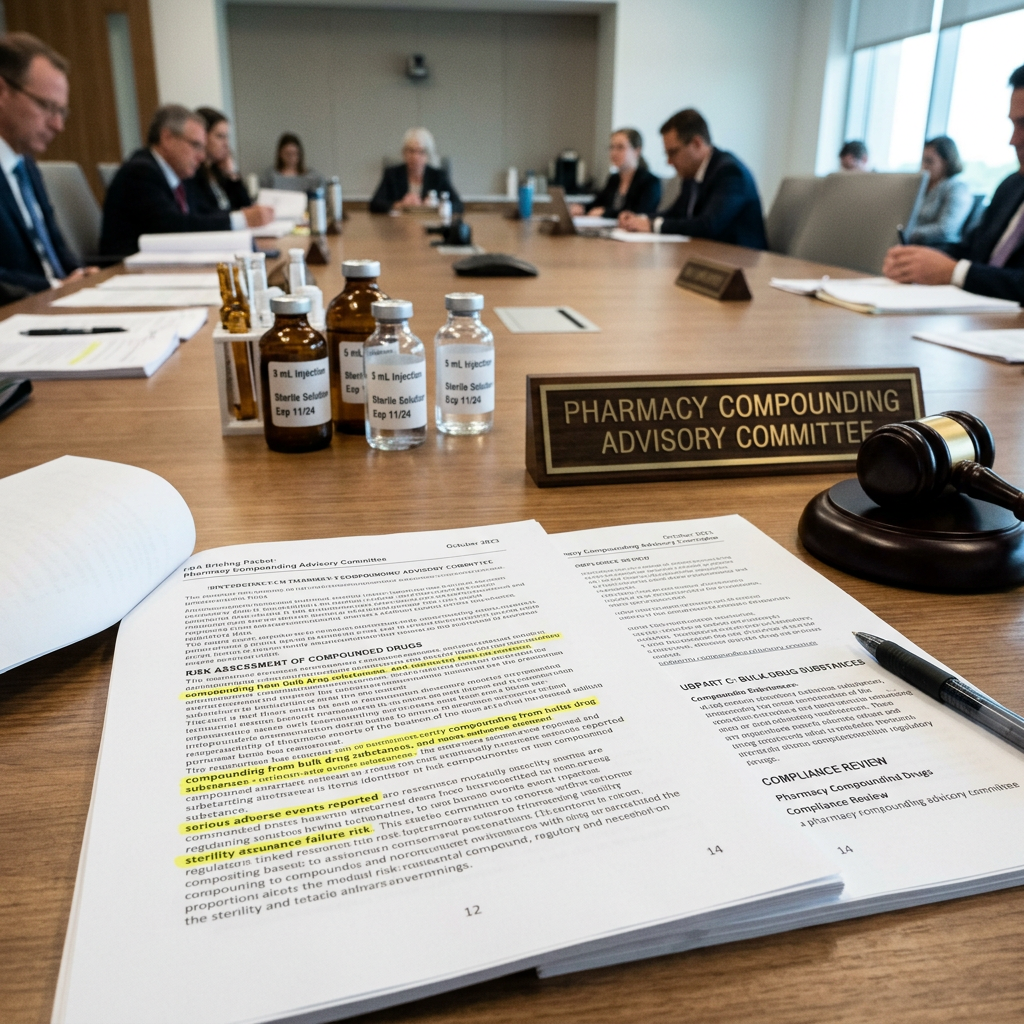
FDA Staff Reviewers Say ‘No’ to 7 Compounded Peptides Ahead of July PCAC Vote
FDA staff reviewers urged against adding seven popular peptides to the 503A bulks list ahead of the July PCAC meeting, citing weak human data and safety uncertainty.

FDA reviewers urge ‘no’ on BPC-157, TB-500, MOTS-c ahead of July 2026 compounding vote
FDA reviewers’ June 29 briefings recommend against listing seven popular peptides for 503A compounding, citing limited human data and immunogenicity risk.

Medicare Starts Paying for Obesity Drugs Today — Bridge Program Opens $50 Access for Millions
Medicare's new $50 Bridge program covering Wegovy, Zepbound, Foundayo, and oral Wegovy for obesity launched July 1 — the first Medicare weight-loss benefit.

FDA staff urges caution on compounded peptides ahead of July advisory meeting
Ahead of the July 23–24 Pharmacy Compounding Advisory Committee meeting, FDA staff briefings recommend against listing seven popular peptides for compounding.