Overview
ACE-031 is a fusion protein consisting of the extracellular domain of activin receptor type IIB (ActRIIB) fused to the Fc region of human IgG1. By acting as a 'decoy receptor,' it sequesters myostatin, activin A, GDF-11, and other negative muscle regulators before they can engage native receptors. Early clinical trials in Duchenne muscular dystrophy boys showed trends for maintained walking distance and increased lean mass, but development was halted due to non-muscle vascular adverse events (telangiectasias, epistaxis).
Mechanism of Action
ACE-031 binds myostatin and related TGF-β family ligands (GDF-11, activins) with high affinity, preventing their interaction with endogenous ActRIIB receptors on muscle and other tissues. This comprehensively disinhibits muscle anabolic pathways. The Fc fusion extends half-life to 10-15 days. Unlike follistatin-344 which also binds BMPs, ACE-031 is more selective. The broad ligand binding (beyond just myostatin) may contribute to both greater efficacy and vascular side effects.
Potential Benefits
- Statistically significant 3.3% lean mass increase in postmenopausal women from single dose
- 5.1% thigh muscle volume increase (MRI) within 29 days
- Improvements in bone mineral density markers
- Favorable fat mass changes
- Long half-life (10-15 days) enabling infrequent dosing
- Trends for preserved 6-minute walk test in DMD
Dosage Protocols
The following reflects doses used in published research studies. This is not medical advice. Consult a qualified healthcare professional.
| Beginner | Clinical doses only — not a consumer research peptide |
| Intermediate | N/A |
| Advanced | N/A |
| Cycle Duration | Variable — clinical trials used 6-24 week courses |
Development halted in 2011 due to safety concerns (epistaxis, telangiectasias). Not available for research use from reputable suppliers.
Use our Reconstitution Calculator to determine exact syringe units for your protocol.
Routes of Administration
Subcutaneous Injection High (Fc-fusion protein)
Clinical trial administration only.
Read our full Routes of Administration Guide for detailed comparison of all delivery methods.
Stacking Protocols
Popular research stacks involving ACE-031:
Explore our complete Peptide Stacking Guide for more combinations and safety considerations.
Reconstitution
| Storage | Refrigerate at 2-8°C after reconstitution. Do not freeze reconstituted solution. |
|---|
Typical vial sizes: Clinical trial formulation. Add bac water slowly down the side of the vial, swirl gently — do not shake. Use insulin syringe for precise dosing.
Need exact syringe measurements?
Amino Acid Sequence
Fusion protein: ActRIIB extracellular domain + IgG1-Fc linker (~25 kDa + ~25 kDa)
Side Effects & Safety
- Telangiectasias (dilated blood vessels in skin)
- Epistaxis (nosebleeds)
- Injection site erythema
- Potential cardiovascular effects due to broad ActRIIB ligand blockade
- Development discontinued due to safety profile
Safety & Contraindications
This information is for educational purposes only. Consult a qualified healthcare provider before using any peptide.
Pregnancy / Lactation
Bleeding Disorders
Active Skin Infection at Injection Site
Pharmacokinetics
| Half-Life | ~10-15 days (Fc fusion) |
|---|---|
| Storage | Store lyophilized at 2-8°C. After reconstitution, refrigerate and use within 24 hours. |
Synergistic Compounds
The following compounds have been studied alongside ACE-031 for potential complementary or synergistic effects:
Learn More
References & Further Reading
Latest News & Research
View all articles →
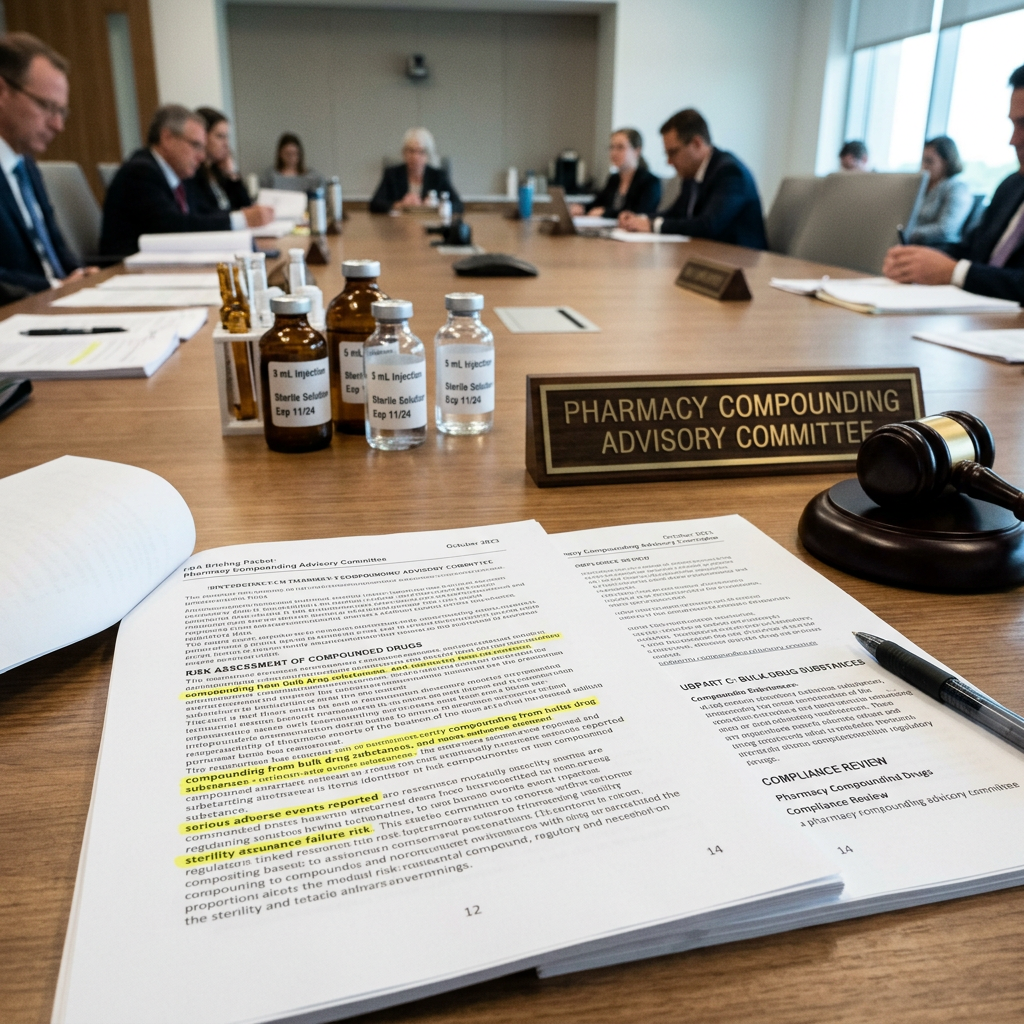
FDA Staff Reviewers Say ‘No’ to 7 Compounded Peptides Ahead of July PCAC Vote
FDA staff reviewers urged against adding seven popular peptides to the 503A bulks list ahead of the July PCAC meeting, citing weak human data and safety uncertainty.

FDA reviewers urge ‘no’ on BPC-157, TB-500, MOTS-c ahead of July 2026 compounding vote
FDA reviewers’ June 29 briefings recommend against listing seven popular peptides for 503A compounding, citing limited human data and immunogenicity risk.

Medicare Starts Paying for Obesity Drugs Today — Bridge Program Opens $50 Access for Millions
Medicare's new $50 Bridge program covering Wegovy, Zepbound, Foundayo, and oral Wegovy for obesity launched July 1 — the first Medicare weight-loss benefit.

FDA staff urges caution on compounded peptides ahead of July advisory meeting
Ahead of the July 23–24 Pharmacy Compounding Advisory Committee meeting, FDA staff briefings recommend against listing seven popular peptides for compounding.